
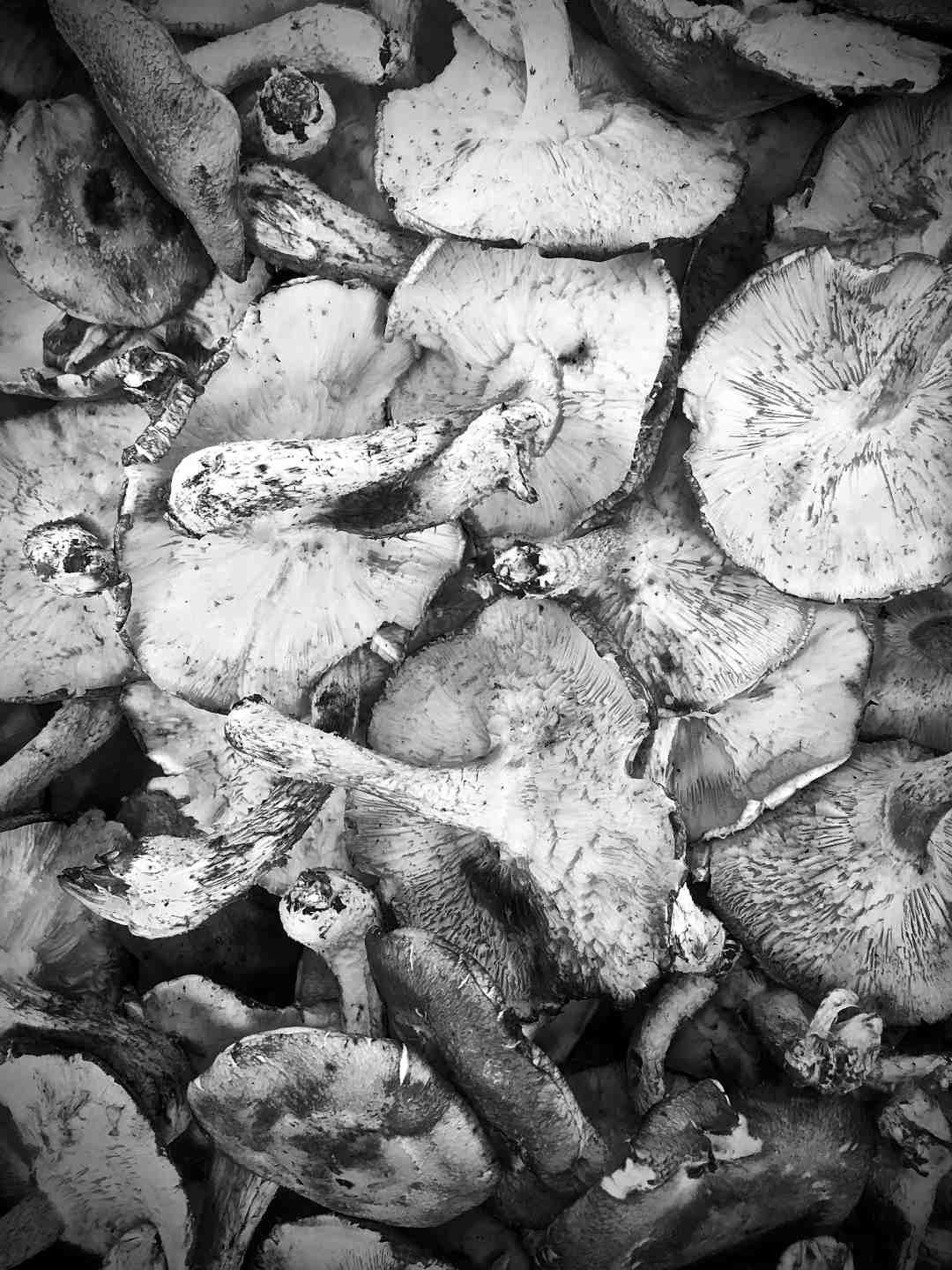
Basket low, strap whispering against my hip, I slip beneath the green roof—
a cathedral of leaves where rain still talks in small, bright beads.
The earth smells of old rain and folded paper: dark, readable grammar.
I follow the thin language of trails — snail silver, deer scat, a mole’s ridge —
and there: a crown of ochre tucked into the rib of a rotten log.
The caps are not sure of themselves; they dimple, cup, or flare,
each a miniature weather: sunburn, honey, powdered limestone.
Some are funeral whites, lacquered and innocent; others burn like coins.
They wink and lie: the red-spotted umbrella that promises folklore and poison,
the pallid, confident button that could soothe a fever or close a throat.
Morel — a honeyed chamber of shadow — tears open like a surprised map.
Truffle — the bruised heart beneath roots, breath of beasts and dark trains.
I press a cap between thumb and forefinger: it smells like cellars and slow afternoons,
or like metal and a warning. The forest teaches by taste and by absence.
We call this a hunt, but it is a bargaining: the mushrooms offer up their hush,
and we answer with knives and questions. Some tinctures stitch a fever closed;
some dinners fold a family into silence. I remember the shape of caution:
not superstition, but a slow, polite violence — to cut away and leave the rest.
At last, laden and wary, I stand where light finds the trunks —
and count, not coins, but the small tremors in my palms.
Nature’s gifts arrive with claws. We harvest, barter, and learn —
that the wild yields both remedy and grief, and that knowing is a kind of mercy.
Discover more from The New Renaissance Mindset
Subscribe to get the latest posts sent to your email.
 The New Renaissance Mindset