
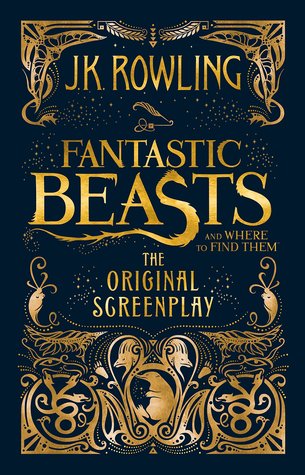
At first glance Fantastic Beasts and Where to Find Them wears the comfortable disguise of a familiar schoolroom text: a slim compendium of creatures, their habitats, and their hazard ratings, presented as a textbook used within the fictional world of Harry Potter. Read more carefully, however, and Rowling’s faux-field guide becomes a clever literary performance — a pastiche of natural history, a work of metafiction, and a pedagogical toy that both extends and refracts the world-building of the Potter series. It is less a novel than a performed scholarship: playful, at times morally pointed, and always attentive to the pleasures of classification.
Form and Voice
Rowling stages the book as the eccentric but authoritative notes of Newton Artemis Fido “Newt” Scamander, a naturalist whose voice is a felicitous blend of Victorian curiosity and modern geniality. The entries mimic the tone of old travelogues and dictionary-like compendia: short, descriptive, and often wry. This register allows Rowling to do two things at once. On the one hand she gives readers the satisfying accumulative pleasure of a bestiary — the kind once supplied by Pliny and later by the Victorian naturalists. On the other, she punctures that authority with footnotes, asides, and pedagogical jokes that remind us we are within a fictional school, not a museum. The book’s voice, therefore, is performative: it claims scientific distance but repeatedly admits fondness, bafflement, or moral concern.
Worldbuilding by Appendix
Where the Potter novels build character and plot through chapters, this book builds its world through annotation. Small details — a creature’s migratory pattern, a Ministry regulation, a recommended anti-poaching incantation — cumulatively thicken Rowling’s universe. The encyclopedic format is deceptively powerful: it invites readers to fill gaps with their imaginations, to supply context, histories, and cross-references. This is world-building as collage rather than narrative architecture, and it leverages the reader’s prior familiarity with Hogwarts to turn what might be a novelty tie-in into a meaningful expansion of a fictional ecology.
Themes: Otherness, Domestication, and Ethics
Beyond the surface charm of invented beasts, the book gestures toward ethical questions about human-animal relations that sit, sometimes uneasily, beneath its jaunty prose. Many entries concern creatures endangered by human interference, smuggling, or institutional neglect; others show how magical laws attempt to domesticate or contain beings whose very existence resists human order. In skirting the edge of conservationist discourse, Rowling invites reflection about the costs of categorization. Taxonomy, in the book, is not merely scientific but political: classification confers control, and control often justifies containment. In a subtle move, the book makes readers complicit — our laughter at a mischievous Niffler is shadowed by the knowledge that such amusements can become exploitation.
Intertextual Play and Literary Lineage
Rowling’s bestiary exists in conversation with a long literary tradition of imaginary zoology. The book recalls medieval bestiaries, Renaissance travel narratives, and the nineteenth-century compendia of Darwinian and Linnaean systems — all reimagined with a wink. Its most telling debts are to the pedagogical compendia of children’s literature: it functions as both a primer and a provocation. This double identity is its greatest trick: it can be read as a collectible object for fans, an imaginative prompt for younger readers, or a sly critique of how institutions—schools, museums, ministries—frame knowledge.
Limitations and Critique
As a literary object, the book’s strengths are also its limits. The compendium form resists sustained narrative and psychological depth; no creature entry can replace an arc of character development. Readers seeking the immersive drama of the Potter novels will find the bestiary episodic and fragmentary. Additionally, while the book flirts with ethical complexity, it rarely pushes those questions into rigorous critique; conservation emerges as a theme more by implication than interrogation. Finally, the humorous voice, though often winning, sometimes masks a conservative impulse to resolve disorder through bureaucratic measures rather than radical empathy.
A Charming, Thoughtful Annex
Fantastic Beasts and Where to Find Them is best appreciated as an annex to a larger imaginative project: an intellectual plaything that extends a fictional world while inviting readers to think about how knowledge is gathered, performed, and used. It is not high literature in the realist sense, nor does it try to be; its pleasures are encyclopedic and affective. For readers willing to savour marginalia, for teachers who want a text that prompts inquiry into classification and ethics, and for fans who enjoy seeing a world’s hinterlands mapped out, Rowling’s bestiary offers a compact, witty, and unexpectedly reflective experience. It is, in short, a minor masterpiece of fictional scholarship: light in plot, dense in implication, and thoroughly readable.
Discover more from The New Renaissance Mindset
Subscribe to get the latest posts sent to your email.
 The New Renaissance Mindset