
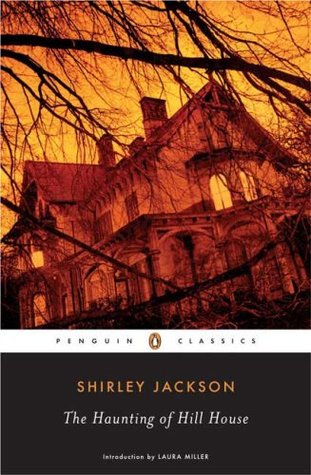
Written by Shirley Jackson, this novel is less a sequence of jump-scares than a sustained experiment in atmosphere, point of view, and the politics of domestic fear. Jackson’s masterpiece refuses the tidy mechanics of conventional Gothic; instead it anatomizes the uneasy overlap between mind, architecture, and social expectation. The result is a book that reads like a psychological autopsy wrapped in a haunted-house fable.
At its core the novel is an intense study of perception and belonging. It stages a small, carefully chosen cast inside an enormous, decaying mansion, and uses the house not merely as setting but as an active agent. Spaces in the house—corridors, stairs, rooms—are described with forensic precision, and through repetition these descriptions become a kind of psychic pressure. The house’s materiality (its angles, its silence, the way it “fits” or misfits a human body) mirrors the characters’ interior fractures. Jackson’s intelligence lies in how she draws the reader into that mirroring: we begin by observing the house and, almost imperceptibly, find ourselves feeling its claustrophobia.
Formally, the novel is elegant and elliptical. The prose is lean but sensorial: a single sentence will pivot from domestic banality to uncanny dread with unsettling ease. The author specializes in the small detail that warps a scene—a child’s laugh, a misplaced object, an offhand remark—and by accumulating such details she achieves an escalating sense of inevitability. This is not horror that depends on spectacle; it depends on implication. The narrative voice is attentive to nuance and ambiguity, which is why the book continues to provoke debate over whether its core disturbances are supernatural or psychological. She deliberately leaves that question open, and in doing so she forces readers to confront the limits of rational explanation when faced with grief, social exile, and madness.
Thematically, the book interrogates gendered expectations and the social architecture that constrains the protagonist. The central figure’s vulnerability is not only personal but social: her history of family duty, failed belonging, and yearning for a place to call hers make her both sympathetic and tragic. The book exposes how domestic spaces—historically coded female spaces—can become instruments of repression as well as sites of desire. The house’s hostility reads, in part, as a metaphor for a society that will not accommodate certain bodies and temperaments. That reading makes the novel politically acute without reducing it to polemic; the power comes from how the personal and structural coalesce into uncanny terror.
Critically, Jackson’s treatment of ambiguity is a masterclass. She refuses to anchor meaning in a single reading; instead the text holds competing interpretations in tension. The haunting can be read as external malevolence, as the crumbling of a fragile psyche, or as a social allegory about exclusion and agency. Each lens illuminates different facets of the prose, and the novel’s strength is that none fully cancels the others. The final pages, elliptical and devastating, leave the reader with a moral and affective residue that lingers—exactly the effect she intends.
Finally, the novel’s influence on modern psychological horror is unmistakable. Its insistence on interiority, its domestic claustrophobia, and its cool, clinical sentences have become templates for writers who want their fear to feel inevitable rather than manufactured. More than a textbook ghost story, this book is a study in how narratives can domesticate dread and make it resonate: it transforms the haunted house from a trope into a thinking machine that tests the limits of empathy and sanity.
For readers who value craft as much as chill, this novel rewards close, re-read attention. It is a book that stays with you not because it tells you what to fear, but because it reveals the mechanisms by which fear takes up residence.
Discover more from The New Renaissance Mindset
Subscribe to get the latest posts sent to your email.
 The New Renaissance Mindset