
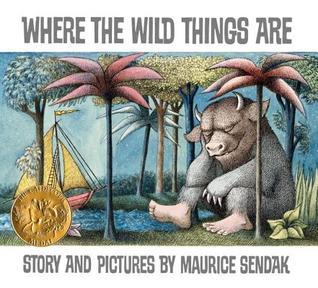
Maurice Sendak’s Where the Wild Things Are is one of those rare picture books that functions simultaneously as a fable, a miniature psychological drama, and a radical experiment in economy — of line, of colour, and of words. On the surface it tells the simple story of a child’s temper and imaginative flight; beneath that surface it stages a swift, convincing rite of passage, in which play, power, and the ache of home are braided together. Read closely, the book is less an escapist fantasy than a compressed allegory of how a child negotiates anger, authority, and belonging.
Form and economy
One of the book’s most striking features is its linguistic restraint. The author pares the prose to a handful of declarative sentences and memorable exclamations; those lines become incantatory because of the book’s spareness. Small verbal shocks — the child’s “I’ll eat you up!” — sit against long, wordless pictorial spreads and gain force from that contrast. This economy does two things: it mirrors a child’s concentrated thought-world (quick, intense, then moving on) and it lets the pictures carry narrative weight. The famous command, “Let the wild rumpus start!” functions not as an expository line but as an organizing ritual — the moment the imagination formalizes into play and power.
The interplay of text and image
Its illustrations are not mere accompaniments; they are the primary narrator. The book’s pacing is largely pictorial: pages expand into double–page spreads when Max’s inner world opens and contract when his emotional arc folds back toward home. Sendak’s line — rough, assured, often ink-dark against washed colour — renders the wild things with a mixture of menace and absurdity. Their gestures and faces register a theatricality that is sometimes comic, sometimes conspiratorial; they are dangerous-looking and almost affectionate at once. This tension allows a single image to hold ambivalence: the wild things are both objects of Max’s triumph and mirrors of something in him.
Power, play, and kingship
Scholarly readings often focus on the book’s motif of kingship. Max’s coronation — he is “king of all wild things” — reads as a fantasized triumph of autonomy: he can order the beasts, enact revenge, and make the rules. Yet Sendak complicates this victory. Kingship is transitory; it does not resolve the deeper need that drives the narrative. The wild rumpus is exhilarating, but it is not restorative. The book’s emotional climax is not the roar of victory but the private, almost embarrassed decision to return home. That decision reframes the earlier display: the imaginative conquest was necessary, but inadequate as a final end.
Ambivalence and the homecoming
The final sequence — Max’s return to a supper “still hot” — has generated much critical interest because of its moral ambiguity. Is Max rewarded for his mischief? Is the parent’s hospitality unconditional? It refuses to give a simple moral. The supper’s warmth reads as a compassionate, if fraught, reconciliation; at the same time, the earlier scenes of exile and power linger. The book captures the strange adult–child contract: home remains the place that contains misrule, forgives it, and thus domesticates it. The last image is quiet, intimate and not entirely resolved — a clever formal echo of childhood itself.
Psychological reading and cultural context
It is tempting to read the narrative through Freudian or attachment lenses — the wild things as projections of the unconscious fury and loneliness of a child — but Sendak’s strength is that he never turns the beasts into simple symptom. They are theatrical rehearsals of autonomy: monstrous, comic, and capable of pleading (“Oh please don’t go — we’ll eat you up — we love you so!” is parodied within the narrative’s choreography). The emotional truth is less about pathology than about the normal, even necessary, oscillation between rage and tenderness in early life.
Language, tone, and address
The book’s diction is notable for its alternation between enlarged speech (imperatives, exclamations) and near-silent narration. Those scattered short quotations — “I’ll eat you up!”; “Let the wild rumpus start!”; “king of all wild things” — have entered popular memory because they condense feeling into performative speech-acts. They are at once play-commands and affective markers, and they allow readers (child and adult alike) to inhabit Max’s volatile interiority without being told what to feel.
Legacy and influence
As a cultural artefact, the book is exemplary for showing how picture books can perform sophisticated psychological and narrative work in a handful of pages. Its influence has been broad: many contemporary picture books now take for granted the writer’s insistence on emotional complexity, pictorial pacing, and the legitimization of ambivalence in children’s literature.
Where the Wild Things Are remains powerful precisely because it trusts both its young reader and its medium. It stages anger and reconciliation without moralizing; it uses silence and image to deepen the text’s psychological notes; and it leaves the final human question — how we return to one another after we rage — both answered and intriguingly open. In that openness the book continues to read as an honest account of childhood: feral, theatrical, tender, and stubbornly alive.
Discover more from The New Renaissance Mindset
Subscribe to get the latest posts sent to your email.
 The New Renaissance Mindset
A brilliant analysis of one of my and my children’s favorite books. As a side note, I was just listening to Prokofiev’s Romeo and Juliet symphony, and wondering now what this book would sound like if rendered into music. Amazing, I imagine. What fun to do so. If only I was a composer!
LikeLiked by 1 person
Thank you, Ms. Brasket.
I believe there was a soundtrack for the movie made for this book…
I went looking for it just now and was surprised by the results… I had thought it was done by a Montreal artist named Patrick Watson, but it wasn’t. Anytime I’ve replayed scenes from the film or pages from the book, I hear Patrick Watson’s music.
FYI: he has a song called “where the wild things are” on his album “Wooden Arms”.
I love the ethereal carnival atmosphere of his music, and for me, his music and voice are the soundtrack (in my head) 😏
LikeLike
very nice,
LikeLiked by 1 person
Thank you
LikeLiked by 1 person