
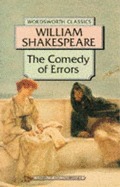
Shakespeare’s briskest and most farcical early play, The Comedy of Errors stages a combustible mixture of slapstick, classical plot-mechanics, and surprisingly tender melancholia. On its surface the play is a tight mechanical farce — two sets of identical twins, mistaken identities, beatings, arrests, and a sequence of escalating misunderstandings — but beneath that machinery Shakespeare already practices the tonal shifts and human sympathy that will mark his later comedies.
Plot and dramatic design
The playwright borrows his premise from Plautus’s Menaechmi and reworks it into an exercise in unity and compression: the action takes place in one city, largely within a single day, which intensifies the confusion and the comic economy. The play opens with Egeon’s desperate appeal and a threat of death if he cannot raise a ransom — a harsh, almost tragic note that frames the farce to follow and continually returns the audience’s sympathies to family and loss.
Language — comedy with a pulse
The language here alternates pithy physical jokes with surprising metaphors of yearning. Antipholus (of Syracuse) articulates one of the play’s rare lyrical moments when he compares himself to a solitary drop seeking its counterpart:
“I to the world am like a drop of water / That in the ocean seeks another drop…” (1.2).
That image — a miniature of existential longing lodged inside a bawdy comedy — is crucial: it reminds us that the play’s confusions are not mere theatrical tricks but dramatize alienation, the need for recognition, and the possibility of restored identity.
At the same time, it uses crisp, functional lines to drive the farce. Consider Antipholus’s pragmatic complaint about money: “The gold I gave to Dromio is laid up / Safe at the Centaur” — a short, stageable line whose literalness (and the ensuing contradiction when Dromio denies it) fuels comic momentum.
Characters and doubling
Comedy of Errors depends on doubling not only as a plot device but as a means of reading identity itself as performative. The two Antipholuses are distinguished more by circumstance than by innate psychology; the Dromios function as physically comic counterparts who expose the social hierarchies that bind master and servant. Shakespeare is already curious about the instability of social roles: a single misrecognition — someone calling you by the wrong name, or denying your household — threatens reputation, legal standing, and even bodily safety. The law (Solinus’s edict against Syracusans) frames the farce with genuine stakes and prevents the play from dissolving into pure buffoonery.
Tone and invention
Critics sometimes dismiss Errors as an “apprentice” play because it privileges farce over the moral complexity of later comedies. That charge has force only if one reads the play as mere gag-construction. Read closely, many of the scenes — Egeon’s tearful history, Antipholus’s plaints, the final, almost ritualized recognition in Act V — show a playwright probing how comedy can repair social and familial rupture. The sudden pivot from violent quarrel to tender reunion in the last act feels staged, but it also performs reconciliation as an ethical act: naming, recognition, and public acknowledgment restore order.
Performance notes (why it still matters on stage)
The play’s reliance on physical confusion makes it a director’s delight: timing, doubling, and prop comedy matter as much as Shakespeare’s words. Yet the text rewards actors who can hold both tone and thought — allowing a Dromio to be a comic engine and, in quieter moments, an index of human vulnerability. Contemporary productions that lean into both the violence and the tenderness of the text often reveal how close satire, farce, and humane concern sit in Shakespeare’s early craft.
Short assessment
The Comedy of Errors is deceptively simple: its pleasures are immediate, its architecture tightly wrought, and its emotional payoffs unexpectedly affecting. If it lacks the moral layering of Twelfth Night or the philosophical curiosity of As You Like It, it compensates by demonstrating how comedy — even in its wildest, most physical form — can stage loss and reunion with both wit and compassion. For students and seasoned readers alike, the play offers a compact lesson in how plot mechanics and human feeling can be braided together so that the laughter at a mistaken cuff or a stolen chain registers, a few beats later, as relief at recognition and homecoming.
Discover more from The New Renaissance Mindset
Subscribe to get the latest posts sent to your email.
 The New Renaissance Mindset