
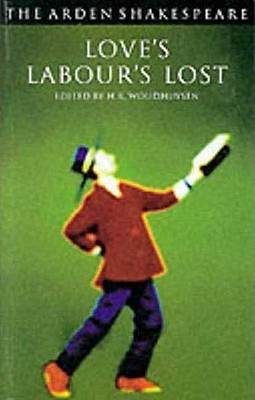
Shakespeare sets a peculiarly cerebral trap for his audience in Love’s Labour’s Lost: a courtly experiment in renunciation and study that is immediately confounded by the comic contagion of love. The play reads like a satire of pedantry and Petrarchan affectation, and its pleasures come less from plotful surprise than from the verbal inventiveness and the dramatic friction between rhetoric and behaviour.
Language and rhetoric
From the first lines the play advertises a preoccupation with fame and form — “Let fame, that all hunt after in their lives, / Live registered upon our brazen tombs.” This opening self-consciously monumentalizes the court’s vow and, at the same time, announces an irony: language here aspires to immortality even as characters make light of their own vows. The play’s energy is conversationally erudite: sonnets, mock-heroic speeches, and pedantic learnedness are all staged not simply for ornament but to expose how easily wit can be converted into self-delusion.
Character and comic method
The comic center is not a single plot but the collision of temperaments. Berowne (Biron) is Shakespeare’s witty sceptic: his asides mock the academy’s grave tone even as he participates in its excesses. When the young lords recite their love-poetry we get lines like, “Once more I’ll mark how love can vary wit,”—a neat, self-aware dismissal that both enjoys and deflates its own lyricism. He stages lovers who become comedians of themselves; their very attempts at eloquence produce comic exposure.
Gender, voice, and counter-satire
The women in the play are not passive foils. They register and return the men’s rhetoric with sharp staging of their own: Katharine’s laconic dismissal — “Some thousand verses of a faithful lover, / A huge translation of hypocrisy, / Vilely compiled” — makes a play-within-a-play of the suitor’s rhetoric and turns mockery back on the male desire to be admired. The result is a comic dialectic, in which language is both the instrument of conquest and the means of resistance.
Tone and the awkward ending
Critics and audiences often feel the play ends oddly: after a sustained comic carnival there is an abrupt note of delay, mourning, and promise rather than immediate marriage. That tonal swerve — the postponement of easy matrimonial closure — transforms the piece from a pure comedy into something more ambiguous: an experiment in rhetorical adolescence and moral apprenticeship. The abruptness insists the play is not content merely to amuse; it wants the audience to recognize the gap between words and sustained ethical action.
Why it matters
Love’s Labour’s Lost is sometimes underrated because it lacks the domestic warmth or tightly engineered plot of Shakespeare’s later comedies; but read for its linguistic daring, its skepticism about fame, and its lively interrogation of the play-acting of love, it becomes a compact laboratory of dramatic method. The play rewards readers who listen closely — its puns, sonnets, and mock-serious pronouncements repay attention with a steadily accumulating wit that is as intellectual as it is theatrical.
Approach Love’s Labour’s Lost as you would a chamber-piece of ideas: savour the verbal set-pieces, attend to the way Shakespeare choreographs talk into action, and be prepared for a finale that asks more of you (and of the characters) than a conventional comedic tidy-up. For readers who relish the sound of language thinking aloud and the comedy that issues when clever men are bested by their own cleverness, this play is a singular pleasure.
Discover more from The New Renaissance Mindset
Subscribe to get the latest posts sent to your email.
 The New Renaissance Mindset