
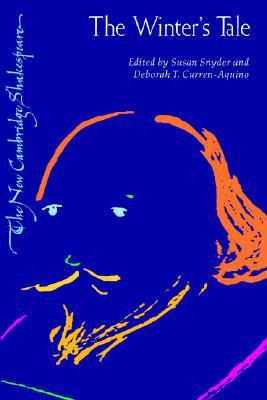
Shakespeare’s late romance is an audacious exercise in tonal sleight-of-hand. The Winter’s Tale begins in the claustrophobic pressure-cooker of courtly jealousy and ends in an almost miraculous unclenching — a movement from accusation to amends, from desperate possession to a form of theatrical mercy. The play resists tidy categorization: it is at once a domestic tragedy, a pastoral comedy, and a metaphysical meditation on time, loss, and the restorative possibilities of art. Read as a single moral argument, the play stages the ravages of a mind seized by suspicion and the slow, difficult reassembly of a world broken by that passion.
Argument and structure
Shakespeare’s structure is the play’s bracing formal gambit: two very different halves, separated by a famous “time-jump,” ask different genres to answer one problem. The first half — court scenes in Sicilia — is taut and forensic: Leontes’ jealousy toward Hermione feels like a forensic investigation of character. The second half moves to Bohemia’s green world of shepherds and festivals, where lost identities are reconstituted amid the innocent commerce of disguise and courtship. The play insists that neither instant justice nor uncomplicated pastoral balm suffices; rather, only the long arithmetic of time and contrition can restore what has been shattered.
Character and psychology
Leontes is the play’s dramatic engine and its moral alarm. The play gives us a ruler whose jealousies do not arrive as rational doubts but as an affective contagion that transforms evidence into proof. The language of his suspicion — sudden, incendiary — makes clear how quickly a mind can convert absence into treason. Hermione, by contrast, is written with an austere dignity: she articulates truth by presence rather than display, and her trial scene foregrounds the limits of language under duress. Paulina, furious and unyielding, supplies the play’s prophetic conscience; her refusal to countenance expedience insists on moral accounting.
Scenes and images that register
Two moments remain unforgettable because they crystallize the play’s tonal risks and rewards. First is Antigonus’s dispatch to the Bohemian coast and its abrupt, terrible stage direction — the kind of theatrical image that has lodged in cultural memory: “Exit, pursued by a bear.” That moment, comic in stagecraft yet somber in consequence, dissolves the boundary between emblem and reality, reminding us how peril (and fate) intrudes on human design. The second is the dénouement — the “statue” scene — where art and ritual effect a reconciliation so strange and tender that one cannot decide whether the scene stages resurrection, theatrical illusion, or the ethical miracle of forgiveness. The play ends by asking the audience to perform belief: can a faithful miming of the past repair the present?
Language, music, and pastoral play
Shakespeare’s diction shifts with the play’s geography. Sicilia’s rhetoric is rhetorical in the old courtly sense — dense, forensic, litigious — while Bohemia’s language laps into lyricism and rusticated wit. The pastoral interlude is not mere escapism; it’s the play’s laboratory for reanimation. Perdita (the exposed child turned pastoral princess) speaks with luminous simplicity about flowers, music, and found identity; through her, the playwright explores how culture and nature conspire to name and anchor a self. The play’s intermittent songs, pageants, and cloying revels complicate the comic tone with an elegiac aftertaste: joy here carries the shadow of what was lost.
Major themes and artistic questions
At its core The Winter’s Tale is preoccupied with measurement: how to measure truth, how to weigh justice, how long it takes a mind or a polity to repent. Time itself is personified and enlisted as judge and healer; the famous temporal leap is not merely a plot device but an ethical insistence that some injuries only yield to patient seasons. Forgiveness in the play is not cheap — it requires recognition, public account, and the labor of re-creation. Shakespeare also interrogates the relation between art and reality: the “statue” moment forces the audience to consider whether theatre can effect moral repair or whether it only simulates it.
Why read and see The Winter’s Tale now
Shakespeare’s romance remains compelling because it refuses complacent moral closure. It teaches — brutally and tenderly — that rulers and lovers alike are liable to catastrophic misreading; it insists that repair requires more than apology, that time and art must conspire to restore the social fabric. As a theatrical experiment in mercy, The Winter’s Tale offers a model of how drama can both diagnose and, in its own way, heal. It is a play that leaves you unsettled and, if you let it, quietly less certain about the sturdiness of your own judgments — which is precisely the point.
Discover more from The New Renaissance Mindset
Subscribe to get the latest posts sent to your email.
 The New Renaissance Mindset