
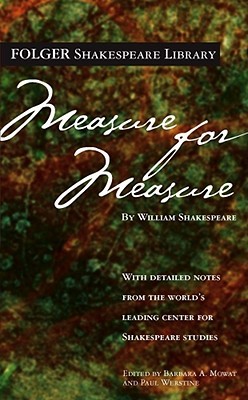
Measure for Measure resists tidy classification. Cast as a “comedy” in early quartos yet steeped in moral unease and judicial severity, it belongs to that uneasy middle ground—what later critics call a problem play—where questions of law, mercy, desire, and hypocrisy refuse easy resolution. Shakespeare stages a civic experiment: the Duke of Vienna deputizes Angelo to restore order, and Angelo’s zeal for the letter of the law exposes how juridical rigour can become personal tyranny. The play’s dramatic energy comes from the collision between civic order and private conscience, and from Shakespeare’s uncanny ability to make language itself an engine of moral ambiguity.
The Bard’s rhetoric often names the play’s ethical knots with elegant cruelty. When Escalus observes the uneven workings of fortune—“Some rise by sin and some by virtue fall”—the line compresses the play’s central paradox: moral deserts do not map neatly onto punishment and reward. Escalus’s aside gestures toward a world in which law does not simply correct wrongdoing but redistributes fate in baffling ways, so that enforced justice can feel like injustice. The line’s laconic judgment—“Some rise by sin and some by virtue fall”—captures the play’s recurrent anxiety that systems meant to secure the commonweal may instead produce arbitrary suffering.
That anxiety becomes intimate in the confrontation between Isabella and Angelo. Isabella’s professed fidelity to chastity and her plea for her brother Claudio’s life set up one of the play’s most wrenching moral dilemmas: what is one person’s body worth against another’s life? Lucio’s impatient counsel—“Our doubts are traitors, / And make us lose the good we oft might win” —is at once comic and urgent, urging action where Isabella’s conscience hesitates. The text stages debate rather than decision: Isabella’s virtue is neither unproblematic nor merely exemplary; it is political, persuasive, and in the end ambiguous.
Angelo’s language is the play’s rhetorical tour de force because it reveals how a zeal for “justice” can mask appetite and hypocrisy. His famous paradox—“O, it is excellent / To have a giant’s strength; but it is tyrannous / To use it like a giant”—is a compact confession. Angelo professes the rhetoric of restraint even while he plans to exercise coercive power over Isabella. The contrast between his public posture and private designs dramatizes Shakespeare’s interest in the mismatch between law as expression and law as exercise: the moment one wields “giant’s strength” in the name of virtue, the line between civility and despotism blurs.
Dramatically, it refuses a single moral vantage point. The Duke’s decision to disguise himself and oversee the action from the wings is theatrical and ethical strategy: he watches, arranges, and finally dispenses mercy, but the play leaves open whether such managerial benevolence absolves the harsher mechanisms he set in motion. The famous “bed-trick” and the public unmaskings at the end produce the tidy outward movements of a comedy—marriage, reconciliation, public order—but they also leave ruptures: Angelo is publicly shamed yet spared death; Isabella is offered the Duke’s hand and answers in a silence pregnant with possible refusal; Claudio’s reprieve does not undo the humiliation imposed on others. The comedy’s resolution therefore reads as an uneasy bargain rather than unequivocal restoration.
Stylistically, the play is rich in tonal shifts—satire, rhetoric, pastoral lyric, and farce collide. Shakespeare’s use of prose and verse maps characters’ moral postures: Angelo’s sententious blank verse, Lucio’s hearty prose, Isabella’s luminous rhetoric. The dialogue often compresses large theological and legal debates into compact exchanges, giving political argument the intimacy of a confessional scene. This compression is one reason the play rewards performance: stage direction, actorly emphasis, and the physical presence of bodies in space fill the argumentative silences in ways that a reader must imagine.
Finally, Measure for Measure’s contemporary force lies in its refusal to comfort. It forces us to ask whether mercy can be staged into law, whether private virtue can bear the burden of public life, and whether systems of punishment can ever avoid reproducing the very injustices they aim to check. Its “comic” ending feels less like closure than like a question posed to an audience that must decide—what counts as justice, and who gets to measure it? For readers and audiences today, the play’s power is in that persistent, disquieting question.
In short: Measure for Measure is a work of moral seriousness disguised—partly, ambiguously—as a comedy. Its language furnishes aphorisms that lodge in memory; its dilemmas refuse consoling solutions. Read carefully, it is a play that insists we think about how law, language, and desire shape each other—and how, in the end, mercy may be the only measure we can hardly legislate.
Discover more from The New Renaissance Mindset
Subscribe to get the latest posts sent to your email.
 The New Renaissance Mindset