
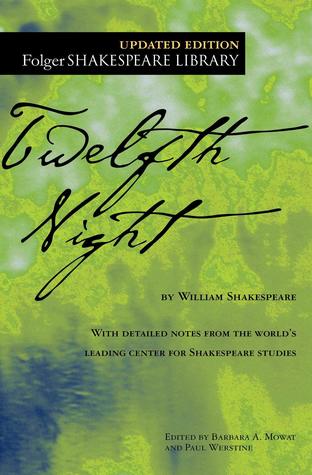
There are comedies that simply make us laugh and comedies that quietly complicate our laughter until it tastes of something stranger. Twelfth Night belongs to the latter group: at once a carnival of language and a probing study of identity, desire, and social pretence. From the opening invocation — “If music be the food of love, play on” — the play announces both an appetite and a combustible excess: music, disguise, and misprision will fuel the action and, ultimately, unsettle its happy endings.
Shakespeare’s structure here is deceptively simple. A shipwreck separates twins (Viola and Sebastian) so that Viola assumes male dress and the name Cesario; she enters Orsino’s service and becomes the intermediary of a love triangle that is comic by circumstance and tragic by proximity. The disguise engine permits a sustained interrogation of gender: Viola’s cross-dressing is comedic device and epistemological experiment. Her sweetness and intelligence are not merely qualities to be admired but instruments that reveal how readily social categories can be performed and misread. The play stages this truth economically: hindsight makes many of Viola’s tender asides into philosophical claims about identity as enacted role rather than metaphysical essence.
Language is the play’s chief pleasure and its ethical barometer. Orsino’s opening line, “If music be the food of love, play on,” functions as both lyric manifesto and self-dramatizing hyperbole, announcing a subject who will court feelings more than people. Feste — the professional fool — sets the moral counterpoint: his songs and aphorisms (e.g. “Better a witty fool than a foolish wit”) are not mere entertainment but a calibrated commentary that punctures ideology and exposes human vanity. The humour often rests on verbal dexterity: puns that sprout into philosophical paradox, banter that uncovers hierarchy, and songs that convert private sorrow into public spectacle.
Yet the scholarly strain in reading Twelfth Night comes when we attend to the play’s darker energy. The subplot surrounding Malvolio — the puritanical steward made the object of a forged letter and a humiliating masquerade — has generated centuries of debate. On the one hand, the prank culminates in delicious theatrical set pieces: Malvolio’s solipsistic reading of the phony injunction (“Some are born great, some achieve greatness, and some have greatness thrust upon ’em”) renders him grotesque and richly comic. On the other, the orchestration of his undoing — a mockery that involves confinement and public shaming — leaves an ethical aftertaste: is our laughter complicity with cruelty? The play offers no simple exculpation. The comic pleasures of revelry are shadowed by a violence that interrogates communal “joy” as a mechanism that polices and punishes nonconformity.
Characterization in Twelfth Night is especially notable for its tonal range. Viola is a model of interior suppleness — sly, resourceful, and heartbreakingly articulate without self-indulgence — while Olivia represents both the object of desire and a figure of melancholic command. Sir Toby and Maria provide carnival energy; their roistering is essential to the play’s regimen of inversion. Feste, whom many productions highlight as the moral core, reminds us that the stage is a mirror and a scalpel: his irony is not only witty but diagnostic. Even Orsino’s ostentatious languor insists we ask what love costs when it is indulged as posture.
Formally, the play marries lyric moments to farce. Its music (literal and figurative) calibrates scene transitions and emotional beats; songs like “Journeys end in lovers’ meeting” compress thematic trajectories into brief, memorable refrains. Shakespeare’s comic architecture here is elastic — quick to collapse into mistaken identity yet robust enough to reassemble into the happiest of endings. But the “happily ever after” — the multiple marriages at the close — is ambivalent: felicity comes as recognition and unmasking, yet recognition itself has been achieved through deception. The theatrical ethics are thus paradoxical: identity is both revealed and constructed in the same breath.
A scholarly reading therefore must attend to audience position. In performance, the crowd laughs; in reflection, the critic can hear the laughter’s edges. The play rewards such double attention: moments that provoke applause onstage often, when quoted in the study, reveal a subtext of social anxiety. To stage Twelfth Night as pure jocularity is to miss the ways it interrogates class (the steward’s humiliation), gender (Viola’s dexterity and the slipperiness of desire), and performative identity. Conversely, to insist on its darkness alone is to ignore the subtle felicities — linguistic, musical, and comic — that make it one of Shakespeare’s most humane examinations of how we live as lovers, fools, and social actors.
Twelfth Night is an elegiac comedy: richly witty, formally ingenious, and morally porous. It invites repeated returns because each performance and each close reading yields new dissonances between feeling and artifice. The play’s enduring power lies in its ability to make us both laugh and re-evaluate why we laughed — a theatrical lesson about self-knowledge disguised, as so much of the play is, as entertainment.
Discover more from The New Renaissance Mindset
Subscribe to get the latest posts sent to your email.
 The New Renaissance Mindset