
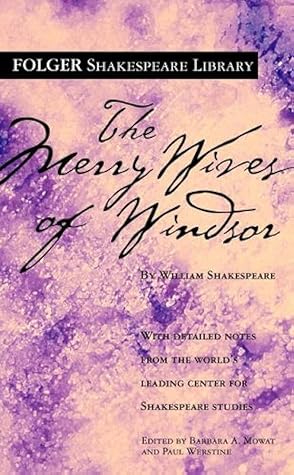
Shakespeare’s The Merry Wives of Windsor is often treated as a lightweight comedy, a cheerful outlier among his more psychologically layered and poetically elevated plays. Yet that judgment undersells its accomplishment. Beneath its brisk plotting, domestic mischief, and antic disguises lies a tightly observed satire of class pretension, masculine vanity, and social performance. The play is less interested in romantic idealism than in the everyday comedy of reputation, appetite, and intelligence. It is a play of households rather than courts, of practical wit rather than tragic grandeur, and its energy comes from the satisfying collapse of a man who believes himself irresistible and discovers, instead, that he is ridiculous.
At the centre of the comedy stands Sir John Falstaff, a figure Shakespeare had already made magnificent in the history plays. Here, however, he is stripped of heroic scale and dropped into the petty world of provincial Windsor, where his grand self-image is exposed as fraud. His scheme is delightfully shameless: he writes identical love letters to Mistress Page and Mistress Ford, hoping to exploit their husbands and secure money as well as sexual conquest. What makes the joke durable is not merely that the women outwit him, but that Falstaff remains almost gloriously unchanged in his appetite. He is still all self-dramatizing confidence, still all language, still all bluster. When he boasts and schemes, he sounds as though the world itself ought to rearrange itself around his desires. The comedy lies in the fact that Windsor will not cooperate.
The play’s greatest strength is its portrayal of Mistress Page and Mistress Ford, who are not passive targets of Falstaff’s tricks but active strategists in their own right. Shakespeare gives them a kind of domestic sovereignty. They expose Falstaff’s vanity not with solemn moralism but with intelligence, speed, and theatrical flair. Their response to his first approach establishes the play’s moral architecture: they are not only faithful wives, but also practical guardians of the social order. They convert embarrassment into performance, transforming private insult into public correction. The famous scene in which Falstaff is hidden in the laundry basket and dumped into the Thames is comic spectacle, but it is also symbolic. The would-be seducer is literally washed out, humiliated and cleansed by the very domestic world he sought to corrupt. The women’s wit is more than defensive; it is creative. They turn household space into a stage of judgment.
This is one reason the play feels so modern. Its comedy depends on social systems rather than purely individual eccentricity. Marriage, gossip, credit, and reputation shape nearly every exchange. Even the play’s secondary plot, involving Anne Page and her parents’ competing matrimonial plans, turns marriage into a contest over authority, property, and social aspiration. Mistress Page and Mistress Ford disagree about how best to punish Falstaff, but they agree on the larger principle that women need not submit silently to male schemes. Meanwhile, Anne herself becomes a figure of constrained agency, desired by three men with very different social ambitions. Through her, Shakespeare reminds us that marriage is not merely a private emotional choice but a public negotiation of class and family power.
The play also reveals Shakespeare’s gift for linguistic variety. Falstaff’s prose is expansive, self-indulgent, and comic in its excess; the Host of the Garter is earthy and managerial; Justice Shallow is a masterpiece of senescent self-importance, a man so wrapped in nostalgia that he mistakes memory for identity. His rambling chatter about past pleasures and rural life is funny because it is both inflated and empty. He performs social significance through language while saying almost nothing of substance. That contrast between language and reality runs throughout the play. Characters repeatedly try to make themselves larger than they are, and the comedy arises when social reality punctures the pose.
Even so, the play is not without complications. Its treatment of jealousy and suspicion can feel sharper than its festive tone suggests. Ford’s jealousy is played for comedy, but Shakespeare gives it enough force to hint at the destructiveness of insecurity. When Ford suspects his wife, he is not merely foolish; he is vulnerable to the corrosive power of male anxiety. In this sense, the play is not just about Falstaff’s humiliation. It is also about how easily social imagination can become distortion. Rumour, fantasy, and desire all warp perception. People see what they fear, not what is there.
What saves the play from becoming cruel is its ultimately restorative structure. By the end, deception has been exposed, marriages reaffirmed, and the social body repaired through laughter. Falstaff is not destroyed so much as deflated. His final punishment, in the forest sequence, is almost ceremonial: he is made to wear horns, to become the butt of communal mockery, and to acknowledge defeat. His cry, “I do begin to perceive that I am made an ass,” is funny because it finally names what the audience has long known. Yet even here Shakespeare refuses to abandon him entirely. Falstaff remains vivid because he is so unashamedly alive. The play mocks him, but it also depends on his vitality. Without his appetite, there would be no comedy to sharpen the women’s wit.
In the end, The Merry Wives of Windsor is a minor masterpiece of comic social engineering. It may lack the vast emotional range of Shakespeare’s great tragedies and late romances, but it compensates with precision, pace, and satirical bite. Its world is small, but its intelligence is large. Shakespeare shows how ordinary domestic life can become a theatre of wit, resistance, and correction. The result is a comedy that is outwardly cheerful but inwardly acute: a play about the follies of self-love, the power of female intelligence, and the fragile dignity of social order. It is merry, yes—but also sly, observant, and far more knowing than its reputation suggests.
Discover more from The New Renaissance Mindset
Subscribe to get the latest posts sent to your email.
 The New Renaissance Mindset