
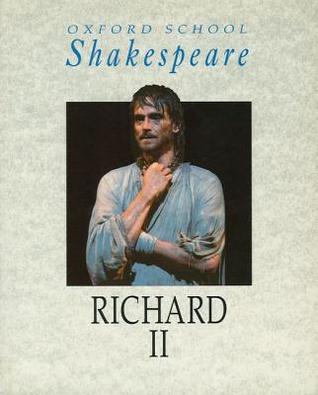
Richard II is one of the most hauntingly elegant of the history plays, not because it is driven by battlefield spectacle, but because it stages the collapse of kingship as an inward, almost ceremonial tragedy. The play is less interested in the mechanics of politics than in the fragile mystique that allows a king to be a king. Richard’s downfall is not simply the story of a weak ruler being replaced by a stronger one; it is Shakespeare’s profound meditation on authority, performance, language, and the tragedy of self-knowledge arriving too late.
At the centre of the play is Richard himself, a monarch whose greatest strength is also his fatal weakness: he thinks in poetic, symbolic, and absolutist terms, but the world around him increasingly demands practical judgment and political force. From the beginning, Richard treats power as if it were something granted by the imagination as much as by law. His court is full of ceremony, ritual, and pageantry, and the playwright makes clear that Richard understands kingship as a kind of theatre. Yet this is precisely why he fails. He is all surface and sovereignty, but not governance. He can speak like a king, yet cannot secure the kingdom.
One of the play’s most famous gestures captures this beautifully when Richard laments, “For God’s sake, let us sit upon the ground / And tell sad stories.” The line reveals a ruler whose authority is already slipping into elegy. Richard is often at his most compelling when he is mourning himself, as though he can sense the disappearance of his own majesty before he can prevent it. Shakespeare gives him language of extraordinary beauty, but that beauty becomes a form of self-enclosure. Richard’s speeches are dazzling, but they do not stabilize the realm. Instead, they expose a man increasingly detached from the material realities of rule.
Bolingbroke, by contrast, appears cooler, more measured, and more grounded in political consequence. He is not a romantic hero; he is a tactician. Yet Shakespeare does not simply paint him as the justified saviour of England. His rise is morally ambiguous, and the play’s genius lies in refusing easy categories. Bolingbroke returns not merely to reclaim what is his, but to seize the political vacuum Richard has created. If Richard embodies the divine aura of monarchy, Bolingbroke represents the emerging logic of pragmatic sovereignty. The transition between them marks a historical shift from sacred kingship toward a more modern sense of rule founded on power, consent, and control.
That shift gives the play its tragic atmosphere. The deposition scene is one of Shakespeare’s most devastating because it dramatizes not just the loss of a crown, but the collapse of identity. Richard does not merely surrender power; he watches the symbolic structure that made him himself come apart. In that scene, the crown becomes an object of unbearable significance. A king is reduced to a man, and the man cannot survive the humiliation. Shakespeare makes this moment especially painful by allowing Richard to remain eloquent even in defeat. His language rises above his circumstances, which only deepens the tragedy: he can interpret his fall, but not escape it.
The play is also remarkable for the way it links political disorder to cosmic and natural disorder. The opening already frames the conflict as a disturbance in the moral and elemental order of England. When Gaunt speaks of “this sceptred isle,” he idealizes the nation as a blessed, almost sacred land, but that vision is undercut by the corruption and division that follow. Shakespeare repeatedly suggests that when kingship is misused, the whole body politic suffers. The play’s world feels unstable because authority itself has become unstable. This is not just a personal tragedy; it is a national one.
What makes Richard II enduringly powerful is that Shakespeare refuses to make its protagonist merely contemptible. Richard is vain, politically inept, and dangerously self-regarding, but he is also vulnerable, lyrical, and deeply human. As he falls, he becomes more recognizable, even more sympathetic. His suffering reveals the loneliness hidden beneath royal spectacle. In the prison scenes, especially, The Bard strips away the public costume of monarchy and leaves a man confronting mortality, time, and the limits of power. Richard begins as a king who confuses language with authority; he ends as a man who discovers language cannot save him.
Stylistically, the play is one of Shakespeare’s most musical and image-rich histories. The verse often glitters with ritual grandeur, but beneath that grandeur runs a melancholy awareness that political order is made of fragile, mutable signs. A crown, a title, a name, a lineage—these are all shown to be both immensely powerful and astonishingly vulnerable. That tension gives the play its enduring force.
Ultimately, Richard II is not only a history of a fallen monarch. It is a tragedy of representation itself: how power is performed, how legitimacy is narrated, and how identity can unravel when the symbols supporting it are taken away. It presents the kingdom as a stage on which kingship must constantly justify itself. Richard fails that test, but in failing, he becomes unforgettable. His ruin is beautiful, unsettling, and politically profound.
Discover more from The New Renaissance Mindset
Subscribe to get the latest posts sent to your email.
 The New Renaissance Mindset