
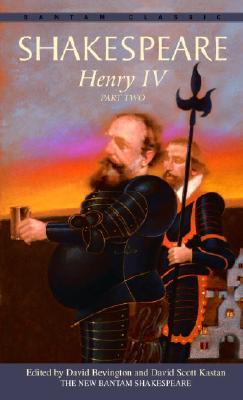
Henry IV, Part 2 is one of The Bard’s most quietly devastating history plays. At first glance, it may seem like a companion piece to the more famous Part 1, a continuation of rebellion, tavern wit, and Prince Hal’s coming-of-age story. But Part 2 is darker, slower, and far more reflective. It is a play haunted by fatigue: the exhaustion of age, the erosion of authority, the instability of political power, and the unsettling fact that even victory may arrive too late to restore meaning. If Part 1 is lively and expansive, Part 2 is somber, inward, and elegiac. It is a drama about endings disguised as a sequel.
One of the play’s greatest achievements is the way it reimagines kingship not as triumph but as burden. King Henry IV is no longer the forceful usurper of earlier political struggle; he is a weakened ruler consumed by guilt and illness. His famous lament, “Uneasy lies the head that wears a crown,” captures not only personal anxiety but the whole tragedy of monarchy in the play: sovereignty is exposed as sleeplessness, vigilance, and spiritual unrest. The crown is not an emblem of glory so much as a weight that presses the wearer toward dissolution. The author turns political authority into a psychological condition, and that shift gives the play much of its emotional gravity.
This sense of exhaustion extends beyond the king to the realm itself. The kingdom feels frayed, scattered, and vulnerable to fragmentation. Rebellion is no longer an abstract political threat; it has become a symptom of a body politic that cannot hold itself together. The Archbishop of York, the Earl of Northumberland, and other conspirators do not simply oppose Henry; they embody the instability that follows from illegitimate rule. Shakespeare is not interested in easy moral arithmetic here. Henry IV is indeed a usurper, but the rebels are not noble restorers of justice. The result is a world in which political action has lost its moral clarity. Everyone claims necessity; everyone is compromised.
Against this backdrop, Prince Hal’s development becomes especially intriguing. In Part 1, Hal’s boisterous companionship with Falstaff made him seem almost gleefully delinquent, a young man playacting at irresponsibility. In Part 2, however, the performance deepens into something more ambiguous. Hal continues to move between worlds: the court and the tavern, the language of rule and the language of comedy. Yet now the play asks whether the self he has constructed is merely tactical or fundamentally divided. Hal remains elusive because he understands that kingship itself is theatrical. His eventual transformation is not a simple moral conversion but a masterful assumption of role.
That assumption reaches its most famous expression in the rejection of Falstaff. The scene is painful precisely because it has the force of necessity. Hal’s line, “I know thee not, old man,” is one of the most ruthless sentences in Shakespeare’s canon. It is not merely a personal renunciation; it is a political severing. Falstaff belongs to the world of festive improvisation, appetite, and self-invention. The king cannot. Hal’s refusal of his old companion is therefore the price of legitimacy. He makes us feel both the justice and the cruelty of this break. Falstaff is comic, corrupt, intoxicating, and profoundly alive; yet he is also an obstruction to the disciplined image Hal must now inhabit.
Falstaff, in fact, is the play’s most remarkable creation, perhaps even more so than in Part 1. He is funnier, sadder, and more exposed. If he once seemed an exuberant embodiment of appetite, here he increasingly resembles a man who has mistaken wit for immunity. His language remains dazzlingly agile, full of reversals and evasions, but the play allows us to see the exhaustion beneath the performance. He is still a master of improvisation, but improvisation now looks like denial. When he dismisses responsibility, he is not just comic; he is tragic in miniature. His world depends on the fantasy that charm can outrun consequence, and Part 2 steadily dismantles that illusion.
The subplot involving Justice Shallow is often treated as comic filler, yet it is one of the play’s most subtle achievements. The scenes in Gloucestershire are full of old age, memory, self-delusion, and the pathetic vanity of men who once imagined themselves central to history. Shallow’s endless reminiscing becomes a comic version of the play’s deeper historical concern: the distance between remembered greatness and present emptiness. These scenes slow the action, but they also create a world of faded residue, as though the play itself were looking back over a life already half spent. Shakespeare uses comedy to register decay.
Language in Henry IV, Part 2 often mirrors this mood of unraveling. The verse can be ceremonious and heavy with public rhetoric, but it is repeatedly interrupted by prose, colloquial speech, and tonal instability. That mixture is especially important because it keeps reminding us that political order is never secure, never purely elevated. The court borrows from the tavern; the tavern mimics the court. Shakespeare refuses to separate high and low styles into neat categories. Instead, he lets them contaminate one another, which is why the play feels so richly human. Everyone is improvising a role, whether as king, rebel, fool, soldier, or heir.
What makes the play enduring is not simply its political wisdom but its emotional intelligence. The playwright understands that succession is rarely clean, and that the making of a king involves losses that cannot be repaired. Hal’s rise is triumphant in one sense, but it is also lonely. The final movement toward Henry V is marked by the death of the old king and the burial of an era. Even the apparent success of dynastic order carries melancholy. The son must become what the father cannot sustain, but that transition is shadowed by severance, grief, and the cold arithmetic of power.
In that sense, Henry IV, Part 2 is less a sequel than a reckoning. It completes the political arc begun in Richard II and developed through Henry IV, Part 1, but it does so by stripping away heroic illusion. What remains is a play about legitimacy, performance, mortality, and the painful cost of becoming fit to rule. Its brilliance lies in the balance it strikes between comedy and elegy. We laugh, but we also sense that the laughter belongs to a world already passing away.
Shakespeare’s achievement here is to show that history is not only made by battles and crowns, but by fatigue, memory, and the quiet collapse of old selves. Henry IV, Part 2 is a profound meditation on what it means to inherit a fractured world—and on the fact that to govern it, one may have to abandon the very companions who once made life feel free.
Discover more from The New Renaissance Mindset
Subscribe to get the latest posts sent to your email.
 The New Renaissance Mindset