
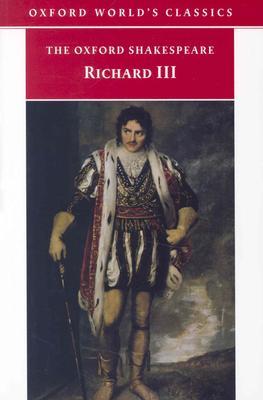
Shakespeare’s Richard III is one of the most electrifying studies of political ambition in all of literature, but its real brilliance lies in the way it makes villainy feel not merely monstrous, but theatrical. Richard is not simply a man who pursues power; he is a man who understands that power is inseparable from performance. From the opening lines, he announces himself as a strategist of spectacle: “Now is the winter of our discontent / Made glorious summer by this sun of York.” The pun on “sun” and “son” is typical of Shakespeare’s style here—witty, compressed, and politically loaded. Richard speaks as though history itself is something he can edit, revise, and manipulate. Yet the irony is immediate: the man who sounds most in command is also the one most at war with his own body, his own society, and his own soul.
One of the play’s most unsettling achievements is that Richard is made intelligible before he is made condemnable. He tells us, with chilling candour, “I am determined to prove a villain.” The line is famous not only because it is direct, but because it frames villainy as a kind of chosen identity, a role Richard embraces with extraordinary intelligence. He is self-aware enough to know the moral shape of his acts, and self-dramatizing enough to turn that knowledge into charisma. Shakespeare gives him a mind that is always several steps ahead of the room. He flatters, imitates, deceives, and improvises with such agility that his language becomes a weapon sharper than any blade in the play. Even his intimacy with the audience is a tactic: his soliloquies recruit us into complicity, making us witnesses to his schemes and, uncomfortably, almost his confidants.
At the same time, the play never lets us forget that Richard’s verbal mastery emerges from exclusion and resentment. He repeatedly turns his physical deformity into a political grievance and an imaginative engine. His first soliloquy links his body to the social world that has denied him access: he is “deformed, unfinished,” and therefore, in his view, unfit for the courtly pleasures of peace. This self-conception matters deeply. Richard’s cruelty is not presented as random evil; it grows from a psyche that converts humiliation into ambition. Shakespeare does not excuse him, but he does make him psychologically legible. The result is a villain who feels modern in his self-consciousness, as though identity itself were a costume he has been forced to wear and then chosen to weaponize.
The play’s treatment of language is inseparable from its treatment of power. Richard does not simply lie; he stages lies. His seduction of Lady Anne is one of the most astonishing demonstrations of rhetorical domination in drama. Standing before the widow of the man he killed, he turns shame into courtship and moral outrage into a theatrical contest he intends to win. The scene is grotesque, but it is also a virtuoso display of linguistic force. Richard’s success suggests a world in which speech can momentarily override truth, grief, and even memory. Yet Shakespeare makes sure that this triumph feels rotten. The speed with which Anne is maneuvered reveals not Richard’s romantic magnetism, but the vulnerability of a world where appearances can be made to masquerade as reality.
Women in Richard III are among the play’s most morally lucid figures, and Shakespeare uses them to expose the human cost of Richard’s ascent. Queen Margaret, Duchess of York, and Elizabeth do not wield armies, but they possess a prophetic and ethical force that cuts through the political fog. Margaret’s curses, in particular, give the play its haunted structure. She speaks as though history were already moralized by suffering, and her language carries the weight of accumulated grief. The women often sound like the conscience of the play, while the men act out the machinery of violence. Their lamentations remind us that dynastic power is not abstract; it is paid for in the bodies of sons, husbands, and brothers.
Structurally, the play is remarkable for the way it compresses time into a relentless moral momentum. The action feels like a chain reaction: murder produces fear, fear produces betrayal, betrayal produces instability, and instability opens the way for further violence. Shakespeare gives the court a collapsing architecture, a world in which every foundation is temporary. Richard’s rise depends on that instability, but his fall is also generated by it. Once he reaches the throne, the language of mastery begins to crack. The final act brings with it an almost metaphysical reversal: the restless controller is invaded by memory, guilt, and nightmare. His cry—“Conscience is but a word that cowards use”—sounds decisive, but the dream sequence that follows reveals the fragility of such bravado. In sleep, the dead return, and Richard’s inner life becomes a tribunal he cannot bribe or bully.
The concluding movement of the play restores a providential order that may feel psychologically satisfying but ideologically complex. Richmond’s victory is framed as national healing, yet the speed of that restoration can seem too neat in comparison with the luxuriant corruption that precedes it. Shakespeare seems less interested in political realism than in moral theatre: tyranny must be dramatically embodied before it can be symbolically defeated. Still, the play’s ending does not erase the brilliance of Richard’s ascent. If anything, it confirms how thoroughly he has dominated the imagination of the audience. He is vanquished, but not forgotten.
What makes Richard III endure is that it is both a history play and a study of charisma without conscience. Richard is frightening because he understands how people listen, how institutions wobble, and how language can manufacture reality. Shakespeare gives him some of the most dazzling lines in the canon, and then surrounds him with the wreckage of those lines’ consequences. The play becomes, in effect, a meditation on the seductions of eloquence itself. Richard speaks so well that he nearly persuades us to admire the mechanics of his evil even as we recoil from it. That tension is the play’s deepest achievement: it turns moral corruption into dramatic fascination, and in doing so reveals how thin the boundary can be between political genius and spiritual ruin.
Discover more from The New Renaissance Mindset
Subscribe to get the latest posts sent to your email.
 The New Renaissance Mindset