
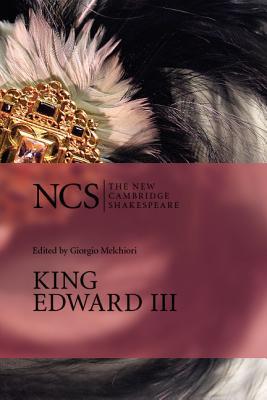
The authorship of King Edward III has long lingered in the penumbra of the Shakespearean canon—half-shadow, half-illumination—yet to read it attentively is to feel, unmistakably, the pulse of a mind that would come to define the architecture of English drama. Whether wholly or partially the work of William Shakespeare, the play offers a compelling meditation on kingship, war, desire, and national identity, rendered in a language that oscillates between rhetorical grandeur and startling psychological intimacy.
At its thematic core, King Edward III explores the paradox of power: its capacity to elevate and to corrupt, to unify a nation and fracture the self. This duality is embodied most vividly in the figure of Edward himself, whose martial vigour is offset—indeed, imperilled—by his sudden, destabilizing infatuation with the Countess of Salisbury. In one of the play’s most arresting passages, Edward confesses:
“Her beauty hath turned my office into wantonness.”
This line encapsulates the central tension of the play: the king’s role as sovereign—defined by duty, restraint, and public responsibility—is undone by private desire. The word “office” carries the full weight of political obligation, while “wantonness” suggests a reckless abandonment of moral and social boundaries. In this moment, Edward becomes less a symbol of national strength and more a study in human frailty.
The Countess, however, is no passive object of desire. In a scene that anticipates the moral clarity of Shakespeare’s later heroines, she rebukes the king with both dignity and rhetorical precision:
“Lest sin’s example, taint my following life.”
Here, the Countess articulates a vision of virtue grounded not in submission but in ethical foresight. Her resistance reframes the king’s pursuit as not merely inappropriate, but as a potential contagion—an act whose consequences ripple beyond the immediate moment into the moral fabric of society itself. This exchange between Edward and the Countess is often cited as evidence of Shakespeare’s hand, particularly in its nuanced portrayal of gendered power dynamics and its capacity to dramatize internal conflict through language.
Yet the play is not confined to the private sphere. Its broader canvas is the Hundred Years’ War, and it is here that King Edward III reveals its most overtly patriotic impulses. The siege of Calais, in particular, serves as a stage upon which themes of honour, sacrifice, and national unity are vividly enacted. The famous episode of the six citizens of Calais, who offer themselves as hostages to save their city, is rendered with a solemnity that borders on the mythic:
“Most bounteous king, we yield our lives to thee.”
This moment, while steeped in historical legend, becomes a vehicle for exploring the ethics of leadership. Edward’s eventual clemency—prompted by Queen Philippa’s intervention—suggests a model of kingship tempered by mercy, a balance between القوة and compassion that would later find fuller expression in plays like Henry V.
Indeed, the stylistic and thematic resonances with the Henriad are difficult to ignore. The martial rhetoric, the concern with legitimacy and honour, the interplay between public spectacle and private conscience—all point toward a dramaturgical evolution that would culminate in Shakespeare’s mature histories. Consider the following lines from the Black Prince:
“And let the world be witness of my deeds.”
The emphasis on “witness” underscores a recurring preoccupation with performance—not merely in the theatrical sense, but in the political. Kings and princes are always on display, their actions subject to the scrutiny of both their contemporaries and posterity. This awareness lends the play a meta-theatrical dimension, as characters navigate not only their roles within the narrative but also their legacies beyond it.
From a stylistic standpoint, King Edward III is uneven, as one might expect from a collaborative or transitional work. Some passages are marked by a stiffness of diction and a reliance on conventional imagery; others, however, soar with a lyrical intensity that feels unmistakably Shakespearean. The juxtaposition of these elements creates a text that is at once fragmented and fertile—a site of experimentation where the seeds of later greatness are already taking root.
In evaluating King Edward III, one must resist the temptation to measure it solely against the towering achievements of the canonical plays. Instead, it is more fruitful to approach it as a liminal work—a threshold between anonymity and authorship, between imitation and innovation. It is a play that asks, implicitly, what it means to become William Shakespeare: how a dramatist moves from the conventions of the day toward a more complex, more human vision of power and identity.
In this sense, King Edward III is not merely a historical curiosity but a vital piece of the Shakespearean mosaic. It reveals a playwright—or playwrights—grappling with the demands of history, the seductions of language, and the enduring question of what it means to rule, both on the stage and in the world.
Discover more from The New Renaissance Mindset
Subscribe to get the latest posts sent to your email.
 The New Renaissance Mindset