
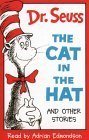
Dr. Seuss’s The Cat in the Hat (1957) is often regarded as a whimsical children’s story, but beneath its playful rhymes and vibrant illustrations lies a complex and richly layered work of literature. The book is a deceptively simple narrative that blends satire, psychological tension, and cultural commentary into a tale that continues to resonate with readers of all ages.
At its core, The Cat in the Hat is a study in chaos and control, a theme encapsulated in the sudden arrival of the mischievous, anthropomorphic cat. The story’s premise—a rainy day boredom interrupted by an anarchic visitor—serves as a microcosm of the human condition, wherein structure is precariously balanced against the allure of disorder. The titular Cat, with his oversized striped hat and charismatic audacity, becomes a symbol of unbridled creativity and the seductive power of rebellion. He challenges the tidy domestic order upheld by the children and their goldfish, representing the rational voice of authority.
The text’s rhythmic and repetitive language mirrors the tension it portrays: each line builds with Seussian precision, capturing the growing chaos while lulling the reader into a hypnotic engagement. This duality is significant. On one hand, the book invites the child reader to revel in the subversive antics of the Cat; on the other, it questions the boundaries of agency and accountability, with the looming specter of the Mother’s return.
Dr. Seuss crafts the Cat as both liberator and disruptor. His arrival is neither entirely welcome nor wholly objectionable; he embodies the complexities of freedom—both exhilarating and risky. While the children initially hesitate to engage in the Cat’s antics, their gradual participation signals the pull of curiosity and the innate human desire for novelty. Yet, it is the goldfish, a comically moralistic foil, who constantly warns of the impending consequences. The dynamic interplay between these characters invites readers to reflect on their own navigation between instinct and reason, freedom and responsibility.
Moreover, the book can be read as a commentary on mid-20th-century societal norms. Published during the postwar era, a time when the nuclear family and rigid social expectations reigned supreme, The Cat in the Hat offers a subtle critique of these structures. The absence of the Mother for the entirety of the narrative symbolizes the fragility of traditional authority, which can be upended in her absence. The Cat, then, becomes a figure of countercultural rebellion, foreshadowing the social upheavals of the 1960s.
The resolution of the story, with the Cat’s return to restore order, adds another layer of complexity. After wreaking havoc, the Cat cleans up, leaving the house immaculate just in time for the Mother’s arrival. This act raises important philosophical questions: Is the restoration of order merely an illusion? Does it erase the lessons learned in chaos? Or is it a reminder that creativity and rebellion, while transformative, must ultimately coexist with structure?
The brilliance of The Cat in the Hat lies in its ability to oscillate between childlike wonder and sophisticated commentary. It is a book that refuses to be neatly categorized, much like its enigmatic protagonist. Dr. Seuss’s masterful use of language, his surreal yet precise illustrations, and his ability to distill profound truths into seemingly simple tales elevate this work far beyond the realm of children’s literature.
In the end, The Cat in the Hat is a testament to the enduring complexity of human nature and the delicate interplay between order and chaos, freedom and consequence. It is a work that rewards repeated readings, offering new insights with each revisit—an enduring masterpiece that speaks to the child and the philosopher in all of us.
Discover more from The New Renaissance Mindset
Subscribe to get the latest posts sent to your email.
 The New Renaissance Mindset