
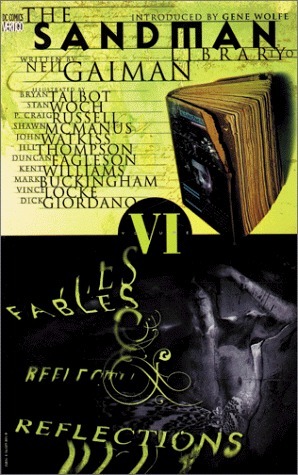
In The Sandman, Vol. 6: Fables & Reflections, Neil Gaiman once again reminds us why he is considered one of the master myth-makers of modern literature. This volume, a collection of largely self-contained tales, both expands and deepens the philosophical architecture of The Sandman universe, offering a meditation on power, storytelling, and the inexorable pull of destiny.
While previous volumes often focused on long, intertwined narratives, Fables & Reflections feels like a chamber of echoes — a series of parables in which Dream (Morpheus) appears not as a protagonist but as an interstitial figure, a god whose influence ripples at the margins of mortal existence. Here, Gaiman’s narrative voice takes on a magisterial cadence, reminiscent of Ovid’s Metamorphoses and Calvino’s Invisible Cities: myth and fable are used not to escape reality but to distill its most essential, and often tragic, truths.
Each story is a jewel: “Thermidor” imagines a thrilling political intrigue during the French Revolution, with the head of Orpheus — Dream’s son — serving as a potent symbol of the artist’s immortality and suffering. “August” daringly humanizes the emperor Augustus, revealing the performative nature of power through an extraordinary act of theatrical humility. “The Hunt” reads like an old folktale told around a fire, celebrating the endurance of oral tradition itself. Meanwhile, “Ramadan” is perhaps the most poignant tale in the volume: a meditation on Baghdad’s lost splendor and the ephemeral nature of cultural memory, illustrated with luminous, intricate artistry that mirrors the ornate beauty of Islamic miniature paintings.
A central tension runs through these fables: the confrontation between the ephemeral and the eternal. Gaiman is keenly aware that dreams, myths, and stories may outlast empires, yet even these immortals are subject to change, decay, and reinterpretation. Dream himself, once so aloof and implacable, is shown to be quietly evolving — a subtle but significant thread in the overarching narrative of The Sandman series.
Artistically, the volume showcases a variety of styles, from Bryan Talbot’s gritty realism to P. Craig Russell’s luminous romanticism. The aesthetic plurality matches the book’s thematic scope, underlining the idea that no single artistic mode can contain the immensity of human (and inhuman) experience. The artwork and writing create a polyphonic text — multiple voices, times, and traditions converging into one bittersweet symphony.
What elevates Fables & Reflections beyond a mere anthology of fantasy stories is Gaiman’s unwavering commitment to treating myth seriously, not as antiquated detritus, but as living, breathing material — material that can critique politics, power, mortality, and art itself. In this, Gaiman follows in the footsteps of Borges and Angela Carter, offering a postmodern reclamation of ancient narrative forms.
In short, Fables & Reflections is not only essential reading for those invested in The Sandman saga; it is a standalone testament to the enduring power of storytelling — and to Gaiman’s own place among the literary dreamers and fable-weavers who refuse to let history’s dust settle over the human imagination.
Discover more from The New Renaissance Mindset
Subscribe to get the latest posts sent to your email.
 The New Renaissance Mindset