
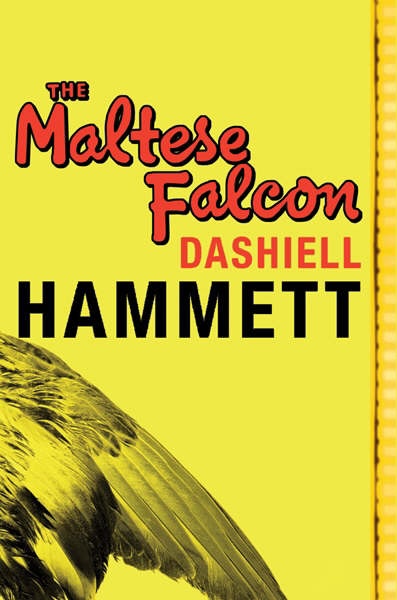
Dashiell Hammett’s The Maltese Falcon (1930) is often cited as the cornerstone of hard-boiled detective fiction, yet such classification risks underselling the novel’s literary sophistication and its subtle critique of American modernity. Beneath the façade of terse dialogue, clipped narration, and a noir ambiance, Hammett crafts a morally ambiguous world that destabilizes notions of truth, identity, and justice. This is not merely a detective story—it is a meditation on the limitations of reason in a world governed by desire and deceit.
A Study in Ethical Ambiguity
At the heart of the novel is Sam Spade, a private detective whose ethics are as elusive as the black statuette he pursues. Critics have long debated whether Spade is a hero, an antihero, or simply a man who survives by his own code. His repeated invocation of “doing it for Miles” (his murdered partner) becomes less an expression of loyalty than an incantation of professional detachment. Spade is no knight errant; he is a figure carved from post-WWI disillusionment, a detective who solves mysteries by unmasking illusions, only to affirm that nothing lies beneath but more performance.
Spade’s moral compass is not aligned with justice in the traditional sense but with a kind of transactional integrity. His choice to turn Brigid O’Shaughnessy over to the police is not a triumph of virtue but a bleak assertion of balance—she killed his partner, so she must pay. The reader is left disquieted: was this justice or a cold act of survivalism? Hammett invites us to sit with the discomfort.
The Femme Fatale and the Performance of Gender
Brigid O’Shaughnessy, a quintessential femme fatale, is far more than a stock character. She is an actress in a world where everyone lies, a woman whose manipulation is both her weapon and her shield. Through her, Hammett explores the constructed nature of femininity in the pulp genre—Brigid’s shifts in demeanor, her veiled truths, and her ultimate helplessness in the face of Spade’s calculated resolve suggest a critique of how women are rendered legible only through male desire and judgment.
Unlike Chandler’s Marlowe, who tends to moralize about women’s “fallenness,” Hammett’s Spade observes without condemning. This narrative detachment allows for a more complex view of Brigid: not as a villainess, but as a tragic figure in a world that has left her few options other than seduction and deception.
The Black Bird as Symbol and Void
The Maltese Falcon itself—the object that drives the plot—is one of the most potent MacGuffins in literary history. Allegedly worth a fortune, its ultimate revelation as a fake renders the entire pursuit hollow. But this anticlimax is not narrative failure; it is thematic culmination. The bird stands in for all human striving—ambition, greed, obsession—and Hammett suggests that these pursuits often lead to nothing. The novel’s climax deflates the mythology of the quest, positioning the falcon as a symbol not of treasure but of the futility of desire.
Language and the Modernist Sensibility
Stylistically, Hammett’s prose is deceptively simple—staccato, unadorned, often mimicking the speech patterns of the streets. But this minimalism is its own aesthetic achievement. In stripping language of ornament, Hammett aligns himself with modernist contemporaries who sought to portray reality without sentiment. Much like Hemingway, he crafts meaning through omission, through the spaces between words. In this way, The Maltese Falcon speaks the grammar of doubt—a world in which nothing can be fully known and everything is contingent.
Beyond Genre
Though often pigeonholed within the confines of detective fiction, The Maltese Falcon deserves recognition as a literary work of serious merit. It interrogates the mythology of American individualism, exposes the hollowness of romantic ideals, and constructs a noir epistemology—one in which truth is always suspect and morality is provisional. Hammett’s novel stands as a noir bildungsroman, not of innocence gained, but of illusions shed.
Like the falcon itself, The Maltese Falcon is both artifact and enigma—valuable not for what it reveals, but for how it exposes the emptiness of what we chase.
Discover more from The New Renaissance Mindset
Subscribe to get the latest posts sent to your email.
 The New Renaissance Mindset