
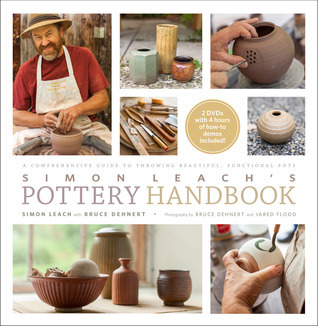
Simon Leach’s Pottery Handbook stands as both a technical manual and a philosophical meditation on craft. Descended from one of Britain’s most celebrated lineages of studio potters—his grandfather Bernard Leach being the seminal figure in the Anglo-Japanese pottery tradition—Simon Leach bridges tradition and contemporaneity with rare grace. His handbook is not merely an instructional text on how to throw, glaze, and fire clay, but an invitation into a way of thinking and being through making—an ethos deeply rooted in the tactile dialogue between hand, material, and purpose.
At first glance, the book appears to fit within the utilitarian lineage of craft manuals. Its structure is pedagogically sound, leading the reader through each essential stage of the potter’s process—from preparing clay and centring on the wheel to more advanced techniques of trimming, glazing, and firing. Yet beneath its clarity lies a reverence for imperfection, rhythm, and humility that aligns it more closely with the aesthetic philosophy of wabi-sabi. Leach’s approach is distinctly humanist; he celebrates the minor asymmetries, the quiet traces of the maker’s touch, and the living vitality that separates handmade pottery from factory uniformity.
The strength of this volume lies in its balance between practicality and philosophy. Each technical explanation is enriched with Leach’s reflective insights—often recalling the teachings of his grandfather, or his own decades-long engagement with the medium. His tone is patient and conversational, guiding the reader not as a distant expert but as a fellow traveler on the creative path. The accompanying photographs, taken with documentary precision, not only clarify technique but also capture the intimacy of the studio environment: the clay-splattered wheel, the rhythm of repetition, the serene concentration of the maker at work.
Importantly, Simon Leach’s Pottery Handbook modernizes the Leach legacy for a new generation. Where Bernard’s A Potter’s Book (1940) carried the tone of a manifesto for a post-industrial craft ideal, Simon’s text demystifies those ideals without diminishing their beauty. He integrates the realities of contemporary life—limited studio space, digital learning, and global accessibility—into the timeless language of clay. His accompanying YouTube tutorials, referenced throughout the book, reinforce this hybridity: a confluence of ancient craft and modern communication.
From a literary and cultural perspective, the handbook contributes to a broader discourse on the renewal of the handmade in an age of digital abstraction. Leach’s writing reminds readers that making pots is not merely an act of production but an act of mindfulness—a reclaiming of slowness, presence, and the tactile imagination. His words echo the moral tone of the Arts and Crafts movement while resonating with the ecological and existential questions of today: how we inhabit the world, and how we make meaning through the materials at hand.
In essence, it’s a contemporary classic in studio craft literature. It succeeds not only as a “comprehensive guide” to throwing beautiful, functional pots but also as a meditation on the values that make pottery—and perhaps any form of creation—beautiful and functional in the fullest human sense. It belongs on the shelf not only of the aspiring potter but of anyone seeking to understand how craft endures as both skill and philosophy: a conversation, endlessly renewed, between hand, clay, and spirit.
Discover more from The New Renaissance Mindset
Subscribe to get the latest posts sent to your email.
 The New Renaissance Mindset