
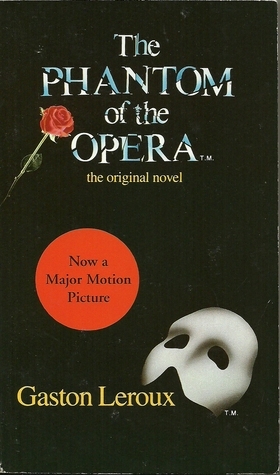
Gaston Leroux’s The Phantom of the Opera (Le Fantôme de l’Opéra) is often treated, in popular memory, as a lurid melodrama or simply the source-text for later musicals and films. Read on its own terms, however, the novel reveals itself as a compact study in theatricality: a work that stages questions about authorship, monstrosity, love, and the social life of art behind the footlights. Leroux — trained as a journalist and steeped in Parisian fin-de-siècle anxieties — writes a novel that is at once a gothic romance, an urban chronicle, and a self-conscious exercise in narrative mise en abyme.
Plot and narrative posture
Leroux frames the story as a detective-like excavation: an ostensibly factual reconstruction built from “documents” and eyewitness testimony. This rhetorical device does two things. First, it lends the uncanny episodes beneath the Paris Opera House a kind of archival weight; the fantastic is kept tethered to documentary realism. Second, it makes Leroux’s narrator complicit in theatrical illusion — the book performs discovery even as it manufactures suspense. The central triangle — Christine Daaé, the mysterious “Opera Ghost,” and Raoul, Vicomte de Chagny — is familiar, yet Leroux repeatedly destabilizes the apparent simplicity of the lovers-versus-monster plot through ironic distance and theatrical commentary.
Characters and moral complexity
Christine is the novel’s pivot: an artist whose voice functions as a semiotic site where competing desires converge. She is at once objectified (the “angel” or instrument of others’ projections) and, in Leroux’s hands, a moral agent whose choices complicate readerly sympathies. Raoul, the sentimental aristocrat, offers a conventional romantic counterpoint but sometimes feels theatrically underdrawn — precisely to highlight Christine’s ambiguous agency.
The Phantom — Erik, in Leroux’s later revelations — is Leroux’s most interesting invention because he refuses simple moral categorization. He is monstrous in body and monstrous in genius; his deformity is both literal and symbolic. Leroux presents Erik as an artist whose genius is inseparable from his social exile. The novel asks: when does aesthetic creation redeem the artist, and when does it become a form of tyranny? The Phantom’s cruelty is horrifying, but Leroux also pushes the reader toward pity: Erik is a maker of music and of masks, a figure who embodies art’s power to transgress social limits and to inflict moral wounds.
Music, masks, and the mechanics of art
Music is more than background in Leroux’s novel; it is the operative language. The Phantom’s control over sound — his mastery of operatic effect, orchestration, and vocal pedagogy — maps directly onto his control of the house and of Christine. The book stages music as a form of speech, and musical motifs double as dramatic devices. Masks and hidden passages, likewise, furnish literal metaphors: the Opera House itself is a palimpsest of staged identities. The subterranean labyrinth where Erik hides becomes an image for the subterranean unconscious of the city, where desire and shame take grotesque forms.
Gothic tradition and modern urban anxiety
Leroux roots his novel in gothic tropes (the castle in the cellar, the monstrous secret, the damsel imperilled) but relocates them in a modern urban institution — the Palais Garnier. That relocation is crucial: the novel becomes an anatomy of modern public culture, of spectacle, and of the gatekeepers who manage taste. The Opera House is a social microcosm where class, reputation, and spectacle intersect; Leroux’s depiction of backstage politics reads as both a satire of institutional pretensions and a sympathy for art’s marginalized practitioners.
Style and structure
Leroux’s prose is economical and often cinematic — brusque descriptive paragraphs intercut with dramatic set-pieces. His journalistic instincts create brisk pacing and an appetite for the anecdotal; his gothic sensibility supplies atmosphere. The serialized novel’s appetite for cliff-hangers is visible in Leroux’s structuring, but so is a deliberate ironic distance: the narrator frequently comments on the theatricality of what is being reported, reminding the reader that they are participating in a constructed drama.
Enduring power and imperfections
What gives The Phantom of the Opera its longevity is an uneasy mixture of attraction and repulsion that Leroux stages without sentimentality. The novel’s pleasures are interpretive: it rewards readers who attend to its metafictional games and to the ethical dilemmas posed by art’s possessiveness. Its chief weakness may be occasional melodramatic excess — episodes where plot convenience eclipses psychological subtlety — yet even these excesses register as part of Leroux’s project: to make the reader feel the operatic sweep he describes.
Read as more than a source for Andrew Lloyd Webber or for cinematic spectacle, Leroux’s novel is a compact reflection on the costs and consolations of aesthetic genius. It interrogates the social conditions that render an artist monstrous, the ways institutions both produce and punish talent, and the fragile border between admiration and annihilation. For readers interested in the intersections of music, urban modernity, and gothic imagination, The Phantom of the Opera remains an arresting and disquieting text — a novel that, like the music at its heart, lingers long after the final curtain.
Discover more from The New Renaissance Mindset
Subscribe to get the latest posts sent to your email.
 The New Renaissance Mindset