
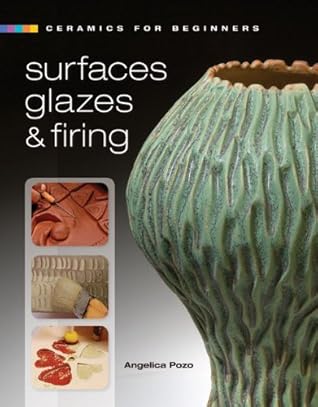
Angelica Pozo’s Ceramics for Beginners: Surfaces, Glazes & Firing reads at first like a craftsman’s primer and, on closer inspection, performs the subtler work of a modest modus operandi. It is both a handbook and a primer in temper — practical, kindly, and quietly persuasive. Where many how-to volumes insist on mastery as a destination, this insists upon practice as a mode of attention: a way of seeing clay, heat, and surface as a text to be read and revised.
Structure and voice
The author organizes the book with the clean logic of a studio course: foundational technique, exploratory surface work, glaze theory, and then firing practices. This architecture serves an implicit pedagogy — one that privileges incremental confidence over technical bravura. Her prose is plain but not prosaic; sentences are economical, often punctuated by small, exacting metaphors that translate tactile experience into readable instruction. The authorial voice is at once encouraging and exacting: a teacher who corrects but never belittles.
Close reading: surface as language
The book’s arresting achievement is its sustained attention to surface. It treats glazes, slips, and incisions not merely as decorative afterthoughts but as the primary language of ceramic objects. It advances a persuasive argument (implicit rather than didactic): the surface is where intention and accident converse. Exercises that pair controlled mark-making with provocations for serendipity — resist techniques, soda or wood firing anecdotes, layering slips — become small experiments in narrativity. The novice is taught to see a glaze’s bloom or a kiln’s “kiss” as an index of process, not an unpredictable failure.
Technical clarity and limitations
Technically the book is admirable. Diagrams and stepwise photographs (Pozo’s use of imagery is judicious rather than ornamental) demystify kiln schedules, cone charts, and mixing ratios without flattening complexity. Practical sections on safety and kiln care are un-showy and vital — treating them as ethical commitments to craft rather than bureaucratic prerequisites.
My critique is not of omission but emphasis. The book’s very beginner orientation means readers seeking advanced glaze chemistry or in-depth kiln engineering will find the treatment introductory. Similarly, Pozo sometimes privileges studio wisdom and anecdote in places where a fuller historical or cross-cultural perspective on surface treatments might enrich the reader’s sense of lineage. For readers who want the scientific underpinnings of crystalline glazes or the full thermodynamics of reduction atmospheres, supplemental texts will be necessary.
Pedagogy and audience
The book is written for the attentive beginner: hobbyists who crave craft rigour, community studio members, and educators designing entry-level curriculum. Teachers will appreciate the modular exercises, the suggested troubleshooting checklists, and the comparatively low-barrier materials lists. It’s temperament — generous, iterative, forgiving of mistake — models a studio culture that privileges learning through making, a rare and welcome stance in contemporary craft manuals.
Aesthetic and ethical dimensions
The work is quietly ethical. Repeated through the chapters is concern for sustainability (advice on glaze waste, kiln efficiency, and safe materials), and an emphasis on respect for materials. This ethical thread is not ostentatious; it is woven into practice — how one mixes a glaze, how one inventories clay bodies — thereby linking aesthetics to responsibility.
Ceramics for Beginners: Surfaces, Glazes & Firing will not supplant advanced technical manuals, nor does it attempt to. What it offers — and offers well — is a manner of initiation: clear instruction married to a cultivated way of looking. Pozo’s greatest contribution is pedagogical humility: she equips beginners with a language of surface that invites experimentation while making the studio feel like a place of ongoing inquiry rather than a site of instant virtuosity.
For novices who want more than recipes, for teachers crafting hands-on units, and for makers who value process over finished perfection, this book is a steady companion. It rewards slow reading and, as with the best manuals, rewards the slow, patient work it encourages: the work of hands learning to listen to clay.
Discover more from The New Renaissance Mindset
Subscribe to get the latest posts sent to your email.
 The New Renaissance Mindset