
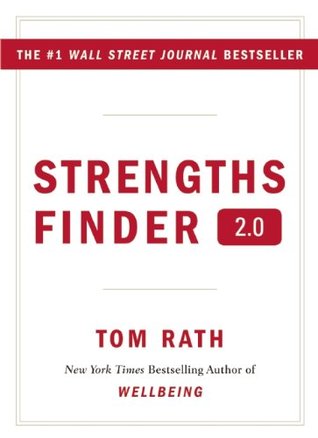
Tom Rath’s StrengthsFinder 2.0 occupies an odd but revealing niche at the intersection of self-help pragmatism and organizational psychology. Framed less as a conventional argument-driven monograph and more as a practical toolkit, the book’s modest ambition is its strength: it promises not a wholesale reinvention of the self, but a reorientation — to pay attention to what works, amplify it, and organize life and work around that axis. Read as a literary object, the book is less interested in rhetorical flourish than in structural clarity; its prose is purposely plain, its chapters short, and its aim obvious: to make a psychological instrument usable by a mass audience.
At the center of the project is the StrengthsFinder assessment, a psychometric inventory developed at Gallup and here popularized for broad consumption. The author offers a succinct rationale for privileging strengths over weaknesses: energy and progress, he suggests, flow more readily from refinement than from remediation. The book functions partly as an interpretive manual for the assessment’s output — a compendium of 34 theme-descriptions with application tips, paired with brief sections on how teams and managers might reconfigure roles around complementary strengths.
Two features deserve particular attention. First, the book’s economy of language. Rath writes with the teleology of a practitioner: each paragraph has a job to do. There is little theoretical digression, no extended literature review; instead, the argument is grounded in examples, aphorisms, and actionable suggestions. This makes the book admirably usable for busy readers but also limits its persuasive depth. A skeptical reader will notice the absence of close engagement with counterarguments — for instance, the value of shoring up critical gaps through learning, or the socio-structural barriers that constrain the expression of strengths in organizations.
Second, the text’s hybrid status as both popularization and apparatus manual. The core of the book is the set of bespoke profiles tied to the StrengthsFinder taxonomy: “Achiever,” “Learner,” “Strategic,” and so on. These profiles are concise, often briskly insightful, and peppered with behavioural prescriptions — ways to apply a given strength day-to-day. As a rhetorical strategy, this personalization is shrewd: readers are invited to see themselves in modular pieces rather than a single, totalizing portrait. It transforms identity into an assemblage of capacities that can be deployed and distributed — a decidedly modern, managerial way of imagining the self.
There are, however, important limitations. Methodologically, the book depends on the authority of the assessment while offering the reader little in the way of critical apparatus: sample sizes, psychometric properties, cultural biases, and the test’s sensitivity to context all vanish in the drive to make the instrument approachable. Ethically, the book’s advice — to align job roles and reward systems with measured strengths — can be empowering, but it can also be co-opted by managerial regimes seeking efficiency at the cost of employee development. In organizations with weak leadership, the “play to your strengths” ethos might inadvertently excuse structural failures to provide training, equitable pay, or meaningful redesign of work.
Stylistically, its limited rhetorical palette is both boon and constraint. The book’s brisk, directive tone facilitates implementation: readers can read a profile and immediately try an exercise. Yet the lack of narrative complexity or reflective nuance sometimes reduces the human subject to a checklist. For readers who prefer a richer account of personal transformation — the messy interplay of habit, failure, mentorship, and chance — StrengthsFinder 2.0 can feel procedural rather than humanistic.
Who benefits most from this book?
Practitioners, team leaders, career coaches, and individuals seeking a clear, operational framework for self-understanding will find much to use here. Those looking for deep theoretical engagement, cultural critique, or a comprehensive account of human development will need to supplement this manual with more expansive texts. Importantly, the book works best when treated as a starting point: the assessment can surface useful patterns, but its real value emerges when combined with reflection, dialogue, and a willingness to test and revise assumed capacities in real-world settings.
StrengthsFinder 2.0 is a disciplined, pragmatic contribution to the contemporary literature of self-management. It excels in clarity, applicability, and the democratization of a corporate diagnostic tool. Its blind spots — methodological opacity and a managerialist slant — caution the reader to use the book critically. Read as a practical handbook rather than a philosophical creed, Rath’s work offers a compact, serviceable instrument for rethinking how we allocate attention and design work around what we do best.
Discover more from The New Renaissance Mindset
Subscribe to get the latest posts sent to your email.
 The New Renaissance Mindset