
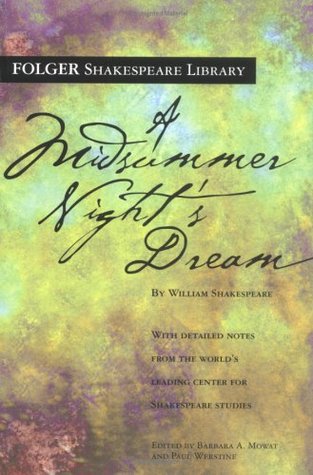
Shakespeare’s comic fantasia remains, more than four centuries after its first performances, a small universe where love, language, and theatricality chase one another in circles until witty chaos becomes a kind of logic. In this review I treat the play both as a tightly engineered comic machine and as an example of poetic imagination that deliberately trades fixed meaning for the slipperiness of dream.
At the center of the play’s power is its interest in contrasts: the ordered world of Athens and the wild woodland; sovereign rule and mischievous magic; speech that clarifies and speech that confounds. The playwright stages collisions—of social rank (the noble lovers versus the rustic “mechanicals”), of genders, and of human will against caprice—and lets humour function as criticism. As Lysander’s rueful observation reminds us, “The course of true love never did run smooth.” That line is the play’s thesis: mismatched desire, thwarted agency, and the comic labor of reconciliation.
Language and tone shift with remarkable agility. Shakespeare slides from crystalline lyric—moments of pastoral music and metaphysical conceit—to plain, knockabout prose in the Mechanicals’ scenes. Those shifts are not merely stylistic: they produce the play’s moral architecture. The lovers’ speeches elevate infatuation to an almost metaphysical ailment; the fairies’ songs and Puck’s quick quips transform that ailment into spectacle; while the Mechanicals’ rehearsal of Pyramus and Thisbe turns earnest tragedy into affectionate parody. The result is a theatrical kaleidoscope in which seriousness is constantly undercut by playfulness.
Characterization is compact but vivid. Oberon and Titania embody rival kinds of authority—political, erotic, and aesthetic—and their quarrel over the changeling child reads as an argument about ownership (of bodies, of stories, of art). Puck is the play’s restless fable-maker: his mischief advances plot and philosophy alike. The four young Athenians—Hermia, Helena, Lysander, and Demetrius—are sketched in broad comedic strokes, but Shakespeare invests them with enough interiority for their confusions about desire to feel acute rather than merely schematic. Even Bottom, the comic engine of the Mechanicals, acquires a strange dignity when Titania, bewitched, addresses him with a queen’s rhetoric—an effect that turns ridicule into tenderness.
The play-within-the-play is not an indulgent afterthought but a key to interpretation. The Mechanicals’ earnest incompetence asks: what is theatre doing? Their bungled tragic staging and exaggerated gestures force the audience to watch the mechanics of representation with affectionate scrutiny. The very last moments—when the audience is addressed and when the lovers awaken as if from a dream—compel us to ask whether the play has represented truth, sleep, or theatrical illusion. The dream motif is not merely decorative; it frames the entire action as a suspended experiment in identity and narrative.
Formally, the play is astonishingly economical. It alternates iambic lyric with colloquial prose so that poetry and comedy amplify one another. The poet’s ear for images—music, flowers, transformation—gives the pastoral sequences a sensuous density that compensates for the punning lightness of the comic set-pieces. At the same time, the play’s structure—interwoven plots that converge only through mistaken vision and applied magic—demonstrates a comic architecture whose motor is error rather than intention.
If one seeks a modernly relevant reading, the play’s preoccupation with consent, power, and representation invites careful staging choices. Directors can emphasize the agency of Titania and Hermia or the manipulative ethics of Oberon; they can treat the fairy world as restorative or as a zone of violation. These choices change the play from a harmless romp into a pointed commentary on how love and authority interact.
The Bard has given us a work that is, paradoxically, both light as a trifle and stubbornly profound. Its pleasures are theatrical—mischief, disguise, mimicry—but its insights into the slipperiness of desire, the instability of identity, and the craft of performance keep it urgent for actors, scholars, and audiences. And if the play leaves us smiling while unsettled, perhaps that is precisely the point of this midsummer enchantment.
Discover more from The New Renaissance Mindset
Subscribe to get the latest posts sent to your email.
 The New Renaissance Mindset