
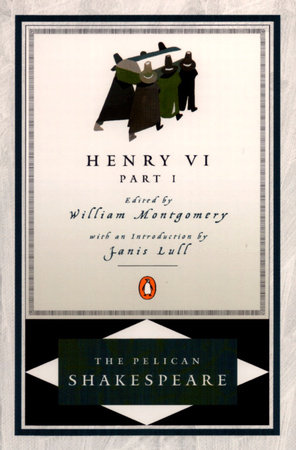
Henry VI, Part 1 is one of Shakespeare’s most revealing early history plays because it dramatizes not the triumph of statecraft but the fragility of nations in the making. Rather than presenting England as a coherent political body, the play stages a country already splintering under the pressures of succession, military exhaustion, and competing claims to legitimacy. Its most striking achievement is that it turns history into theatre in the fullest sense: power is performed, authority is narrated, and identity is fought over in public before it is ever secured in law.
At the centre of the play stands not Henry himself, who is still a boy and mostly a symbol of dynastic inheritance, but the men and women who struggle to interpret or exploit the vacancy around him. This is why the play feels less like a stable historical chronicle than a contest of voices. Bedford, Exeter, Talbot, Gloucester, York, Suffolk, and Joan all speak as if England belongs to the one who can best command the story. Shakespeare gives each faction its rhetoric, and in doing so he shows that political power depends as much on language as on armies.
Talbot is the play’s clearest embodiment of martial honour. He is introduced as a national hero, and the playwright gives him the kind of elevated language that makes his death feel like the end of an older, nobler England. His most memorable meditation on reputation—“Glory is like a circle in the water”—captures the play’s tragic irony: glory expands outward, but it cannot last. It is beautiful, resonant, and vanishing. Talbot’s tragedy is not merely that he dies in battle, but that he belongs to a world in which heroic values are no longer enough to sustain political reality. His son’s death with him turns military honour into familial devastation, and Shakespeare uses that scene to show how public history consumes private life.
Yet the play is not simply a lament for English decline. It is also fascinated by instability as a source of dramatic energy. Joan of Arc is the most vivid example. Shakespeare writes her as a figure of extraordinary power and unease: she is charismatic, tactically intelligent, and spiritually ambiguous. To the English she is an uncanny threat; to the French she is a saviour. The play repeatedly tests her between holiness and witchcraft, patriotism and deception. This tension is deeply revealing. Joan is not just a character but a crisis in interpretation. The play cannot decide whether she is divinely inspired or demonic, and that uncertainty becomes one of its central dramatic engines. In this sense, Joan exposes how fragile the categories of national myth really are.
Her presence also complicates the play’s treatment of gender. Henry VI, Part 1 is full of men performing authority through martial and political language, yet Joan repeatedly outmaneuvers them. She challenges the masculine codes of war not by rejecting them, but by mastering them. That is precisely why the play must try so hard to contain her. She becomes a site onto which English anxieties about foreignness, female agency, and religious uncertainty are projected. The result is a character who is both theatrically compelling and ideologically unstable.
The play’s political world is equally unstable. The disputes between York and Somerset over the red and white roses are often read as the seed of the later Wars of the Roses, but The Bard is interested less in the genealogy of civil war than in the absurdity of factional pride. The famous rose imagery transforms a dynastic quarrel into a visual emblem of division, but the deeper point is that such symbols acquire authority only because people agree to fight over them. Shakespeare shows the beginnings of civil conflict not as a sudden catastrophe but as a series of misreadings, resentments, and opportunisms.
Henry himself is the play’s most poignant absence. He is decent, pious, and politically ineffective. That is not a flaw in Shakespeare’s design; it is the point. Henry represents innocence confronted by the hard machinery of power, and his weakness creates the vacuum in which all the others operate. He is a king, but not yet a ruler in any substantive sense. Around him, the state becomes something like a broken stage set: splendid, ceremonial, but already cracking.
What makes Henry VI, Part 1 especially interesting is that it is often treated as a lesser Shakespeare play, yet it contains many of the preoccupations that will define his later work: the instability of political legitimacy, the theatricality of identity, the tension between public role and private self, and the way history is shaped by storytelling. The language may not yet have the full complexity of the mature tragedies, but it already has remarkable force. It moves between ceremonial grandeur and battlefield urgency, between patriotic elevation and cynical realism.
As a literary work, then, Henry VI, Part 1 is less about resolution than about exposure. It exposes the vulnerability of heroic ideals, the slipperiness of historical memory, and the violence hidden beneath national myth. Its world is one in which glory enlarges like ripples in water, but the water never holds. That image may be the play’s truest emblem: beauty expanding outward for a moment, then disappearing into instability.
Discover more from The New Renaissance Mindset
Subscribe to get the latest posts sent to your email.
 The New Renaissance Mindset