
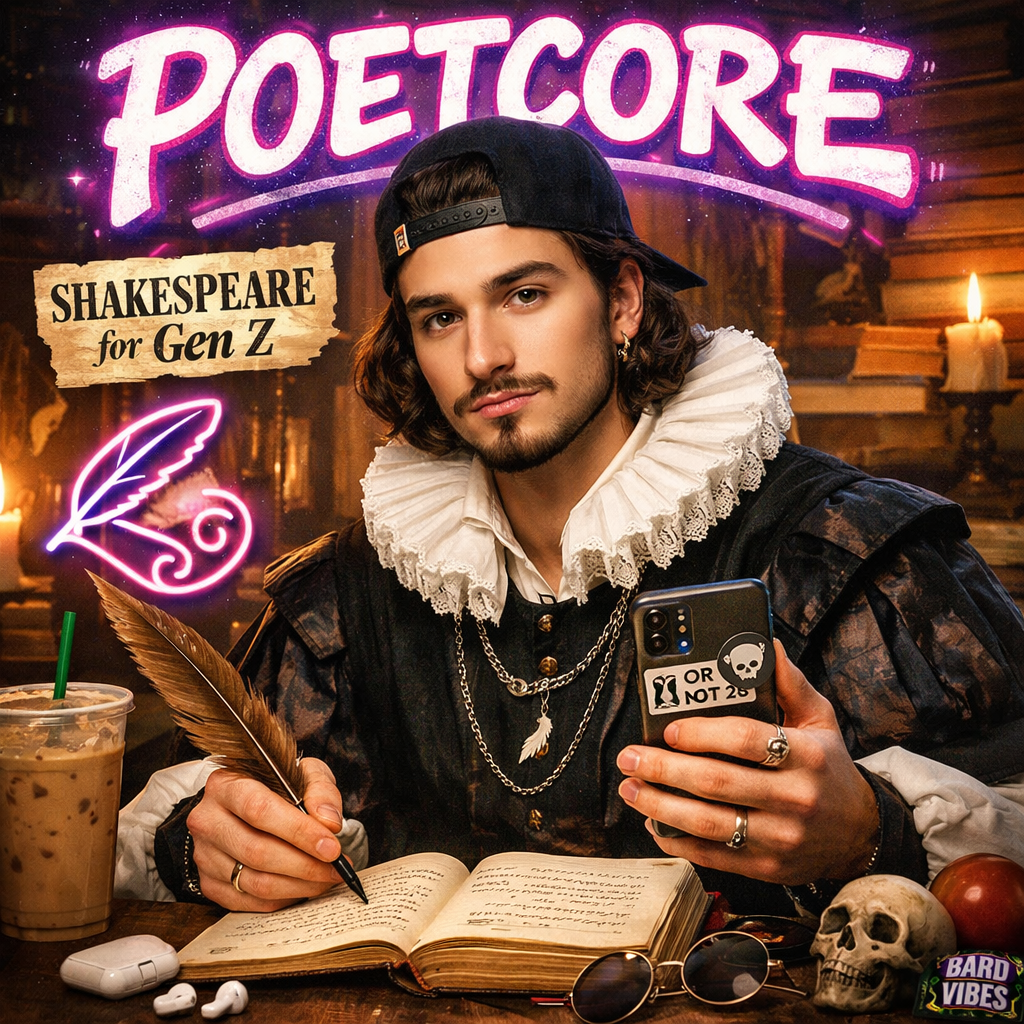
(T.A.E.’s LitBites) – A modern retelling of A Midsummer Night’s Dream by William Shakespeare
Okay, picture this: it’s wedding week in Athens. The big boss, Duke Theseus, is about to marry Hippolyta — queen-energy, total glow-up. But the real chaos is happening off the guest list.
There are four teens at the center: Hermia and Lysander are head-over-heels and planning to run away together because Hermia’s dad, Egeus, says she must marry Demetrius. Hermia’s like, “nah,” and Lysander’s like, “let’s dip.” Demetrius, though? He’s already ghosting Helena, who’s still obsessively loyal to him — full-screen-stalk mode. Helena, heart on sleeve, tells Demetrius about Hermia and Lysander’s escape because she hopes that means he’ll notice her. Classic miscalculation.
So Lysander and Hermia sneak into the woods to elope; Demetrius chases after them. Helena runs after Demetrius. Enter the fantasy update: the forest is ruled by two fairy royals with relationship drama of their own. Oberon, king of the fairies, and Titania, queen, are in a messy breakup over a foster-kid fairy boy. Oberon wants custody; Titania refuses. Bitter vibes everywhere.
Oberon, petty but strategic, recruits his mischievous aide Puck (think: freelance chaos-instigator) to fix things. Oberon plans to use a magic flower — one drop of its juice on a sleeping face makes that person fall madly in love with the next creature they see. He wants to teach Titania a lesson, but Puck is low-key extra and the plan snowballs.
First, Oberon tells Puck to put love-juice on Demetrius so he’ll fall back in love with Helena. While Oberon’s at it, he spies Titania asleep and asks Puck to use the same potion on her as revenge. Puck follows orders — but mistakes happen. He sees Lysander sleeping, thinks he’s Demetrius (bad lighting? low IQ? choose both), and taps Lysander’s eyelids with the juice. Then Puck waits for the magic to work.
Meanwhile, Titania wakes up and Oberon points out a random theatre-rehearsing amateur named Bottom, who’s been transformed—Puck, as a prank, gave Bottom the head of an ass. Instead of freaking out, Titania falls hopelessly, ridiculously in love with Bottom because of the potion. She pampers him, feeds him, sings to him — the queen of the fairies swooning over a human with donkey vibes. It’s the universe’s most theatrical cringe.
Back to the teens: Lysander wakes up and sees Helena first, so — surprise — he’s suddenly obsessed with her, professing intense, immediate love. Helena is baffled and thinks it’s mockery. Hermia wakes and finds Lysander gone (and then Demetrius, still un-jellified, shows up), and now both men are fighting over Helena. The girls bicker, friendships fracture, and the forest turns into a messy, dramatic group chat where no one’s muted but everyone should be.
Oberon finally realizes Puck’s mistake, yells “fix it!” and Puck corrects the chaos: he finds Lysander asleep and swaps the potion back so Lysander’s love returns to Hermia. Then he puts potion on Demetrius for real, so Demetrius wakes up and instantly falls for Helena — for real this time. So by morning, after a LOT of apologies and tired shouting, the four lovers are paired how they were meant to be: Lysander with Hermia, Demetrius with Helena. They walk back toward Athens like nothing happened (except emotional whiplash and one or two bruised egos).
Titania, waking from her potion-induced fake-love hangover, realizes she’s been played. Oberon apologizes and they reconcile — real, grown-up energy, not fake social media forgiveness. He returns Bottom to human form (donkey head removed), and the amateur actors — Bottom and his guild rehearsing a tragically earnest play for Theseus’s wedding — are forgiven and even encouraged to perform. Bottom wakes up with a strange memory of being treated like a king, and he’s honestly thrilled. Who wouldn’t be?
At the wedding, the duke is like, “Let’s watch the show,” so the troupe performs their delightfully awful play — full of slapstick, overacting, and mistakes, and everyone laughs. The lovers get married, the fairy royals make peace, the human world and fairy world give each other a polite nod, and Puck signs off with a cheeky curtain-call promise: if this whole tale offended anyone, think of it as a dream. If you liked it, maybe it was the fairies’ doing.
The point? Love in this story is messy, impulsive, and sometimes literally enchanted. When people try to control feelings — whether with orders, tricks, or dad rules — things explode. But the forest shows another truth: love can be confused and comic, wounded and forgiving, ridiculous and real. After a night of bad decisions, transformations, and donkey-head-level embarrassment, everyone ends up where they belong… or at least where the plot wants them to be. Either way, it’s a wild, whimsical reminder: love doesn’t follow a script — and sometimes the best parts are the unexpected glitches.
Discover more from The New Renaissance Mindset
Subscribe to get the latest posts sent to your email.
 The New Renaissance Mindset