
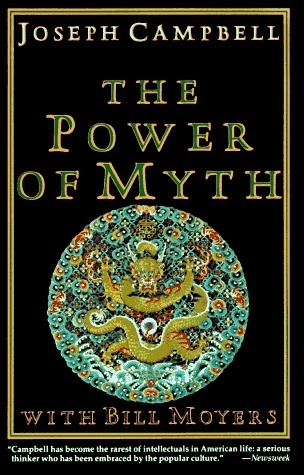
Joseph Campbell’s “The Power of Myth” is a profound exploration of the universality and significance of mythological narratives across cultures and epochs. Published posthumously in 1988, this book encapsulates Campbell’s dialogues with journalist Bill Moyers, originally televised as a series. It serves as a testament to Campbell’s lifelong dedication to understanding the role of myth in human experience.
Campbell, a renowned mythologist and comparative religion scholar, delves into the essence of myth, viewing it not merely as ancient stories but as living metaphors that resonate deeply within the human psyche. His thesis revolves around the idea that myths are symbolic representations of timeless truths and fundamental human experiences, ranging from birth and growth to love and death. Through a comparative lens, he draws connections between myths from diverse cultures, highlighting their underlying similarities and shared archetypes.
One of the book’s strengths lies in its accessibility. Campbell avoids jargon and esoteric language, making complex ideas understandable to a wide audience. He effortlessly weaves together insights from psychology, anthropology, and spirituality to create a cohesive narrative that challenges readers to reconsider their understanding of myth and its relevance in contemporary society.
Central to Campbell’s discussion is the concept of the hero’s journey, a motif recurring in myths worldwide where a protagonist embarks on an adventure, faces trials, and returns transformed. This archetype, Campbell argues, mirrors our individual quest for self-discovery and spiritual fulfillment. By illustrating how myths encapsulate profound truths about the human condition, he invites readers to recognize their own journeys within these timeless narratives.
Moreover, “The Power of Myth” serves as a critique of modernity’s disconnection from mythological consciousness. Campbell suggests that our neglect of mythological frameworks has led to a spiritual and psychological impoverishment in society. He advocates for a revitalization of mythic awareness, not in a literal sense, but as a means to access deeper layers of meaning and wisdom embedded in our cultural heritage.
Critics may contend that Campbell’s approach occasionally oversimplifies or generalizes the complexities of individual myths or cultural variations. However, his broad comparative method is essential for illustrating overarching patterns and universal themes that transcend specific contexts.
In conclusion, “The Power of Myth” is a timeless masterpiece that continues to resonate with readers seeking to understand the profound significance of mythological narratives. Joseph Campbell’s insights challenge us to reconsider the role of myth in shaping our identities and understanding of the world. By bridging scholarly rigor with poetic resonance, Campbell invites us to embark on our own heroic journey of self-discovery, guided by the enduring power of myth.
This book is not just a scholarly exploration but a profound meditation on the human spirit and its eternal quest for meaning—a must-read for anyone interested in the intersections of literature, psychology, and cultural studies.
I hope this review captures the essence of Campbell’s work and its significance in the study of mythology and human experience!
Discover more from The New Renaissance Mindset
Subscribe to get the latest posts sent to your email.
 The New Renaissance Mindset