
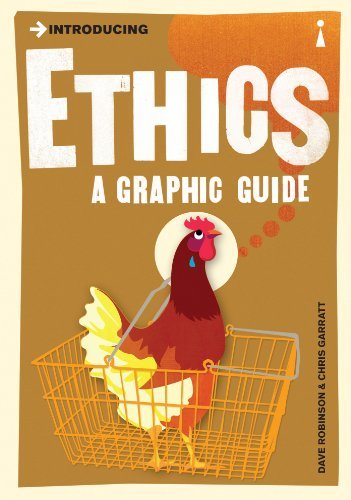
Chris Garratt’s “Introducing Ethics: A Graphic Guide” presents a compelling and accessible journey into the complex realm of ethical theory and philosophy through the innovative medium of graphics and concise explanations. Aimed at both newcomers to philosophy and seasoned thinkers, Garratt’s work succeeds in making ethical theories comprehensible without sacrificing depth.
The book’s strength lies in its visual narrative, employing a blend of illustrations, diagrams, and text to elucidate key concepts. This approach not only engages the reader but also aids in the understanding of abstract philosophical ideas. Garratt masterfully integrates historical contexts, major philosophical debates, and contemporary issues into a cohesive narrative, ensuring that readers grasp the relevance of ethical theories in everyday life.
One of the standout features of the book is its balance between breadth and depth. Garratt covers a wide range of ethical theories—from utilitarianism to deontology, virtue ethics to existentialism—providing enough detail to stimulate thought while avoiding overwhelming technical jargon. Each theory is accompanied by clear examples and scenarios that help readers apply these concepts to real-world dilemmas, encouraging critical reflection.
Moreover, “Introducing Ethics” excels in its treatment of ethical controversies and the evolving nature of moral discourse. Garratt addresses contentious issues such as cultural relativism, animal rights, and environmental ethics with sensitivity, presenting various perspectives and inviting readers to form their own conclusions. This inclusive approach fosters intellectual curiosity and encourages readers to engage actively with ethical questions rather than passively consuming information.
In terms of structure, the book is well-organized into thematic chapters that build upon each other logically. Starting with foundational concepts and gradually progressing to more nuanced discussions, Garratt ensures that readers develop a solid understanding of ethical frameworks before delving into complex moral dilemmas. Each chapter concludes with a summary and suggestions for further reading, making the book a valuable resource for both individual study and classroom use.
Critically, while the graphic format enhances accessibility, some readers may find the simplistic illustrations occasionally inadequate for conveying the full complexity of certain philosophical arguments. Additionally, the brevity necessitated by the graphic guide format may leave readers craving more detailed analysis of specific theories or contemporary ethical challenges.
Overall, Chris Garratt’s “Introducing Ethics: A Graphic Guide” is a commendable introduction to the field of ethics, offering a refreshing blend of visual storytelling and intellectual rigor. By demystifying philosophical concepts and fostering critical thinking, Garratt empowers readers to navigate the complexities of morality with clarity and confidence. This book is a valuable addition to the literature on ethics, appealing to anyone curious about the fundamental principles that shape human behavior and societal norms.
Rating: 4/5
This rating reflects the book’s effectiveness in making ethics accessible through innovative presentation while acknowledging minor limitations in depth and illustration complexity.
Discover more from The New Renaissance Mindset
Subscribe to get the latest posts sent to your email.
 The New Renaissance Mindset