
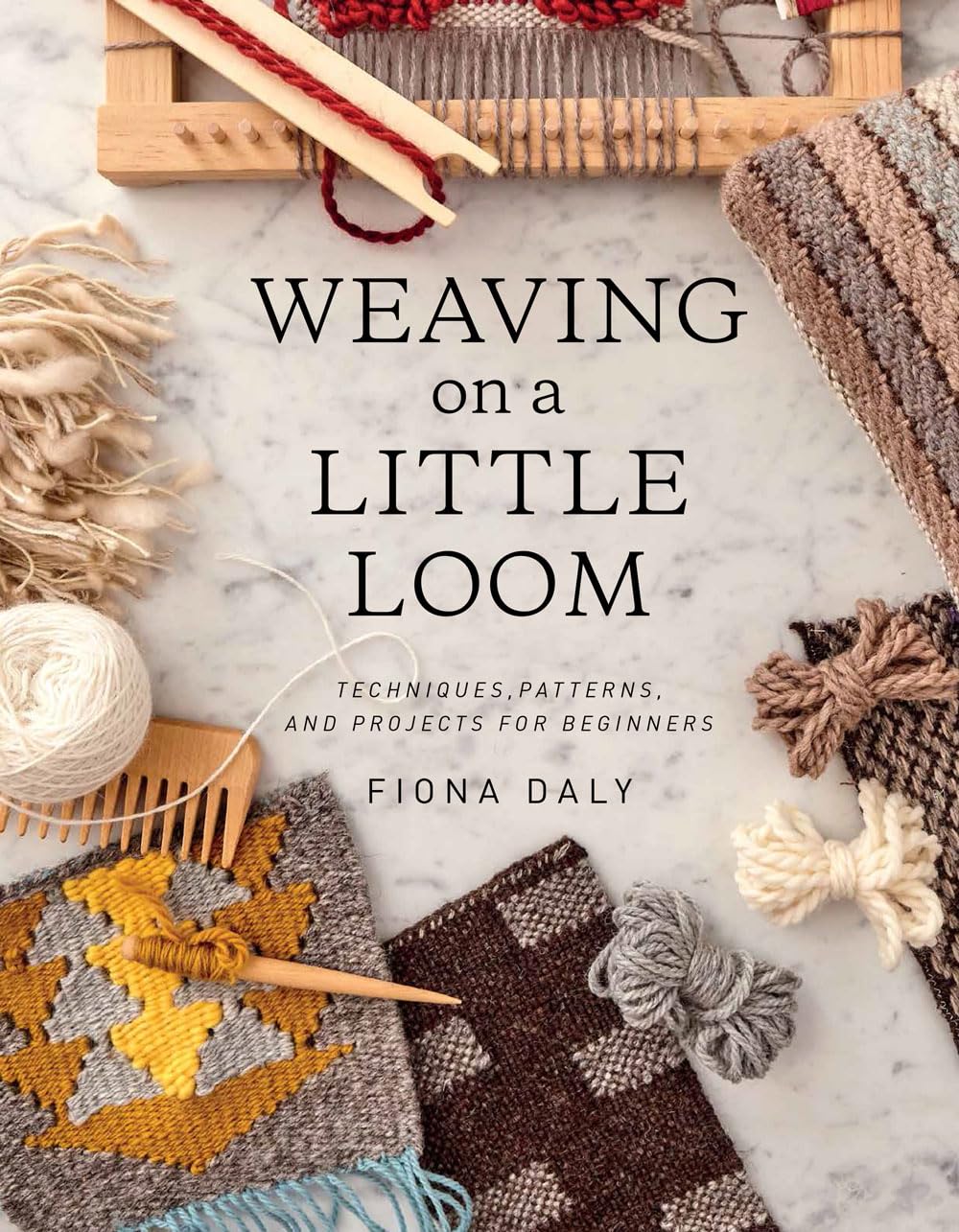
Weaving on a Little Loom by Fiona Daly is a comprehensive guide that introduces readers to the craft of weaving, specifically focusing on the use of a small, portable loom. Written by Fiona Daly, an experienced weaver and textile artist, the book offers a delightful blend of practical instruction, creative inspiration, and an appreciation for the slow craft movement.
While it may initially seem like a straightforward how-to book, Weaving on a Little Loom is much more. It is an invitation to engage with the meditative process of weaving, to explore the tactile pleasures of working with fibers, and to connect with a craft that has been a part of human culture for thousands of years. The book is designed for both beginners and those with some experience in weaving, providing a rich resource for anyone interested in the art of loom weaving.
Structure and Content
The book is divided into several sections, each of which methodically guides the reader through the process of weaving, from selecting materials to finishing a woven piece. Daly begins with an introduction to the materials and tools needed for weaving, emphasizing the importance of quality yarns and fibers. She also discusses the different types of small looms available and their respective benefits.
Following the introduction, Daly dives into the core techniques of weaving. This section is particularly well-structured, with clear, step-by-step instructions accompanied by detailed photographs. The author covers a range of weaving techniques, including plain weave, twill, and more complex patterns like houndstooth. Daly’s explanations are easy to follow, making the book accessible even for those who are new to the craft.
In addition to the technical aspects, Weaving on a Little Loom offers readers creative inspiration. Daly includes several weaving projects, ranging from simple coasters to more complex wall hangings and scarves. Each project is designed to build on the skills learned in previous sections, allowing readers to gradually increase their weaving proficiency. The projects are presented with detailed instructions, lists of materials, and suggestions for color combinations and patterns, making them both educational and creatively stimulating.
The final section of the book is dedicated to finishing techniques and care for woven pieces. Daly provides practical advice on how to remove a piece from the loom, how to finish the edges, and how to wash and care for woven items. This section underscores the importance of attention to detail and the care that goes into producing a high-quality woven piece.
Literary Analysis
While Weaving on a Little Loom is primarily a practical guide, it can also be viewed through a literary lens, particularly in how it embodies the principles of the slow craft movement and the growing interest in sustainable, hands-on activities. Daly’s writing is clear and instructional, but it also conveys a deep passion for the craft of weaving. Her tone is encouraging and patient, reflecting the slow, deliberate process of weaving itself.
The book can be seen as a response to the fast-paced, often disposable nature of modern consumer culture. Through weaving, Daly advocates for a return to manual skills, mindfulness, and the creation of durable, meaningful objects. This aligns the book with broader cultural trends that value sustainability, slow living, and the reclamation of traditional crafts.
Moreover, Daly’s emphasis on the meditative aspect of weaving suggests a therapeutic dimension to the craft. The repetitive motions of weaving, the focus required to create patterns, and the tactile experience of working with fibers all contribute to a sense of calm and fulfillment. In this way, Weaving on a Little Loom transcends its function as a mere instructional manual and becomes a guide to a more mindful, deliberate way of living.
Themes
- Mindfulness and Craft: The act of weaving as presented by Daly is not just a mechanical process but a mindful practice. The book emphasizes the importance of slowing down, focusing on the moment, and finding joy in the process of creation.
- Sustainability: Daly encourages the use of natural fibers and emphasizes the importance of creating durable, high-quality woven pieces. This reflects a broader theme of sustainability and the rejection of disposable culture.
- Connection to Tradition: Weaving is portrayed as a timeless craft, one that connects the weaver to centuries of tradition. Daly’s work is rooted in this history, even as she encourages readers to experiment and find their own creative voice.
- Creative Exploration: The book promotes the idea that weaving is not just a technical skill but a form of creative expression. Daly’s projects encourage readers to experiment with colors, patterns, and textures, making each woven piece a unique work of art.
Conclusion
Weaving on a Little Loom by Fiona Daly is an extraordinary book that serves as both a practical guide to weaving and a manifesto for the slow craft movement. Through her clear instructions, beautiful photography, and thoughtful insights, Daly invites readers to discover the joys of weaving and to reconnect with the tactile, creative processes that are often overlooked in our fast-paced, digital world. Whether you are a beginner looking to learn a new skill or an experienced weaver seeking inspiration, this book is a valuable resource that will leave you with a deeper appreciation for the art of weaving.
Discover more from The New Renaissance Mindset
Subscribe to get the latest posts sent to your email.
 The New Renaissance Mindset
I weave and embroider as an additional meditative practice for me and my Sangha.
Thanks for sharing this!
Have a nice Sunday, Raffaello
LikeLiked by 1 person
Thank you, Raffaello. Can you please tell me more about your weaving… maybe share some pictures and your process?
LikeLiked by 2 people
Thank you Raffaello. I’d love to hear more about what you weave, your process, and see what you do. Please tell me more about it.
LikeLiked by 2 people
So, let’s talk about weaving as a meditative companion. What I want to achieve, in this case, is to teach/learn impermanence, non attachment, and gratitude by weaving with mindfulness, being here and now during the process.
I start from where all the delusion for most weavers comes from: at the end of our process, when everything is done, we unweave it, as a mandala. So, I am not even sure if someone in my Sangha has ever even taken a photo of what we do.
Having said that, I have learned weaving from my paternal granma, the person I actually grew up with. Then, year after year, I have learned more about the wool, the techniques, the designs. I mostly weave using small to medium sized looms, even I know how to use large, professional ones.
So, Speedweave and 50cm wooden weaving looms are my daily tools.
I work with British, Irish, or Scottish wool, almost all the time, creating scarves, patches, and … mandalas. I teach my companions how to weave patterns, choosing the patterns according to the kind of wool they use. For the most adventurous, we also try to make some carpet-like patches.
I hope this answer your question!
LikeLiked by 1 person
What a beautiful tradition to pass on! The practice of impermanence (un-weaving) to embrace the be beauty of the present and process is extraordinary! As an artist, I have struggled with letting go of the outcome to allow the work to evolve organically… I get closest to doing this with my pottery work. The whole process of working with clay is organic and one eventually accepts that outcomes will almost always be different than expectations, because we are working with organic and chemical materials that interact with elemental factors: ie: an infinite number of conditions can and will influence the outcome. So, potters often learn to just let go and enjoy the process.
You mentioned wool from a specific region. What attracts you to this wool?
I ask because I’ve been reading about The Ruskin Mill Trust schools and how “Genius Loci” (the spirit of the place) enriches the (intrinsic) value of the making and the product for both maker and recipient of the work. What makes the wool from these areas special for you?
LikeLiked by 2 people
English, Irish, and Scottish wool have distinct characteristics due to their specific geographical, historical, and cultural factors.
Each region has developed its own unique breed of sheep and processing techniques, resulting in wool products with varying qualities.
English Wool
Irish Wool
Scottish Wool – the one I work better with, as you can get tweed-like results, with just 4 shafts
LikeLiked by 1 person
Amazing! Thank you, Rafaello
LikeLiked by 2 people