
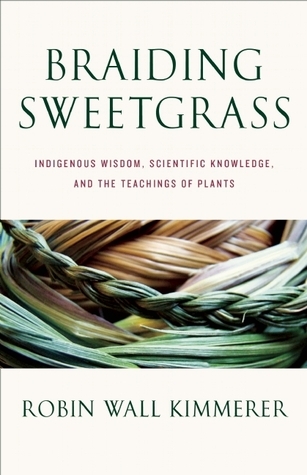
In Braiding Sweetgrass, Robin Wall Kimmerer crafts a profound literary and intellectual exploration that weaves together indigenous wisdom, ecological science, and personal narrative with a grace that mirrors the very nature she reveres. Kimmerer, a botanist and member of the Citizen Potawatomi Nation, offers readers a unique confluence of scientific knowledge and indigenous ways of knowing, creating a bridge between two often-separate epistemologies.
At the heart of the book lies the titular metaphor: the braiding of sweetgrass, an important plant in many indigenous cultures symbolizing the interconnection of nature, community, and spirituality. Kimmerer takes this concept and extends it beyond the physical act to create a braided narrative. She intertwines botany, indigenous teachings, and her own reflections as a scientist and a mother, resulting in a holistic perspective that is both enlightening and deeply moving.
One of the remarkable strengths of Braiding Sweetgrass is its ability to challenge the modern Western relationship with nature without condemning it. Kimmerer encourages readers to look beyond the traditional dichotomy of human versus nature, advocating instead for a reciprocal relationship—one grounded in respect, gratitude, and responsibility. In one of the book’s many powerful passages, she reflects on the Potawatomi tradition of the “Honorable Harvest,” a concept that calls for taking only what is needed and giving back to the Earth in return. This ethos runs throughout the book, informing both its environmental argument and its spiritual dimension.
Kimmerer’s use of language is evocative and poetic, yet not without the precision of a trained scientist. She has an eye for detail that brings the natural world to life: the way she describes the “green gold” of sweetgrass or the “spiral grace” of moss is a testament to her deep attunement to the life around her. In this regard, Braiding Sweetgrass reads as both a scientific inquiry and a work of art, showcasing Kimmerer’s ability to transcend disciplinary boundaries.
However, what truly distinguishes Braiding Sweetgrass from other works in the environmental genre is its call for an ethic of reciprocity. In a time when climate change, species extinction, and environmental degradation dominate public discourse, Kimmerer offers a refreshing and much-needed voice that centers on healing—both the land and our relationship with it. She does not simply present nature as a passive backdrop to human life but as a co-participant in a larger ecological dance. Her message is one of hope, not despair, grounded in the belief that if we can relearn the art of listening to the land, we can begin to repair the damage we have caused.
The book’s structure mirrors the cyclical patterns of nature, with chapters that often follow the rhythm of the seasons. Each chapter feels like its own carefully woven strand, contributing to the larger tapestry of the work. Yet, despite the non-linear nature of its narrative, Braiding Sweetgrass is unified by its core themes of gratitude, responsibility, and interconnection.
Some critics may argue that Kimmerer’s dual roles as scientist and storyteller create moments where the book’s lyrical prose overshadows its scientific rigor, or where its emotional depth challenges its academic neutrality. Yet, it is precisely this blending of genres and approaches that makes the book so powerful. Kimmerer breaks down the false boundary between emotion and intellect, showing that to truly understand nature—and our place within it—requires the integration of both.
Braiding Sweetgrass is a work of profound insight and beauty, one that speaks not only to the mind but to the heart. Kimmerer’s message is both urgent and timeless, calling for a reawakening of our collective consciousness and a return to a more respectful and balanced way of being in the world. As a literary work, it invites readers to reflect deeply on their own relationships with the natural world, and as an ecological treatise, it offers a blueprint for how we might move forward in the face of environmental crisis. For readers seeking a book that will challenge, inspire, and transform, Braiding Sweetgrass is an essential text.
Discover more from The New Renaissance Mindset
Subscribe to get the latest posts sent to your email.
 The New Renaissance Mindset