
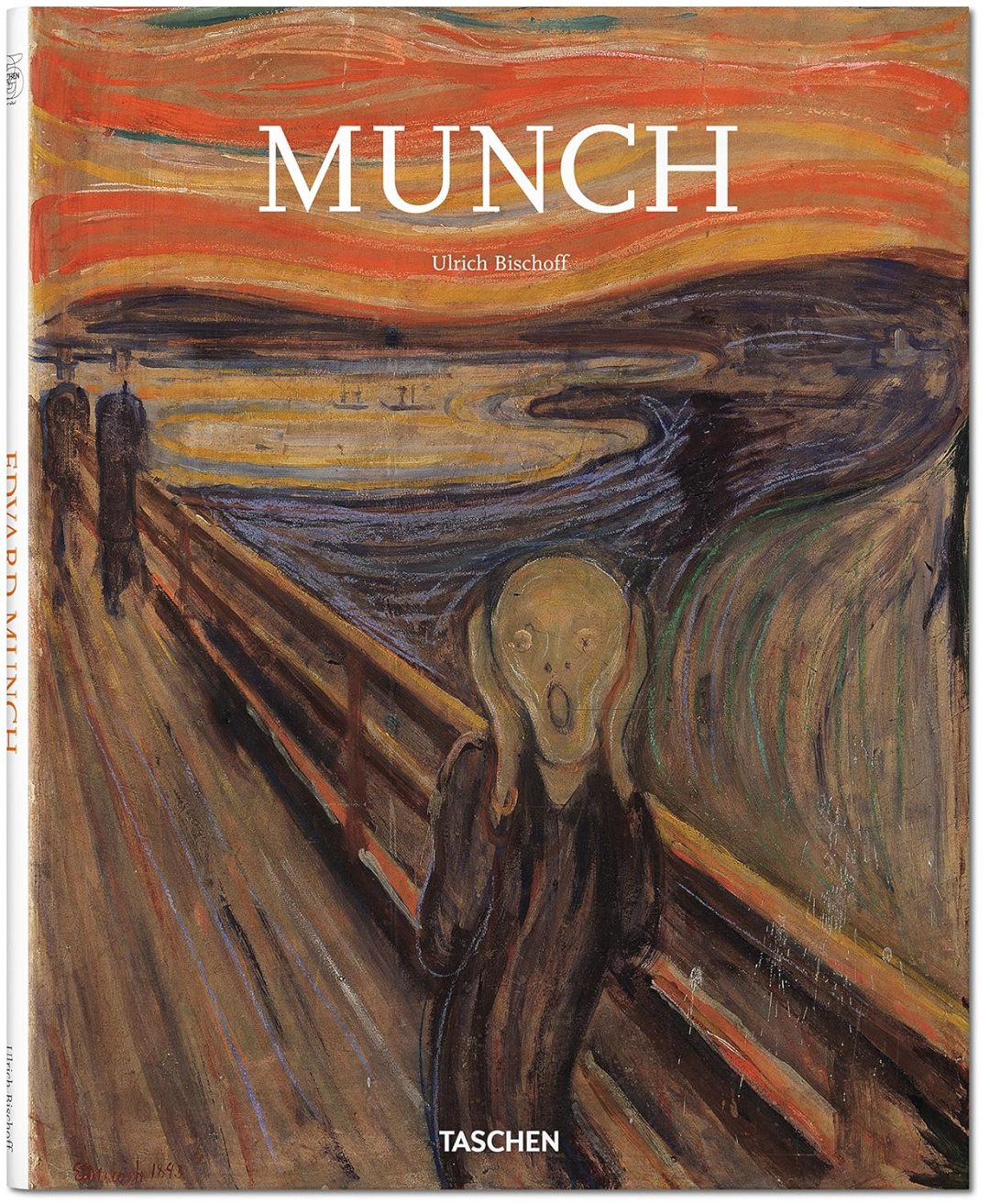
Ulrich Bischoff’s Edvard Munch: 1863–1944 offers readers a vivid exploration of the life and work of the Norwegian artist whose haunting visuals continue to echo across the annals of art history. Bischoff’s monograph situates Munch as a pivotal figure straddling the transition from late 19th-century Symbolism to early 20th-century Expressionism, all while dissecting the deeply personal nature of his oeuvre. With its compelling narrative and visually striking illustrations, the book is both a scholarly resource and an aesthetic experience.
A Study in Melancholia
Bischoff masterfully contextualizes Munch’s work within the psychological and cultural milieus of his time. Munch’s recurring themes of mortality, anxiety, and existential dread—quintessential to modern art—are meticulously unpacked. The author draws parallels between Munch’s art and his turbulent personal life, marked by bereavement, illness, and strained relationships. Bischoff connects these biographical threads to Munch’s iconic pieces such as The Scream and Madonna, offering a nuanced understanding of how his inner turmoil found a visual lexicon that resonated universally.
What distinguishes this analysis is Bischoff’s ability to delve beyond the over-familiarity of The Scream. The book argues that Munch’s genius lies not in a singular work but in his ability to create a cohesive psychological universe where every painting acts as an entry point into his emotional and intellectual landscape.
Aesthetic Innovations
The book also shines in its discussion of Munch’s formal innovations. Bischoff explicates Munch’s use of line, color, and composition, framing these elements as mechanisms for emotional amplification. For example, the text highlights Munch’s fascination with the interplay of the ephemeral and the eternal, evident in his hauntingly blurred figures and dreamlike spaces. This analysis demonstrates how Munch transcended naturalism to pioneer an emotive abstraction that deeply influenced Expressionist luminaries like Ernst Ludwig Kirchner and Egon Schiele.
Moreover, Bischoff contextualizes Munch’s radical techniques within broader artistic trends, including his affinities with contemporaries such as Paul Gauguin and Vincent van Gogh. The author adeptly situates Munch’s work at the confluence of Symbolist poetry, psychoanalytic theory, and the burgeoning spirit of modernism.
A Balance of Accessibility and Depth
While Bischoff’s prose occasionally veers into academic density, it largely maintains an accessible tone, making the book suitable for both seasoned art historians and general enthusiasts. The richly reproduced images of Munch’s works, interspersed throughout the text, not only supplement the discussion but also invite a meditative engagement with the paintings themselves.
Conclusion
Ulrich Bischoff’s Edvard Munch: 1863–1944 succeeds in capturing the restless energy of an artist who forever altered the trajectory of modern art. By seamlessly blending biographical insight with rigorous formal analysis, Bischoff provides a layered portrait of Munch as a man and an innovator. This book is a testament to the enduring relevance of Munch’s vision and a reminder that his art, like life itself, is an unrelenting interplay of beauty and despair.
For anyone intrigued by the intersections of art, psychology, and modernity, Bischoff’s study is an indispensable read.
Discover more from The New Renaissance Mindset
Subscribe to get the latest posts sent to your email.
 The New Renaissance Mindset