
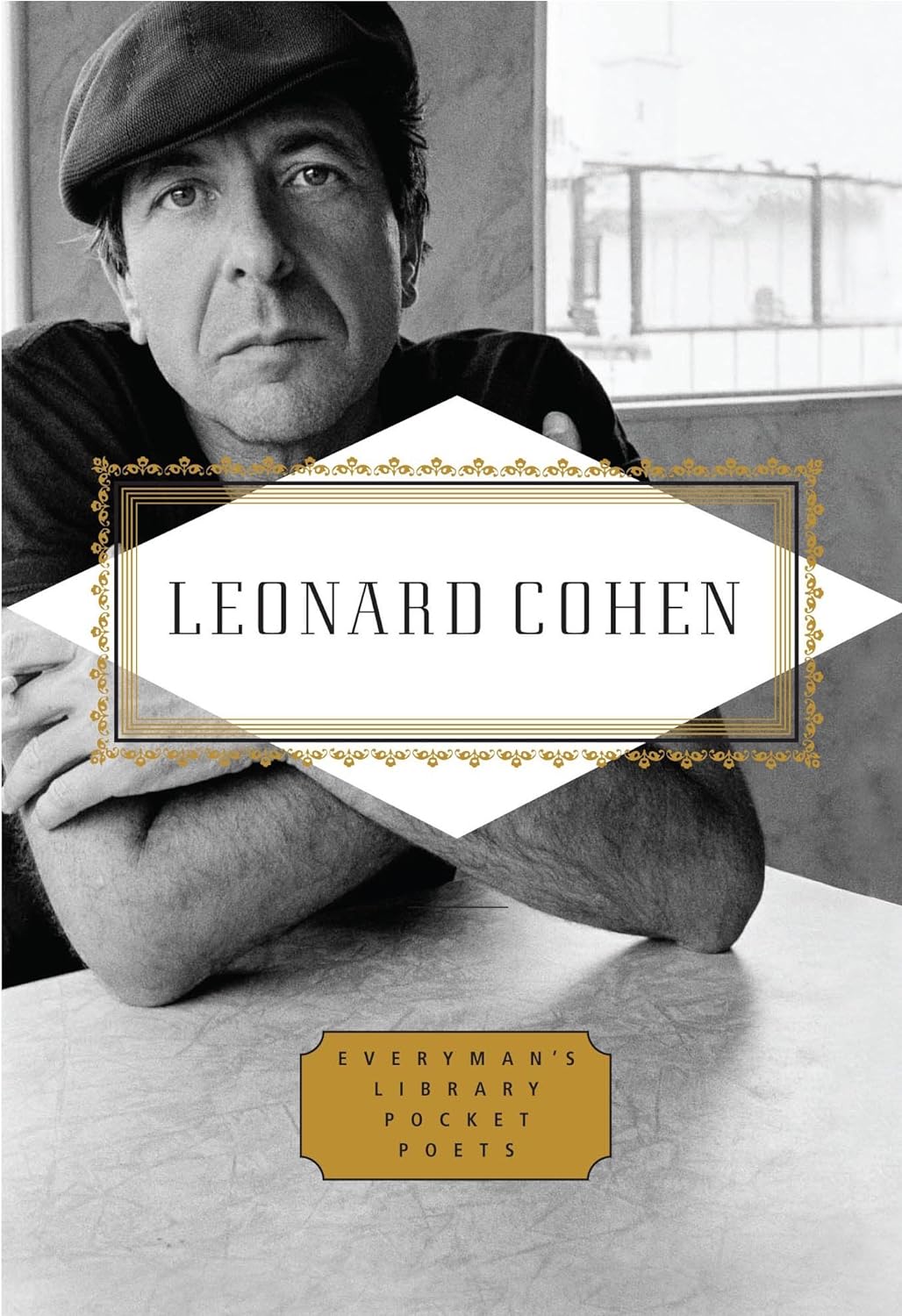
Leonard Cohen’s Poems and Songs is both an anthology and an archive, a treasury that houses the essence of a poet, a mystic, and a troubadour. This compilation is not just a collection of words but a spiritual journey through the corridors of longing, faith, despair, and ecstasy—hallmarks of Cohen’s oeuvre.
The Interplay of Form and Voice
The book is an exquisite curation of Cohen’s poetry and lyrics, spanning his early years as a Montreal poet to his ascension as an iconic songwriter. The juxtaposition of poems and song lyrics invites a reflection on the porous boundary between these forms. What is striking is how the songs do not merely borrow from the poetry but inhabit a different rhythm of existence, where music becomes the partner to the word’s solitude.
The selection captures Cohen’s evolution, from the introspective metaphysics of The Spice-Box of Earth to the liturgical intimacy of his later songs like “Hallelujah.” The reader is reminded that Cohen’s language is not merely literary; it is liturgical, a blend of sacred and profane, where a lover’s touch carries the weight of scripture and God’s silence echoes like an unplayed chord.
Themes of the Sacred and the Profane
Cohen’s genius lies in his ability to weave the sacred and the profane into a seamless fabric. In one moment, the poet contemplates divine grace; in the next, he meditates on the contours of a lover’s body. The thematic duality—desire and renunciation, freedom and bondage—evokes not just religious undertones but the complexities of being human. Cohen does not solve these paradoxes but elevates them into the eternal questions they are.
The title Poems and Songs suggests that the book functions as an act of memory and devotion, akin to the Song of Songs. It pays homage to the traditions Cohen drew from—Jewish mysticism, Catholic imagery, Zen Buddhism—yet it remains grounded in the deeply personal. The opening stanzas of “Suzanne,” for instance, embody this liminality: Suzanne is a muse, a Christ figure, a woman, and a myth, all at once.
A Voice of Time and Timelessness
Reading this collection in the twenty-first century, one feels the enduring relevance of Cohen’s voice. His work is deeply personal yet universal, intimate yet grandiose. Even his darker explorations—such as the melancholic meditations in “Avalanche”—transcend cynicism and become hymns for the weary soul.
The poems are deceptively simple, but this simplicity is a calculated act of discipline. Consider “Dance Me to the End of Love,” where the repetition of “dance me” transforms the imperative into a plea, a prayer, a command. The tension between language and meaning is palpable; Cohen invites his readers to find themselves in this interstice.
On the Experience of Reading Cohen
Perhaps the most compelling aspect of Poems and Songs is its intimate tone. Reading this collection is like having a quiet conversation with Leonard Cohen himself. His wry humor, humility, and wisdom shine through the page, offering solace and insight to those willing to linger in his lines. The book is an invitation to slow down, to engage with language as a sacrament rather than a transaction.
Final Thoughts
Leonard Cohen: Poems and Songs is a masterclass in the art of duality and contradiction. It is a reminder of the power of the word, both spoken and sung, to touch the depths of human experience. For fans of Cohen, this book is an indispensable addition to their library. For newcomers, it is a doorway into a world where poetry, music, and spirituality converge in sublime harmony.
As Cohen himself might whisper: “There is a crack in everything; that’s how the light gets in.” This book is one of those cracks, and the light it lets in is nothing short of transformative.
Discover more from The New Renaissance Mindset
Subscribe to get the latest posts sent to your email.
 The New Renaissance Mindset
Love Leonard Cohen. Saw him in concert just before he passed. A wonderful talent and is missed. Thank you for posting this.
LikeLiked by 1 person
My pleasure. I love his work! Thank you for the comment.
LikeLiked by 1 person