
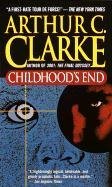
Arthur C. Clarke’s Childhood’s End (1953) is a profound meditation on humanity’s destiny, the limits of individuality, and the cost of progress. Though classified as science fiction, the novel transcends genre boundaries, intertwining speculative imagination with existential philosophy. Clarke crafts a narrative that compels readers to grapple with the weight of evolution, the allure of utopia, and the bittersweet surrender of human autonomy.
A Masterpiece of Subtlety and Scale
The story unfolds in three distinct arcs, each escalating in thematic complexity. It begins with the arrival of the mysterious Overlords, benevolent alien beings who usher in a global utopia. Clarke’s portrayal of this Golden Age is both idyllic and unnerving, as humanity relinquishes its sovereignty for peace and prosperity. Here, Clarke critiques humanity’s frailty and susceptibility to external control, raising questions about freedom’s true value when weighed against security.
In the second arc, the Overlords’ enigmatic nature becomes a source of tension. They refuse to reveal their ultimate intentions or even their physical appearance, maintaining an unsettling distance from the people they ostensibly serve. Clarke’s deft use of mystery generates a pervasive undercurrent of unease, suggesting that perfection may conceal deeper sacrifices. When their demonic visage is finally revealed—a masterstroke of ironic symbolism—it reframes humanity’s collective myths and fears.
The novel’s third act shifts dramatically in scope and tone, veering into the cosmic. The focus moves from individuals to the species as a whole, culminating in the ascension of human children into a transcendent, hive-mind existence. Clarke’s vision of evolution as a surrender of individuality is both awe-inspiring and tragic, leaving readers to ponder the cost of transcendence. The novel’s final moments—silent, devastating, and elegiac—underscore Clarke’s unparalleled ability to blend cosmic grandeur with intimate poignancy.
Themes and Philosophical Undertones
At its core, Childhood’s End grapples with the notion of maturity, both individual and collective. Clarke examines what it means to “grow up” as a species: to relinquish the petty conflicts and limitations that define our humanity in favor of something incomprehensibly greater. The Overlords themselves, bound by their inability to transcend, serve as tragic counterpoints to humanity’s destined transformation. Clarke’s use of their plight as a mirror reflects a broader commentary on the limits of knowledge and power.
The novel also critiques utopia. While the Overlords bring peace and prosperity, Clarke subtly undermines the idea of perfection. The cost of utopia is cultural stagnation; humanity, deprived of its struggles, loses its drive and creativity. This stagnation foreshadows the species’ ultimate obsolescence, a chilling reminder that perfection often leads to passivity and decay.
Clarke’s exploration of religion is equally striking. The Overlords’ demonic appearance and their role as intermediaries in humanity’s evolution challenge traditional theological paradigms, suggesting that our myths may be echoes of deeper truths. Yet, the novel refrains from outright cynicism, offering a vision of spirituality that is grounded not in dogma but in the awe of the unknown.
Narrative Technique and Style
Clarke’s prose is both precise and unadorned, serving the novel’s intellectual rigor rather than indulging in emotional excess. His descriptions of the Overlords’ technology and humanity’s transformation are meticulously detailed yet imbued with a sense of wonder. Clarke’s ability to shift seamlessly from the intimate to the cosmic is a hallmark of his style, making the reader feel both grounded in the present and adrift in the infinite.
Characterization in Childhood’s End is intentionally subdued. While individual figures like Stormgren, Jan Rodricks, and Karellen are compelling, they serve more as conduits for Clarke’s ideas than as fully fleshed-out personas. This deliberate choice reinforces the novel’s thematic focus on collective evolution over personal narratives.
Childhood’s End is a seminal work of speculative fiction that challenges readers to confront uncomfortable truths about humanity’s potential and limitations. Clarke’s vision is at once optimistic and sobering, a testament to his ability to blend scientific speculation with profound philosophical inquiry. The novel’s enduring relevance lies in its capacity to inspire awe while provoking critical reflection on the trajectory of human progress.
For those willing to engage with its intellectual depth and existential implications, Childhood’s End offers a literary experience as transformative as the journey it describes. It is not merely a tale of alien contact but a haunting exploration of what it means to outgrow our own humanity.
Discover more from The New Renaissance Mindset
Subscribe to get the latest posts sent to your email.
 The New Renaissance Mindset