
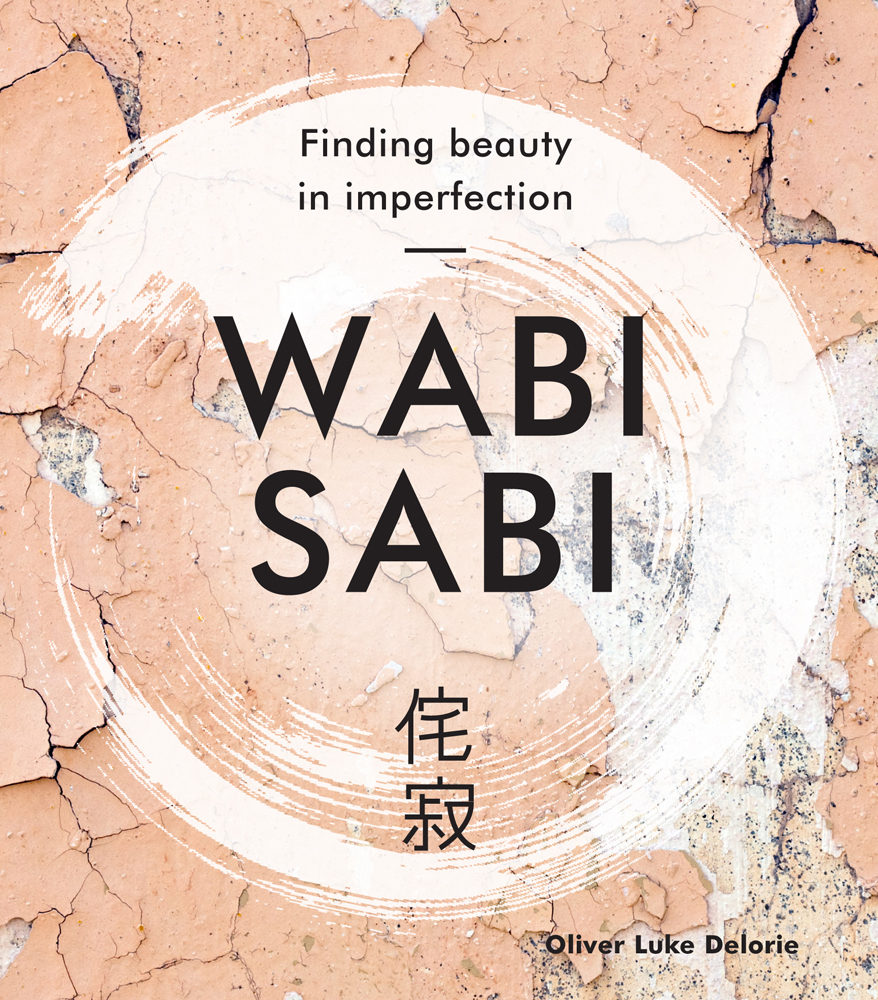
Oliver Luke Delorie’s Wabi Sabi: Finding Beauty in Imperfection is a slender but profound exploration of an aesthetic philosophy deeply rooted in Japanese culture. In its modest form—both physically as a book and conceptually in its content—it mirrors the very principles it seeks to elucidate: simplicity, transience, and the quiet elegance of imperfection.
The Essence of Wabi Sabi
Delorie approaches wabi-sabi not as an exhaustive academic treatise but as a meditative offering. This book is less a traditional analysis and more a fragmented guide, encouraging the reader to embrace impermanence and find beauty in the incomplete. His reflective prose—at times poetic, at times aphoristic—invites contemplation rather than dictation, creating a dialogic relationship with the reader that aligns with the subject’s ethos.
The strength of Delorie’s work lies in its ability to gently reorient a Western audience toward the subtleties of this Japanese aesthetic sensibility. While many might approach wabi-sabi expecting rigid definitions, Delorie resists this impulse. Instead, he provides glimpses, metaphors, and evocative examples, illustrating that wabi-sabi is better felt than articulated.
Literary Form and Function
Structurally, the book reflects wabi-sabi principles. It eschews linear argumentation and exhaustive elaboration, instead opting for a patchwork of musings, interspersed with visual elements that embody the aesthetic. This format might frustrate readers seeking a straightforward guide but rewards those open to lingering in the liminal space between knowing and experiencing.
Delorie’s writing style is deliberately sparse yet rich in imagery, evoking the weathered surfaces, muted colors, and asymmetrical forms that characterize wabi-sabi. His prose occasionally borders on the didactic, but these moments are rare and often tempered by his overarching humility in approaching a philosophy not native to him.
Cultural Sensitivity and Adaptation
One of the book’s most commendable aspects is its respectful treatment of wabi-sabi as a living philosophy. Delorie avoids appropriating or diluting it for commercial purposes—a common pitfall in works that engage with non-Western concepts. He acknowledges the challenges of translating such an ephemeral idea into English, emphasizing its untranslatability as a form of reverence. His acknowledgment of the philosophy’s roots in Zen Buddhism and its connections to the Japanese tea ceremony provides crucial context without overwhelming the reader with historical exposition.
Limitations and Opportunities
While the book excels in evocation, it occasionally risks oversimplifying wabi-sabi by framing it as universally accessible without sufficient engagement with its cultural specificity. Readers deeply familiar with Japanese aesthetics might find Delorie’s interpretations to be surface-level. However, for those newly introduced to the concept, the book serves as an inviting gateway.
Moreover, its brevity may leave some readers yearning for a deeper dive into the philosophical underpinnings of wabi-sabi, such as its relationship with ma (negative space) or its parallels with Western philosophies like existentialism. Yet, this very incompleteness could itself be considered an embodiment of wabi-sabi, leaving space for the reader to explore further.
Final Reflections
Oliver Luke Delorie’s Wabi Sabi: Finding Beauty in Imperfection is less a definitive guide and more an invitation to pause, reflect, and perceive the world differently. Its imperfections—the vagueness, the brevity, the lack of comprehensive detail—are, in a way, its greatest strengths, aligning perfectly with the philosophy it celebrates.
This book will resonate with readers who are open to subtlety and ambiguity, willing to engage with the ephemeral and incomplete. It is not a manual but a mirror, offering glimpses of wabi-sabi that, like the philosophy itself, shift and evolve with the reader’s perspective. In embracing its imperfection, the book transcends its form, leaving a lasting impression akin to the fleeting beauty of a falling cherry blossom.
Discover more from The New Renaissance Mindset
Subscribe to get the latest posts sent to your email.
 The New Renaissance Mindset