
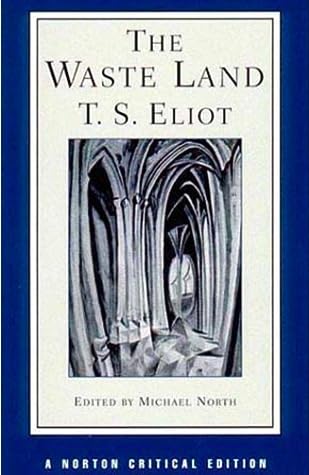
The Waste Land: A Fragmented Mirror of Modernity
T.S. Eliot’s The Waste Land (1922) remains one of the most enigmatic and revolutionary poems of the 20th century. With its fragmented structure, mythological allusions, and polyphonic voices, the poem embodies the fractured consciousness of the post-war world. Eliot’s dense intertextuality—drawing from sources as varied as Dante, Shakespeare, the Upanishads, and contemporary popular culture—creates a textual labyrinth that resists easy interpretation, making it an enduring subject of literary scholarship.
At its core, The Waste Land is an exploration of spiritual and cultural desolation. The imagery of drought, infertility, and broken civilizations suggests a world in moral decline, where religious, literary, and social traditions have lost their unifying power. Eliot structures the poem in five movements, each one contributing to the overarching sense of disorientation and existential searching. The opening section, “The Burial of the Dead,” sets the tone with an ironic inversion of spring’s renewal—April is cruel, bringing memory and desire to a spiritually barren landscape. The voice of Madame Sosostris, the clairvoyant, further suggests the tension between prophecy and meaninglessness, reinforcing the theme of a civilization adrift.
The poem’s second section, “A Game of Chess,” shifts to domestic alienation, portraying a decayed relationship through the lens of high and low culture. This section resonates with the shallow conversations of Joyce’s Ulysses and echoes Shakespeare’s Antony and Cleopatra—a deliberate juxtaposition that emphasizes the degradation of love and communication in the modern world. Eliot’s manipulation of voice and perspective reaches a peak in “The Fire Sermon,” where the sensuality of contemporary life is exposed as sterile and unfulfilling, mirroring both Augustine’s confessions and the Buddhist renunciation of desire.
“Death by Water” is the shortest but one of the most haunting sections, evoking the drowned Phoenician sailor, a symbol of transformation yet also of loss. The water that might have symbolized renewal instead serves as a force of dissolution, reinforcing the paradoxes that pervade the poem. This leads into “What the Thunder Said,” where the search for meaning reaches its climax. The barren landscapes of the poem mirror the search for spiritual sustenance, culminating in the cryptic Sanskrit conclusion: “Datta. Dayadhvam. Damyata.” (Give. Sympathize. Control.)—offering a whisper of redemption but without certainty.
Eliot’s use of free verse and disjointed narration embodies the breakdown of coherent identity in modernity. The poem’s allusions are not mere academic exercises; rather, they highlight the collapse of a once-cohesive cultural tradition into a bricolage of disjointed fragments. Critics like F.R. Leavis have celebrated Eliot for capturing the spiritual crisis of an era, while others, such as Harold Bloom, have questioned whether his reliance on allusion serves as an aesthetic defense mechanism rather than a genuine engagement with modern alienation.
Yet, it is precisely in this fragmentation that The Waste Land achieves its power. The poem does not offer resolution but instead reflects the fractured psyche of its time, making it profoundly modern. Its dissonant voices, its interplay of high and low culture, and its resistance to singular meaning demand that the reader participate in the act of interpretation. Eliot does not reconstruct meaning—he merely arranges the debris of a broken world, leaving us to ask whether meaning can ever be reclaimed.
A century after its publication, The Waste Land remains not only a monument of literary modernism but also a mirror in which each new generation finds its own anxieties refracted. Whether read as a lament, an elegy, or a challenge, Eliot’s masterpiece continues to unsettle, provoke, and illuminate.
Discover more from The New Renaissance Mindset
Subscribe to get the latest posts sent to your email.
 The New Renaissance Mindset
Interesting
LikeLiked by 1 person