
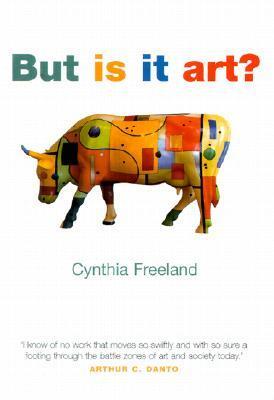
Cynthia A. Freeland’s But Is It Art? is an accessible yet deeply analytical exploration of the philosophical questions that shape our understanding of art. Bridging aesthetics, cultural criticism, and contemporary artistic practices, Freeland provides a framework that is both historically grounded and relevant to modern debates. Her work, though introductory, does not sacrifice intellectual rigor, making it an invaluable resource for students, scholars, and general readers seeking a clearer grasp of the complexities of art theory.
At the heart of But Is It Art? is Freeland’s interrogation of the fundamental question posed in the title: what qualifies as art? Rather than offering a single, definitive answer, she traverses a diverse range of theoretical perspectives, from classical mimesis and Kantian aesthetics to postmodern and feminist critiques. The book is structured thematically, addressing key topics such as the role of museums, the influence of money in the art world, and the ethical dimensions of controversial works.
One of the book’s greatest strengths lies in its ability to illustrate theoretical concepts through concrete examples. Freeland does not confine herself to canonical Western works but engages with a broad spectrum of artistic expressions, from Renaissance painting to contemporary performance art, from Damien Hirst’s provocative installations to Aboriginal and African artistic traditions. This inclusivity resists the often Eurocentric bias found in many art theoretical texts and acknowledges the global discourse surrounding artistic production.
Freeland’s writing is clear, engaging, and refreshingly free from jargon. She successfully distills complex philosophical ideas—such as the institutional theory of art championed by Arthur Danto and George Dickie—into digestible explanations without oversimplifying their implications. Her discussions of ritualistic and religious art highlight how meaning is not solely derived from aesthetic contemplation but also from cultural and historical contexts, an insight that challenges the autonomy-based theories of art prevalent in the modernist tradition.
One particularly compelling aspect of the book is its engagement with the ethical and political dimensions of art. Freeland does not shy away from contentious issues such as the commodification of art, censorship, and the responsibilities of artists and institutions. She explores the ways in which art functions as a site of resistance, propaganda, or ethical dilemma, raising questions that remain highly relevant in today’s digital and media-saturated world.
However, while But Is It Art? succeeds in breadth, some may argue that its introductory nature prevents it from delving deeply into any one theoretical school. For readers seeking an in-depth analysis of a specific tradition, such as phenomenology or semiotics, the book may serve better as a springboard than a comprehensive study. Nonetheless, Freeland’s ability to synthesize disparate perspectives into a coherent and engaging narrative is a testament to her skill as both a philosopher and a communicator.
In sum, But Is It Art? is a vital contribution to contemporary discussions on art theory. It is a book that encourages critical thinking, challenges preconceived notions, and invites readers to consider not only what art is, but why it matters. Freeland’s work exemplifies the best of accessible scholarship—intellectually stimulating, culturally expansive, and, above all, deeply relevant to the evolving discourse on art in the 21st century.
Discover more from The New Renaissance Mindset
Subscribe to get the latest posts sent to your email.
 The New Renaissance Mindset