
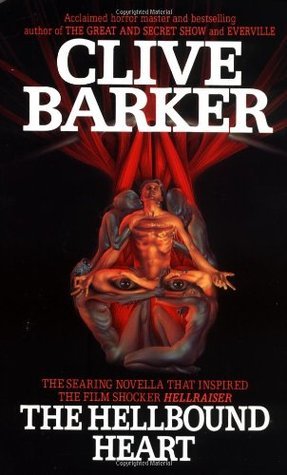
Clive Barker’s The Hellbound Heart (1986) inaugurates his visceral brand of “new flesh” horror, weaving together Gothic romance, metaphysical inquiry, and baroque extravagance. Though often overshadowed by its film adaptation (Hellraiser, 1987), the novella itself is a compact, relentlessly imaginative study of desire’s dark edge. Barker invites readers into a world in which the boundary between pleasure and pain collapses, interrogating the very nature of human longing.
Context and Form
Originally released as a limited-edition novella, The Hellbound Heart emerges at the nexus of Gothic tradition and post–modern transgression. Barker situates his tale in near-contemporary England, yet the story feels timeless: an age-old warning against unchecked appetite. In just over a hundred pages, the narrative pivots on the discovery of the Lemarchand puzzle box—an artifact that promises ecstasy but summons the Cenobites, extra-dimensional “engineers of pleasure.” Barker’s economy of space echoes the compressed intensity of Edgar Allan Poe, yet his imagery bursts with the rich, flesh-obsessed detail more akin to H. P. Lovecraft’s cosmic dread transformed through a carnivalesque lens.
Desire, Transgression, and the Body
At the heart of Barker’s vision is the figure of Frank Cotton, an archetype of Promethean overreach: he seeks “more, more, more” beyond mortal boundaries (Chapter 1). When Frank unlocks the box, his corporeal dissolution and subsequent grotesque rebirth frame the novella’s ethical core: desire unmoored from empathy becomes self-annihilation. Julia’s role—betrayal cloaked in passion—complicates the simple dichotomy of victim and villain. Her willingness to murder for the promise of restoration gestures toward a profound moral inversion: love corrupted by obsession. By staging extreme acts of violence and eroticism, Barker forces readers to confront the instability of their own appetites.
Language and Atmosphere
Barker’s prose is unashamedly ornate. His descriptions of the Cenobites—“white pillars of endless pain,” eyes closed to “the outer darkness,” their bodies punctured and sown—evoke a crucifixion both blasphemous and sensuous (Chapter 2). The novella’s sensory overload underscores its philosophical stakes: what happens when sensation becomes absolute? Yet Barker balances this opulence with moments of chilling restraint—Julia’s furtive return to the scene of Frank’s dismemberment, the locked attic door behind which ungodly ceremonies transpire. Such contrasts amplify the novella’s uncanny effect, rendering the mundane world eerily permeable to otherness.
Structural Tension and Pacing
Barker’s narrative pacing is taut: each scene propels us deeper into transgression. The three central characters—Frank, Julia, and Kirsty—function almost as elemental forces rather than fully rounded individuals, yet this chaptered architecture serves the novella’s mythic ambitions. Kirsty’s emergence as a foil to Julia introduces a classic Romantic contrast: innocence confronting corrupted desire. Barker deftly shifts perspective just enough to sustain suspense: the reader witnesses Frank’s visceral torment, Julia’s cold calculation, and Kirsty’s mounting terror. This tripartite structure underlines the novella’s dialectic between sin and redemption, knowledge and ignorance.
Legacy and Significance
While its cinematic progeny cemented Barker’s popular reputation, The Hellbound Heart remains a foundational text for understanding late-20th-century horror’s turn toward the erotic and the grotesque. Barker’s “new flesh” paradigm—a fusion of body horror and spiritual yearning—has echoed through the works of subsequent writers and filmmakers. In its fusion of Gothic motifs, philosophical depth, and unabashed visceral spectacle, The Hellbound Heart reshapes the contours of horror, reminding us that at the limits of sensation, we confront the most profound questions of identity and desire.
As a literary scholar might argue, The Hellbound Heart occupies a liminal space between genre fiction and philosophical allegory. Barker confronts the reader with a terrifying proposition: that our deepest yearnings, when severed from ethical constraint, may exact a price far greater than death. In this tightly woven novella, horror operates not merely as shock but as a mirror to our own insatiable appetites—leaving us to ponder where the boundary lies between ultimate pleasure and annihilation.
Discover more from The New Renaissance Mindset
Subscribe to get the latest posts sent to your email.
 The New Renaissance Mindset
I saw Hellraiser when it came out — it was a bloody, gruesome mess of a movie with only the Cenobites to recommend it. I recall the escaped character trying to get some skin and flesh for himself and bringing down a hammer on a living person’s head. Not very pretty. The reason for the movie’s existence seems to be to introduce the Cenobites to a mass audience. Apparently the story caught some producers’ eye.
Come visit my blog, and leave some comments, if you like
http://www.dark.sport.blog
LikeLike