
Context and Structure
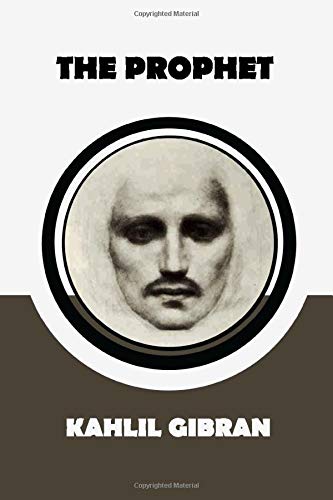
Kahlil Gibran’s The Prophet (1923) is a collection of twenty-six poetic essays framed as the farewell address of Almustafa, “the chosen and the beloved,” to the people of Orphalese. Each chapter treats a universal aspect of human experience—Love, Marriage, Joy and Sorrow, Work, Prayer, Death—delivered in brief, aphoristic sermons. Gibran’s Lebanese-American background infuses the text with Middle Eastern spiritual resonance, while his fluid English prose creates a universal idiom of mystic wisdom.
Poetic Prose and Aphorism
Gibran’s style is at once poetic and didactic. He strips language to its essentials, allowing his ideas to resonate like chants or mantras. Consider his meditation on Love:
“When love beckons to you, follow him,
Though his ways are hard and steep.”
Here, brevity belies depth: “hard and steep” evokes not only difficulty but also ascendance—a recurrent motif of spiritual elevation. Gibran’s frequent use of parallelism and antithesis (e.g., “giving often leaves you richer than taking”) reinforces the musicality and memorability of his counsel.
Thematic Interplay: Paradox and Unity
At the heart of The Prophet lies the interplay of paradox. Joy and sorrow are “inseparable,” like “two springs of one river.” Marriage is “two persons…alone and unutterably free,” yet bound in “oneness.” Gibran does not resolve these tensions; rather, he embraces them, suggesting that wisdom arises through acceptance of life’s dualities. This dialectical approach reflects Gibran’s synthesis of Christian, Muslim, and Sufi mysticism, where oppositions are ultimately reconciled in a transcendent unity.
Philosophical Depth and Ethical Vision
Beyond lyrical beauty, The Prophet offers an ethical framework grounded in personal responsibility and compassion. In “On Giving,” Gibran warns against charity that “scatters the seed of envy,” urging instead gifts given “out of the fullness of your heart.” Such passages transcend mere moralizing; they invite readers into an interior transformation. The Prophet’s voice is not that of a distant deity but of a fellow pilgrim, guiding one toward an embodied spirituality in daily life.
Cultural and Historical Resonance
Though penned over a century ago, Gibran’s meditations remain strikingly relevant. His emphasis on individual sovereignty and creative labor (“Work is love made visible”) anticipates later existential and humanist movements. Moreover, at a time when the modern world was fracturing under industrialization and war, The Prophet offered a balm of timeless wisdom. Its enduring global popularity—having sold over nine million copies—attests to its ability to speak across cultural and temporal boundaries.
Legacy and Influence
The Prophet has inspired countless artists, writers, and thinkers. Its aphorisms are frequently quoted at weddings, funerals, and momentous occasions, underscoring the text’s integration into the fabric of everyday life. Yet, beneath its veneer of homily lies a challenging text: Gibran’s prose demands reflection, and his paradoxes refuse easy resolution. In this way, The Prophet mirrors the very human condition it examines—simple in form, profound in consequence.
As a literary scholar might observe, The Prophet occupies a liminal space between poetry and philosophy, between East and West, between the personal and the universal. Gibran’s succinct eloquence and his celebration of paradox invite readers to dwell in the tension of opposites, discovering there the seeds of wisdom. More than a book of maxims, The Prophet remains a living companion for seekers of insight, a text that, like its hero’s island of departure, always points the way home.
Discover more from The New Renaissance Mindset
Subscribe to get the latest posts sent to your email.
 The New Renaissance Mindset