
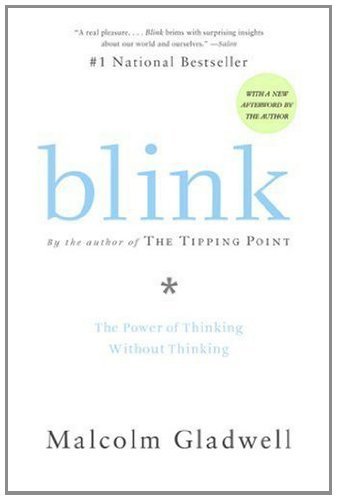
Malcolm Gladwell’s Blink: The Power of Thinking Without Thinking ventures into the shadowy terrain of rapid cognition, positing that our split‑second decisions—“thin‑slices” of experience—often rival, and sometimes surpass, the judgments arrived at through deliberate analysis. For the literary scholar, Blink offers more than a popular psychology manifesto; it is a study in narrative persuasion, an exercise in rhetorical architecture, and a cultural mirror reflecting early‑21st‑century ambivalence toward expertise and rationalism.
Theoretical Context and Intertextual Resonances
Gladwell’s work echoes a lineage of epistemological inquiry stretching from William James’s pragmatism to Henri Bergson’s notion of intuition. He also invokes the heuristic models of Gerd Gigerenzer and Gary Klein, anchoring his anecdotes in cognitive science without succumbing to disciplinary jargon. From a literary vantage, these allusions function as intertextual scaffolding: they lend intellectual heft while allowing the primary narrative—replete with vivid case studies—to remain accessible.
Narrative Strategy and Rhetorical Devices
Central to Gladwell’s craft is his episodic structure. Each chapter unfolds as a self‑contained story, whether the charged atmosphere of a speed‑dating experiment or the fatal misreading that led to Amadou Diallo’s shooting. By deploying the classical narrative arc—exposition, crisis, dénouement—Gladwell renders abstract psychological phenomena palpable. Moreover, his strategic withholding and delayed revelations mirror the very unconscious operations he studies: the reader, like the decision‑maker in his examples, grasps the emotional truth before the analytical one.
He further employs contrast as a leitmotif: the slow, laborious “cook”—such as a cardiologist interpreting an ECG—and the quick “snap”—a firefighter sizing up a burning building—serve to dramatize the stakes of cognition’s tempo. In doing so, Gladwell crafts not merely reportage but a kind of cognitive dramaturgy, where the tension between reason and intuition fuels the reader’s engagement.
Critical Appraisal: Strengths and Limitations
One of Blink’s chief virtues is its illumination of the unconscious: by rendering visible the mechanisms of instinct, it challenges the myth of the wholly dispassionate, hyper‑rational subject. Gladwell’s prose—conversational yet precise—invites readers to interrogate their own mental habits, fostering a democratization of scientific insight.
However, the text’s very narrative elegance sometimes engenders overconfidence in its case studies. The attractiveness of the anecdotes risks gliding past counter‑examples or the complexity of situational variables. For instance, the high‑stakes failure in police shoot‑outs is presented as cautionary but lacks an extended examination of institutional and sociocultural biases that inflect those split‑second judgments. A more rigorous engagement with critical race theory or sociological data would have deepened the critique of systemic factors underlying “blink failures.”
Stylistic and Scholarly Implications
Gladwell’s mimicry of rapid cognition in his prose structure—leaping ahead, double‑backing for clarification, juxtaposing stories—demonstrates a meta‑textual awareness: the book’s form enacts its thesis. This self‑reflexivity aligns Blink with modernist experiments in stream‑of‑consciousness, albeit repurposed for popular consumption rather than avant‑garde disruption. The implication, for scholars of narrative technique, is that genre conventions can be retooled to dramatize cognitive theory without sacrificing readability.
Blink stands as a cultural artifact negotiating authority, expertise, and the tacit dimension of human thought. Its greatest accomplishment is to summon readers into a dialogue with their own unconscious prerogatives, even as it leaves open questions about the limits of intuition in complex social systems. For the literary scholar, Gladwell’s work is both an exemplar of narrative persuasion and a prompt for deeper inquiry into how storytelling shapes our understanding of mind, agency, and knowledge.
Discover more from The New Renaissance Mindset
Subscribe to get the latest posts sent to your email.
 The New Renaissance Mindset