
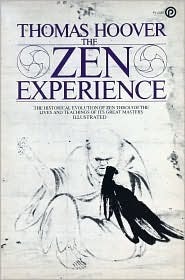
Thomas Hoover’s The Zen Experience stands as a seminal introduction to the rich tapestry of Zen Buddhism, weaving together historical narrative, doctrinal exposition, and primary texts with a clarity that belies the profundity of its subject. First published in 1969 and later revised, Hoover’s work occupies a unique space between scholarly monograph and accessible anthology, inviting both the novice and the seasoned student into the paradoxical world where “nothing special” is everything.
Summary of Content
Hoover organizes the volume into three interlocking sections. The first traces the life of the legendary Bodhidharma through the Flower Sermon of Mahākāśyapa, sketching Zen’s roots in Indian Mahayana before its transplantation to China. The second surveys major figures—Hui-neng, Lin-chi, Dōgen—and schools—Rinzai and Sōtō—highlighting the evolution of practice and poetics. The final section presents an anthology of Zen writings: koans, poems, and excerpts from shōbōgenzō, allowing the reader to encounter Zen not as a mere doctrine but as living, breathing practice.
Historical and Cultural Context
Hoover’s work emerged during the 1960s, a period of Western fascination with Eastern spirituality. Unlike contemporaneous popularizations that often exoticized Zen, Hoover rooted his narrative in careful scholarship. He acknowledged the sociopolitical currents of Tang- and Song-dynasty China, demonstrating how Zen responded to shifting power structures and monastic regulations. By foregrounding primary sources—translated with erudition and attention to linguistic nuance—he respected Zen on its own terms rather than filtering it through Western preconceptions of mysticism.
Literary and Philosophical Analysis
From a literary standpoint, The Zen Experience excels in texture and tone. Hoover’s prose moves between measured academic narrative and the terseness befitting Zen itself. His chapter on koan collections, for instance, juxtaposes crisp summaries with Chinese verse, allowing the voices of Lin-chi’s abrupt shouts and Hakuin’s playful verses to resonate. His translation choices—favoring clarity over archaic diction—enhance the immediacy of the texts without sacrificing their poetic ambiguity.
Philosophically, Hoover respects the foundational paradox of Zen: that enlightenment eludes conceptual capture. He refrains from flattening Zen into a set of axioms, instead illustrating how Zen masters employed shock, humor, and silence to dismantle the very frameworks through which the student sought understanding. Hoover’s commentary on kenshō (seeing one’s nature) is particularly illuminating: he frames it not as a final goal but as an ongoing practice, a lens through which ordinary life unfolds with fresh intensity.
Scholarly Contributions and Limitations
Hoover’s greatest strength lies in his balanced integration of narrative and text. The reader gains both a chronological roadmap and direct access to Zen’s poetic heart. Moreover, his extensive notes and bibliography—though now dated—remain a valuable springboard for further study.
However, a contemporary reader might note certain limitations. Hoover’s focus is almost exclusively on Chinese and Japanese Zen, with scant attention to later Western adaptations or the dialogue between Zen and other Buddhist schools. Additionally, while his translations are clear, they sometimes smooth over the textual ambiguities that scholars today might relish. A modern edition enriched by footnotes on alternative readings or linguistic quandaries could deepen the experience.
The Zen Experience continues to serve as a touchstone for those seeking a rigorous yet evocative introduction to Zen. Hoover’s fusion of historical narrative, scholarly apparatus, and curated primary texts invites readers into an immersive encounter with a tradition that prizes direct experience over theoretical exposition. Though subsequent scholarship has expanded and nuanced our understanding, Hoover’s volume remains a testament to the power of clear, compassionate, and literarily attuned scholarship—an invitation to “see into one’s own nature” that still resonates across decades.
Discover more from The New Renaissance Mindset
Subscribe to get the latest posts sent to your email.
 The New Renaissance Mindset