
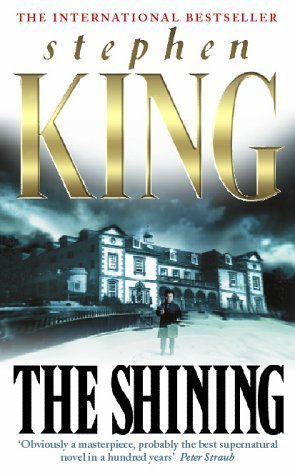
Stephen King’s The Shining (1977) stands as a landmark in horror fiction, blending the author’s mastery of psychological suspense with a profound exploration of familial disintegration, isolation, and the darker reaches of the human psyche. More than a mere ghost story, King crafts a multilayered narrative in which the Overlook Hotel becomes both setting and character, its malevolent history entwined with Jack Torrance’s own inner demons.
Narrative Structure and Point of View
King employs a third-person limited perspective that alternates primarily between Jack and his young son, Danny Torrance. This shifting focalization allows readers to inhabit the adults’ mounting paranoia alongside Danny’s precognitions—his “shine”—creating a tension that escalates as the novel progresses. The seemingly linear chronology conceals a cyclical horror: the hotel’s recurrent violence mirrors Jack’s descent into alcoholism and rage, suggesting that history itself is complicit in re-enacting past traumas.
Themes of Isolation and Madness
Isolation operates on multiple levels in The Shining. The Torrances’ winter confinement severs them from societal norms, while the hotel’s claustrophobic corridors and snowbound grounds symbolize entrapment. For Jack, this seclusion catalyzes a relapse into alcoholism and domestic violence: his frustrations, once externalized through writing ambitions, turn inward and combustible. King deftly shows how solitude can fracture identity: both Jack’s sanity and Wendy’s maternal resilience are tested to their breaking points.
The Overlook Hotel as Gothic Protagonist
More than mere backdrop, the Overlook Hotel embodies the Gothic tradition, its architecture imbued with a malevolent sentience. From the blood-soaked hedge maze to the spectral Room 217, King populates the hotel with motifs of contamination and forbidden knowledge. The infamous photograph in the Gold Room—depicting Jack at a 1921 garden party—underscores the hotel’s temporal disorientation and suggests that its evil is both organic and enduring. In this way, the Overlook parallels classic haunted houses like Hill House or Manderley, yet it operates on a broader metaphysical plane, consuming individual wills and perpetuating violence.
Symbolism and the “Shine”
Danny’s extrasensory “shine” serves as a narrative fulcrum: it permits communication with the grizzled cook Dick Hallorann and illuminates the hotel’s spectral truths. Symbolically, the shine represents both wonder and vulnerability—the gift of perception and the weight of knowledge. It positions Danny as an almost Christ-like figure, whose innocence and empathy confront the latent evil around him. King thereby crafts a dialectic between purity and corruption, childhood and adulthood, psychic ability and moral responsibility.
Stylistic Considerations
King’s prose in The Shining is deceptively straightforward, harnessing colloquial rhythms to ground the novel’s more surreal elements. His use of leitmotifs—blood, mirrors, abandoned ballrooms—reinforces the narrative’s cyclical quality. Moments of sudden, visceral horror punctuate slower, character-driven passages, creating a rhythm that mirrors Jack’s own unraveling. While some critics have noted occasional lapses into melodrama, these serve to intensify the emotional stakes, immersing the reader in the Torrances’ claustrophobic nightmare.
The Shining endures not merely as a chilling tale but as a study of how environment, history, and personal demons converge to erode sanity. King’s fusion of Gothic conventions with modern psychological realism elevates the novel beyond genre confines, offering a profound meditation on the fragility of family and the horrors lurking within—and without—us. As both a harrowing ghost story and a nuanced character study, The Shining remains an essential work in Stephen King’s oeuvre and in the broader canon of American horror.
Discover more from The New Renaissance Mindset
Subscribe to get the latest posts sent to your email.
 The New Renaissance Mindset
I read ‘The Shining’ for the first time this year – your review does it justice. Thank you. Sharon
LikeLiked by 1 person
Thank you, Sharon.
I read it the first time when I was a teen in the 80’s. It didn’t resonate with me then. I reread it recently and found the depth of thought put into the human psyche fascinating. It inspired me to reread a lot of King’s works to see how I might perceive it now with more life under my belt, so to speak.🧐
May I ask, what brought this book into your interest now?
LikeLiked by 1 person
Hi, sorry I don’t know your first name! Yes, I really enjoyed ‘Rose Madder’ by Stephen King , which I have read twice! Like you, I wanted to read more of his work. However, we both know Mr King is prolific and his novels are long!😊. I’m determined to read as many as I can! Thank you so much for your insights. With best wishes, Sharon
LikeLiked by 1 person