
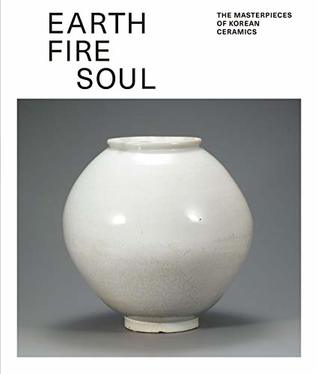
Earth Fire Soul is less a conventional catalogue and more a sustained meditation on making. The book stages Korean ceramics as a living conversation among three inevitable forces — the clay (earth), the kiln (fire), and the human presence that lends works their inward breath (soul). Organized around the masterpieces held by the National Museum of Korea, the volume resists purely chronological narration and instead privileges tactile, formal, and spiritual continuities. The result is a catalogue that reads like criticism: attentive to technique, sensitive to historical inflection, and insistently poetic about what pots remember.
Materiality and Technique
What makes Earth Fire Soul most rewarding is its insistence on material thinking. Long descriptive passages attend to density, temper, and the way particular clays take a glaze; several essays offer lucid accounts of sanggam inlay, the subtle chemistry of celadon glazes, the rough immediacy of buncheong slip decoration, and the quiet austerity of Joseon white porcelain. The book treats technique not as mere craft but as language: incised lines, pecked surfaces, and the thin skin of glaze become syntax that carries social and religious meaning. For readers interested in how gesture survives firing, the book is uncompromisingly generous — close photographs paired with microscopic observations make clear how a small mark or an accidental ash deposit can transform an object’s expressive range.
Historical and Cultural Resonance
The essays weave ceramics into broader currents of Korean history without resorting to summary. Goryeo celadon is handled as a courtly aesthetic — an elegant, watery restraint that converses with Buddhist sensibilities — while buncheong and later Joseon wares are read through the alternating logics of popular use and Confucian propriety. Rather than imposing a teleological story of “progress,” the book shows how changes in taste and technique reflect shifts in ritual life, economy, and cosmology. The most memorable passages are those that linger on liminal moments: a transitional form, the adoption of a new firing regime, or the migration of an image from ritual bowl into everyday tableware — each treated as a small historical revelation.
Curatorial Voice and Design
Curatorial choices here are thoughtful and occasionally provocative. The sequencing privileges dialogues across centuries — a Goryeo inlaid box might sit opposite a Joseon moon jar so that material affinities become visible across time. The editorial voice balances scholarly rigour with an almost pastoral reverence: footnotes and technical diagrams cohabit with lyrical close-readings of form. Photographic plates are plentiful and often shot with an almost forensic intimacy; where the catalogue risks excess is in occasional fetishizing of surface detail at the expense of provenance or socio-economic context. A few readers may wish for deeper archival apparatus — makers’ names, kiln registries, trade routes — but the editors appear to have chosen a different set of priorities: to foreground perception over provenance.
Photography and Reproduction
The book’s visual program is one of its great strengths. Large-format plates let one read glaze as if it were a landscape: lime-green pools, blue-grey celadon translucencies, and the warm, iron-burnished bodies of utilitarian wares. Photographs that include scale and kiln-scars provide salutary counterpoints to the idealized museum shot; we see not only finished surfaces but also the imperfections that give Korean ceramics their humanity. Designers make good use of negative space, allowing pieces to “breathe” on the page; captions are economical yet informative, and in many cases the images themselves function as the primary critical argument.
Limits and Provocations
If the book has a shadow, it is an occasional reluctance to confront the social history fully. The potter’s hand is praised — rightly — but the social conditions of production receive less sustained attention: workshop structures, the lives of itinerant potters, and the economies that supported large-scale kilns are sketched rather than excavated. Similarly, the book’s reverence for aesthetic continuity sometimes smooths over regional diversity; readers interested in comparative East Asian exchanges or the politics of collecting might find the catalogue wanting. These are not fatal omissions but reminders that an object-centred approach, however brilliant, is only one way to tell the story of ceramics.
Earth Fire Soul is a model of how a museum catalogue can be both scholarly and sensorial. It will be indispensable to students of ceramics, to curators, and to any reader who wants to learn how glaze and form carry history in their skins. More than a documentation of masterpieces, the book is an argument: that Korean ceramics command attention not only for their historical stratification but because, in the slow alchemy of earth and fire, they register something like a national temperament — austere, resourceful, quietly metaphysical. For those who already love Korean pottery, the book deepens the view; for newcomers, it offers an elegantly paced initiation into a craft that still speaks with old, necessary voices.
Discover more from The New Renaissance Mindset
Subscribe to get the latest posts sent to your email.
 The New Renaissance Mindset
A beautifully nuanced and thoughtful appreciation of Earth Fire Soul. Your writing mirrors the spirit of the book itself—attentive, tactile, and quietly lyrical—capturing how material, history, and human presence converse through clay and fire. Concise yet rich, it honors both the scholarship and the poetry of Korean ceramics with clarity and depth.
LikeLiked by 1 person
I am humbled by your praise. Thank you very kindly!!
LikeLiked by 1 person