
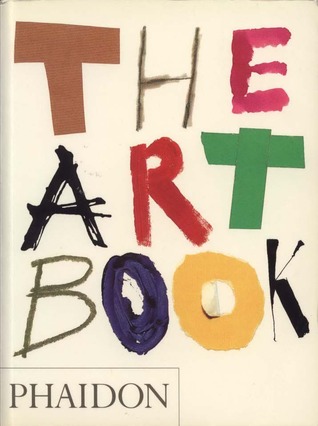
Phaidon’s The Art Book is not a book that seeks to be read from first page to last as a single sustained argument; it is an atlas of encounters. Its achievement is simple and ambitious at once: to compress the dizzying plurality of visual practice into a portable, democratic form. The editors do not attempt a new art-historical narrative so much as they stage a series of concise encounters between reader and work—an encounter whose limits are precisely what makes it interesting.
Form and design as argument
The book’s layout is a declarative statement about how we experience art today. Each artist is given a short entry—typically a single page of text paired with an arresting image on the facing page. The visual immediacy of that pairing privileges seeing over discoursing: the artwork is presented not as illustration of the text but as the text’s equal. In doing so, the book models a tacit argument about access and attention. It assumes readers are visual people first and bibliographic people second; it trusts the image to initiate and the caption to orient.
Design choices—large reproductions, generous white space, brisk typographic pacing—work rhetorically. They make the book feel democratic and portable, fit for classroom use or for the curious layperson. At the same time, the page-by-page regime produces a rhythm of encounter: a succession of interruptions and delights, a browsing that approximates visiting a gallery in condensed form.
Editorial stance and curation
Phaidon’s editorial project is curatorial rather than canonical in the old, exclusionary sense. Yet no anthology can escape selection, and selection is argument. The book’s choices—who is included, who is omitted, which image represents an artist—constitute a judgment about significance, about what visual practice matters enough to be portable. The editors generally favour clarity and iconicity: works chosen are often emblematic, photographically persuasive, and legible at a glance.
That curatorial clarity is both strength and limitation. On the one hand, it allows the book to function as an efficient introduction: a student can quickly acquire names, images, and basic context. On the other hand, the compressed entries risk flattening complexity. Movements that thrive on process, collaboration, or ephemeral gesture (performance art, certain strains of conceptual practice) are inevitably harder to summarize in a single image plus fifty words. The form privileges the object and the figure—paintings, sculptures, photographers—over ephemeral systems and networks.
Voice and scholarly balance
The short texts strive for balance: informative without being didactic, occasionally playful without losing analytical weight. They are not scholarly essays in the manner of extended criticism; they are primers. For the literary scholar, there is an interesting tension here between the aphoristic and the explicatory. The entries often gesture toward broader debates—race, gender, coloniality, market forces—without dwelling on them. This can be generative: a compact signpost pointing to a larger literature. But it can also feel like a missed opportunity when complex contexts are reduced to a single paragraph.
That said, the book frequently surprises in its moments of judgment: a curator’s pithy formulation can clarify a knotty biographical fact or restore a neglected artist to attention. The cumulative effect of hundreds of such judgments produces a kind of para-textual narrative about what mattered in modern and contemporary art.
Strengths: pedagogy, accessibility, and visual rhetoric
As a pedagogical tool the book is superb. Its alphabetic structure makes it searchable; its images are lucid and reproducible in small group settings; its tone invites further research rather than shutting it down. For newcomers, it demystifies the field; for seasoned readers, it serves as a brisk refresher and a provocation to reconsider the usual suspects.
Visually, the book is exemplary. The pairing of image and commentary trains the reader in a basic hermeneutic: look first, then contextualize. For anyone teaching “how to look,” this is a handy companion that models the economy of visual interpretation.
Limitations and lacunae
No compendium can be neutral. The book’s greatest critical vulnerability is its inevitable choreography of omission. Certain global practices—non-Western vernaculars, collaborative community arts, and forms that resist photographic reproduction—receive less weight. The brevity of each entry can also flatten the messy biographies and institutional entanglements that inform much contemporary practice; the social and economic circuits in which art circulates get only the most abbreviated treatment.
Finally, the emphasis on emblematic works means that process and duration—the temporal arts—are harder to capture. Readers should therefore treat The Art Book as an entry point, not as a final verdict.
Who should read it (and how)
The Art Book is best read with two simultaneous intentions: to enjoy and to interrogate. It functions brilliantly as an atlas of first encounters—for students, museum visitors, and the intellectually curious. As literary scholars, critics, and teachers we can use it as a pedagogical device: assign entries for close reading, compare the book’s short tropes with longer monographs, or use its omissions as prompts for research essays.
In short, the book excels at stirring curiosity. Its idiom is one of elegant compression rather than exhaustive exposition. If you want an authoritative synthesis, look elsewhere; if you want a fast, beautifully designed compendium that opens doors—and insists that you walk through them—then Phaidon has delivered precisely that.
Discover more from The New Renaissance Mindset
Subscribe to get the latest posts sent to your email.
 The New Renaissance Mindset