
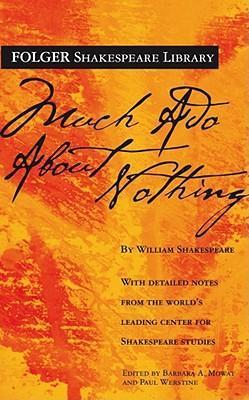
Shakespeare’s comedy of contrasts stages wit against convention and spectacle against small-town culpability; its pleasures are both linguistic and structural. At surface level this is a deft romantic farce — two engagements, two styles of courtship — but the play’s durable power lies in how it forces laughter and moral discomfort to coexist. The result is a work that reads like a lesson in theatrical balance: exuberant wordplay and staged gaiety continually undercut by a brittle concern for honour and reputation.
The play opens by placing its sharpest rhetorical weapon on the lips of its most guarded female speaker: “I had rather hear my dog bark at a crow / Than a man swear he loves me.” This epigram (Act 1, sc. 1) immediately establishes a temperament that will govern the comic spine of the play: a protective, ironic intelligence that parries romantic sentiment with mock-misogynistic bravado. That irony is not mere coquettishness; it is defensive technique, and that defensiveness makes the later exhibition of feeling — when the same wit yields to tenderness — feel like a genuine, rather than staged, conversion.
By contrast the play’s other central courtship is sentimental and naive: the young suitor exults in the language of public joy — “Silence is the perfectest herald of joy: I were but little happy, if I could say how much” (Act 2, sc. 1) — and yet proves remarkably vulnerable to rumor. That vulnerability is the play’s moral hinge. The public shaming at the wedding, delivered with the rhetoric of civic honour — “Give not this rotten orange to your friend; / She’s but the sign and semblance of her honour” (Act 4, sc. 1) — forces us to ask whether comedy can properly contain the damage done when a woman’s reputation is weaponized. Shakespeare stages the collapse of trust with forensic clarity: the mechanisms of honour, gossip, and theatrical display are shown to be brutal even as the dramaturgy that exposes them can still be comic.
The figure who announces the play’s ethical seriousness is not a hero but a confessedly malignant agent: “I am a plain-dealing villain” (Act 1, sc. 3). That unadorned admission of bad faith galvanizes the plot’s darker movement and underscores an unsettling truth: the comic world’s social codes are fragile in the face of deliberate deceit. The play’s resolution — which restores order through contrivance and repentance — thus reads ambivalently. We may admire the staging of reconciliation, yet the text leaves open the cost of that reconciliation: how readily are women’s voices suppressed and then glossed over by male contrivance?
Comic relief is handled with an equally sure but different hand. The local constabulary and its malapropisms are an anatomical study in how language can fail and yet generate delight. The bumbling officers convert criminal investigation into a performance of authority that repeatedly undercuts itself; their scenes are not merely lightness between acts but a formal demonstration that speech can misfire in ways that reveal character and expose social pretensions. Through that doubling — high comedy of wit vs. low comedy of error — the play explores the range of theatrical tones without collapsing them into one mood.
Formally, the play is elegant: its “gulling” scenes (the deliberate deception of the sparring pair) display Shakespeare’s mastery of dramatic irony and of staged self-knowledge. The audience’s privileged perspective during these scenes creates a delicious asymmetry: we watch characters discover themselves, be taught their own natures, and — in the case of the cynical romantic pair — learn to risk sincerity. The transformation from parry to confession culminates in lines that, even when domesticated by marriage, retain an aftertaste of the earlier contest of wits: the final professions of love have the texture of both victory and truce.
Yet a modern reader (or spectator) must name the play’s difficulties. The public humiliation of a young woman for alleged sexual impropriety — and the relatively quick administrative fixes that follow — strain contemporary ethical patience. Shakespeare gives us psychological truth and theatrical resolution, but he does not fully interrogate the gendered power imbalances that make the plot possible. Any modern production must therefore negotiate this tension: preserve the linguistic sparkle while refusing complacent complacency about the injustices that catalyze the action.
The play remains among Shakespeare’s most humane and ambivalent comedies: humane because it sustains a fundamental affection for its characters and ambivalent because that affection coexists with an insistence on the real harms enacted by rumour and honour. Read for its sparkling repartee and structural ingenuity, the play rewards close attention to how language—joke, slander, confession—shapes social fate. Its pleasures are immediate; its moral aftertaste lingers. For readers and performers alike, the work asks not only to be enjoyed but to be interrogated.
Discover more from The New Renaissance Mindset
Subscribe to get the latest posts sent to your email.
 The New Renaissance Mindset