
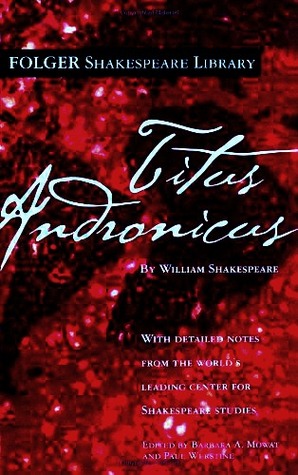
William Shakespeare’s early tragedy reads like a moral and theatrical experiment pushed to its bloodied extremes: brutal in action, often uneven in technique, but stubbornly alive in its capacity to shock and to provoke questions about law, family, and the theatrical appetite for spectacle. At face value the plot is simple—Titus, a war-hero and patriarch, is drawn into a spiralling exchange of injury and retaliation that culminates in grotesque vengeance and mutual ruin—but the play’s power lies less in plot mechanics than in how Shakespeare (and his collaborators, perhaps) stages the collapse of civic order into private atrocity and public theatre.
The play supplies a catalogue of moments that stick in the throat: the ritual slaughter of prisoners; the rape and mutilation of Lavinia; Tamora’s political cunning; and Titus’s final, operatic revenge—serving Tamora the heads of her sons in a pie before the court. These events are not incidental shocks; they are the play’s engine, and Shakespeare uses them to interrogate the boundary between “civilized” order and endemic barbarity. The feast-scene, where Titus reveals the cooked bodies, stages revenge as a consummation that collapses juridical restraint into theatrical display.
Shakespeare’s language in the play alternates between the wildly rhetorical and the rawly physical. Lines that might otherwise sound like declamation carry a corrosive irony here: “Why, foolish Lucius, dost thou not perceive / That Rome is but a wilderness of tigers?”—a sentence that converts civic space into predatory jungle and reframes social life as a contest of consumption and survival. Equally striking is the play’s personification of vengeance itself: “Know, thou sad man, I am not Tamora… I am Revenge: sent from the infernal kingdom.” Such statements make the play’s abstractions tactile; revenge is not only motive but a speaking character that both animates and justifies atrocity. These rhetorical moments show Shakespeare deliberately using elevated diction to amplify, not soothe, the play’s cruelty.
Yet formal unevenness—irregularities of blank verse, abrupt tonal shifts, and moments that read like popular revenge-play convention—accounts for a long critical embarrassment. For centuries critics and editors questioned both the play’s authorship and its literary merit, treating it as a youthful or composite work that betrays Shakespeare’s later mastery. Since the mid-20th century scholarship and performance have revived interest in its structural design and cultural seriousness: critics now read Titus as a pointed meditation on Romanitas, theatrical spectacle, and the social costs of retributive justice rather than simply as gratuitous gore. This historiography of reception is essential to understanding why the play still divides readers and audiences.
From a gendered and political perspective the play is unsettling and fertile. Lavinia’s mutilation—rendered onstage in some productions and suggested in others—becomes the text’s moral fulcrum: a bodily silence that demands translation into testimony and revenge. The Roman court’s failure to do justice and Lucius’s eventual militarized solution complicate any straightforward moral reading; “civilization” proves porous, and both “Romans” and “Goths” participate in escalating brutality. Recent critical readings have pushed this ambiguity further, arguing that the play destabilizes any tidy binary of civilized/barbaric and exposes how public institutions can reproduce private violences.
Performance history helps explain the play’s changing fortunes. On the page Titus can feel episodic and excessive; onstage, however, its theatricality can be harnessed—directors and actors have found in its extremes a vehicle for dark comedy, ritual, and political commentary. Modern stagings (and the Royal Shakespeare Company’s periodic returns to the play) show how design, pacing, and interpretive choices turn shocks into argument: the horror can become indictment instead of spectacle for spectacle’s sake.
So how should a contemporary reader approach this “lame” but combustible work? Read it as a provocation. If one’s first question is whether the play is “good” in the same sense as Hamlet or King Lear, one will be frustrated; its pleasures and lessons are different. Titus asks us to watch civic rhetoric disintegrate into private vengeance, to feel how language can both dignify and abet cruelty, and to confront how a society’s rituals—of mourning, of law, of spectacle—might themselves become instruments of annihilation. For scholarship, it remains a rich text precisely because it resists easy moralizing: it insists that violence be read as social symptom, theatrical device, and ethical test.
In short: Titus Andronicus is not a minor curiosity to be dismissed out of hand, nor is it a flawless tragedy. It is a raw, unsettling early experiment in scale and tone—one that rewards readers and producers who take seriously its questions about vengeance, spectacle, and the precariousness of civic order. Read it critically, staged or on the page, and you will find a play whose moral and theatrical provocations still demand interrogation.
Discover more from The New Renaissance Mindset
Subscribe to get the latest posts sent to your email.
 The New Renaissance Mindset
Nice post
LikeLiked by 1 person
Thank you
LikeLike