
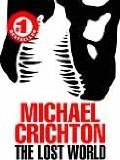
Michael Crichton’s The Lost World, a sequel to his groundbreaking Jurassic Park, delves deeper into the interplay of science, hubris, and the primal forces of nature. Set on Isla Sorna, a “site B” for the genetic experiments that brought dinosaurs back to life, the novel serves as both a thrilling adventure and a sharp critique of humanity’s technological overreach.
At its core, The Lost World is a meditation on the chaos inherent in life and the dangers of scientific arrogance. Drawing heavily on chaos theory—a recurring theme in Crichton’s work—the narrative questions humanity’s belief in its ability to control nature. Ian Malcolm, reprising his role as the voice of reason and scientific caution, provides a compelling lens through which to explore these themes. His philosophical musings anchor the novel, offering a sobering counterpoint to the fast-paced action and frequent brushes with death.
Crichton’s ability to balance high-concept ideas with cinematic storytelling is on full display. The novel’s pacing is relentless, with tautly written sequences that evoke a visceral sense of danger. Whether it’s a raptor stalking the protagonists in the jungle or a high-stakes encounter with a Tyrannosaurus rex, Crichton masterfully builds tension, making each page a gripping experience.
The novel also delves into themes of extinction and survival, using the dinosaurs as both literal and metaphorical representations of humanity’s precarious relationship with the natural world. Crichton draws parallels between the arrogance of the characters in the novel and humanity’s historical tendency to exploit and destroy the environment. These parallels resonate deeply, making The Lost World more than a mere adventure tale—it is a cautionary story about the perils of unbridled ambition and ecological neglect.
However, the book is not without its flaws. While the characters are serviceable for the narrative’s purposes, they often feel more like archetypes than fully fleshed-out individuals. The dialogue can be stilted, serving more as a vehicle for exposition than as a natural reflection of character or emotion. This occasionally undermines the immediacy of the drama, especially in moments where human interaction should take precedence over scientific debate.
Despite these shortcomings, The Lost World succeeds in marrying speculative science with compelling fiction. Crichton’s prose, while not overtly lyrical, is efficient and immersive, allowing readers to lose themselves in the lush, perilous world of Isla Sorna.
For literary scholars, the novel offers rich material for analysis. The recurring motif of chaos as both a destructive and creative force invites comparisons to classical tragedies, where hubris inevitably leads to downfall. Additionally, the ethical dilemmas posed by genetic engineering echo the themes of Mary Shelley’s Frankenstein, positioning The Lost World as a modern exploration of humanity’s Promethean aspirations.
Ultimately, The Lost World may lack the novelty and groundbreaking impact of its predecessor, but it remains a riveting exploration of the fragility of human control over nature. Crichton’s vision—a world where scientific advancement outpaces ethical consideration—feels prescient, making this work as relevant today as it was upon its publication. For readers willing to look beyond the surface thrills, The Lost World offers a profound meditation on humanity’s place in a vast and unpredictable ecosystem.
Discover more from The New Renaissance Mindset
Subscribe to get the latest posts sent to your email.
 The New Renaissance Mindset