
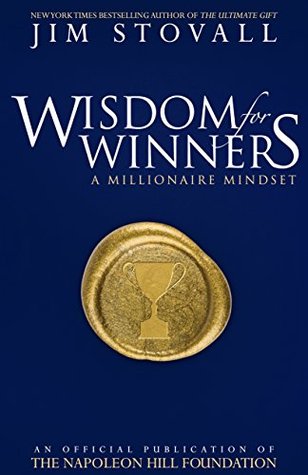
Jim Stovall’s book is less a single sustained argument than a sequence of compact meditations on success, selfhood, and spiritual discipline. Its structure matters: the material is organized into small, stand-alone sections designed to be read incrementally, and the columns originally appeared in print before being gathered into book form. That serial origin gives the work a cumulative authority; it feels less like theory than like a practiced voice returning, week after week, to the same moral centre.
What gives the book its force is the firmness of its aphoristic prose. Stovall writes in a declarative, admonitory register that tries to convert attitude into action. He insists on agency with lines such as “the right to choose,” then tightens the logic into moral realism: “We can’t always choose what happens to us, but we can always choose what we are going to do about it.” Elsewhere, the book’s anti-consumerist edge appears in the memorable warning, “Don’t confuse ‘having’ with ‘being’,” a phrase that captures the book’s larger suspicion of outward display without inner development. Even its repeated refrain, “Today’s the day!,” works like a verbal nudge, almost a secular litany.
The most interesting tension in the book is between its motivational urgency and its spiritual vocabulary. Stovall does not treat success as merely financial or strategic; he frames it as an alignment of spirit, character, and choice, declaring that “All success begins in your spirit” and that human worth exceeds material calculation. This helps explain why the book can feel both brisk and devotional: it is not content to tell readers how to win, but tries to tell them what kind of person must exist before winning is even possible. In that sense, the book’s deepest claim is not that achievement follows optimism, but that optimism itself must be rooted in a disciplined moral imagination.
As a literary object, then, Wisdom for Winners is effective precisely because it resists flourish. Its prose is plain, compressed, and sermon-like, which makes its certainties feel portable and repeatable. The drawback is also the source of its appeal: readers looking for ambiguity, psychological complexity, or stylistic surprise will find little of that here. But readers willing to accept a book built from exhortation rather than narrative will discover a work that is admirably consistent in purpose, and often surprisingly memorable in phrasing.
Discover more from The New Renaissance Mindset
Subscribe to get the latest posts sent to your email.
 The New Renaissance Mindset