
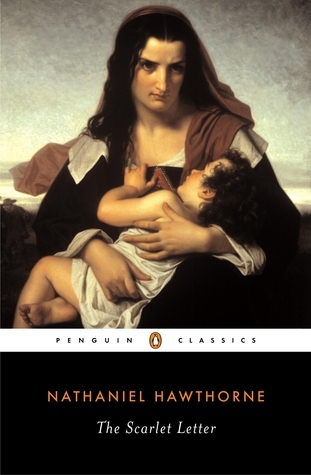
“The Scarlet Letter,” first published in 1850, stands as Nathaniel Hawthorne’s masterwork—a profound exploration of sin, guilt, and redemption set against the rigid moralism of 17th-century Puritan New England. As a literary scholar might observe, the novel operates on multiple levels: as a historical romance, a psychological case study, and an ethical parable. Hawthorne’s layered … Continue reading The Adaptable Educator’s Book Review – The Scarlet Letter by Nathaniel Hawthorn

The Adaptable Educator’s Book Review – Hannibal by Thomas Harris
Thomas Harris’s Hannibal (1999) returns readers to the dark, psychologically intricate world introduced in Red Dragon(1981) and further immortalized in The Silence of the Lambs (1988). As the concluding arc of his Lecter trilogy, Harris revisits one of modern fiction’s most enigmatic antiheroes: Dr. Hannibal Lecter, the cultured psychiatrist turned cannibalistic serial killer. Yet Hannibal is far more than a mere exercise … Continue reading The Adaptable Educator’s Book Review – Hannibal by Thomas Harris

The Adaptable Educator’s Book Review – The Silence of the Lambs by Thomas Harris
Thomas Harris’s The Silence of the Lambs (1988) occupies a distinctive position in late twentieth-century American crime fiction. While its most immediate appeal lies in the gripping suspense and chilling portraits of criminal pathology, the novel’s enduring value—and the core of its appeal to literary scholars—resides in its sophisticated exploration of identity, power, and the blurred boundaries … Continue reading The Adaptable Educator’s Book Review – The Silence of the Lambs by Thomas Harris
The Adaptable Educator’s Book Review – Red Dragon by Thomas Harris
Thomas Harris’s Red Dragon (1981) inaugurates the series of novels centred on the formidable figure of Dr. Hannibal Lecter, yet it is far more than a preliminary sketch of later events. As a literary scholar might observe, Harris marries the methods of traditional detective fiction with a deep psychological probing, situating Red Dragon at the confluence of Gothic sensibility, … Continue reading The Adaptable Educator’s Book Review – Red Dragon by Thomas Harris

The Adaptable Educator’s Book Review – J.R.R. Tolkien: Artist and Illustrator by Wayne G. Hammond and Christina Scull
Wayne G. Hammond and Christina Scull’s J.R.R. Tolkien: Artist and Illustrator (1995) offers a magisterial exploration of Tolkien’s visual creativity, positioning his artwork not as ancillary curiosities but as integral expressions of his mythopoetic vision. Rather than treating the illustrations as mere complements to The Hobbit and The Lord of the Rings, Hammond and Scull frame Tolkien’s art as an … Continue reading The Adaptable Educator’s Book Review – J.R.R. Tolkien: Artist and Illustrator by Wayne G. Hammond and Christina Scull
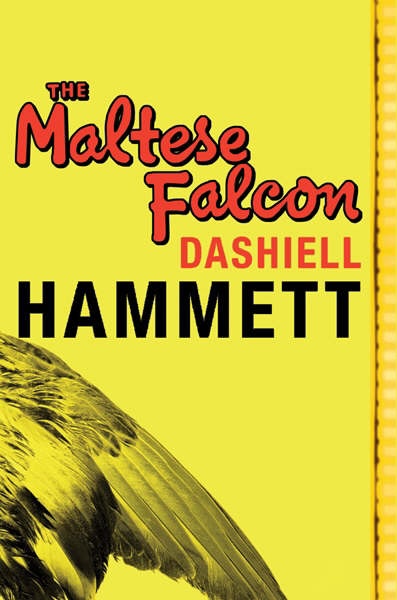
The Adaptable Educator’s Book Review – The Maltese Falcon by Dashiell Hammett
Dashiell Hammett’s The Maltese Falcon (1930) is often cited as the cornerstone of hard-boiled detective fiction, yet such classification risks underselling the novel’s literary sophistication and its subtle critique of American modernity. Beneath the façade of terse dialogue, clipped narration, and a noir ambiance, Hammett crafts a morally ambiguous world that destabilizes notions of truth, identity, and … Continue reading The Adaptable Educator’s Book Review – The Maltese Falcon by Dashiell Hammett
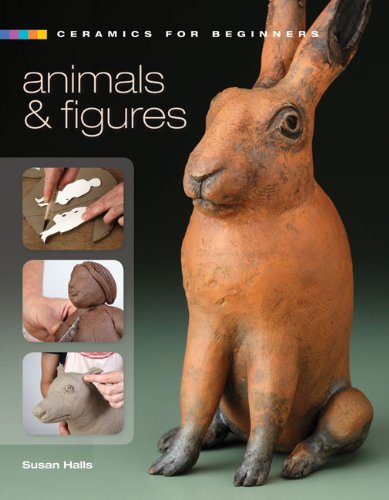
The Adaptable Educator’s Book Review – Ceramics for Beginners: Animals & Figures by Susan Halls
Susan Halls’s Ceramics for Beginners: Animals & Figures positions itself at the intersection of pedagogical clarity and sculptural imagination. Aimed squarely at novices, this volume nevertheless aspires—even at the introductory level—to cultivate both technical facility and aesthetic sensibility in its readers. As a literary scholar might probe a text for subtext, narrative arc, and ideological underpinnings, so … Continue reading The Adaptable Educator’s Book Review – Ceramics for Beginners: Animals & Figures by Susan Halls

The Adaptable Educator’s Book Review – Art Forms in Nature by Ernst Haeckel
Ernst Haeckel’s Art Forms in Nature (original German title: Kunstformen der Natur, first published between 1899 and 1904) stands at a fascinating crossroads of science, art, and philosophy. Though often referenced primarily for its breathtaking lithographs of organisms—radiolarians, diatoms, jellyfish, and countless other invertebrates—Haeckel’s work extends far beyond mere naturalistic illustration. He fashioned a visual and intellectual manifesto … Continue reading The Adaptable Educator’s Book Review – Art Forms in Nature by Ernst Haeckel

The Adaptable Educator’s Book Review – Craft Perception and Practice: A Canadian Discourse, Vol. 2, edited by Paula Gustafson
Craft Perception and Practice: A Canadian Discourse, Vol. 2, edited by Paula Gustafson, represents a pivotal moment in the evolution of Canadian craft scholarship. Published by Ronsdale Press in 2005, this volume collects twenty-two essays and critical commentaries by nineteen independent critics, curators, professional artists, art historians, and studio art instructors. By bringing together voices … Continue reading The Adaptable Educator’s Book Review – Craft Perception and Practice: A Canadian Discourse, Vol. 2, edited by Paula Gustafson

The Adaptable Educator’s Book Review – Craft Perception and Practice: A Canadian Discourse, Vol. 1, edited by Paula Gustafson
Paula Gustafson’s Craft Perception and Practice: A Canadian Discourse, Vol. 1 is an ambitious, multifaceted exploration that positions Canadian craft not merely as an artisanal pursuit but as a site of critical inquiry and cultural negotiation. Gustafson—long known for her incisive editorial work in Artichoke magazine—assembles a slate of voices that interrogate craft’s epistemological foundations, its links … Continue reading The Adaptable Educator’s Book Review – Craft Perception and Practice: A Canadian Discourse, Vol. 1, edited by Paula Gustafson
 The New Renaissance Mindset