

Jem Friar’s The Gratitude Attitude presents itself as an accessible yet profound exploration of gratitude as a cornerstone of happiness. Rooted in the self-development tradition, the book is framed as the first "key" to happiness—a claim that positions gratitude not as a fleeting emotion but as a structured, practicable discipline with transformative potential. Philosophical and Psychological Underpinnings … Continue reading The Adaptable Educator’s Book Review – The Gratitude Attitude: The First “How To Be Happy” Key by Jem Friar
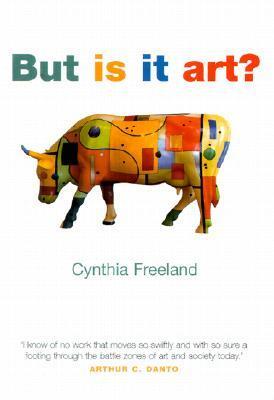
The Adaptable Educator’s Book Review – But Is It Art? An Introduction to Art Theory by Cynthia A. Freeland
Cynthia A. Freeland’s But Is It Art? is an accessible yet deeply analytical exploration of the philosophical questions that shape our understanding of art. Bridging aesthetics, cultural criticism, and contemporary artistic practices, Freeland provides a framework that is both historically grounded and relevant to modern debates. Her work, though introductory, does not sacrifice intellectual rigor, making it … Continue reading The Adaptable Educator’s Book Review – But Is It Art? An Introduction to Art Theory by Cynthia A. Freeland

The Adaptable Educator’s Book Review – Man’s Search for Meaning by Viktor E. Frankl
Viktor E. Frankl’s Man’s Search for Meaning is both a harrowing testament to human suffering and an extraordinary philosophical inquiry into the nature of meaning itself. Written in the aftermath of Frankl’s experiences in Nazi concentration camps, the book transcends the boundaries of memoir and psychology, offering a synthesis of existential thought and practical resilience. A Memoir … Continue reading The Adaptable Educator’s Book Review – Man’s Search for Meaning by Viktor E. Frankl

The Adaptable Educator’s Book Review – The Pillars of the Earth by Ken Follett
Ken Follett’s The Pillars of the Earth (1989) is a monumental work of historical fiction that transforms the construction of a 12th-century Gothic cathedral into a sweeping narrative of ambition, faith, and power. Known initially for his work in the thriller genre, Follett demonstrates an extraordinary ability to craft a novel that is at once an architectural … Continue reading The Adaptable Educator’s Book Review – The Pillars of the Earth by Ken Follett

The Adaptable Educator’s Book Review – Gustav Klimt, 1862-1918: The World in Female Form by Gottfried Fliedl
Gottfried Fliedl’s Gustav Klimt, 1862-1918: The World in Female Form is an illuminating and erudite study of the Austrian painter’s oeuvre, positioning Klimt’s work within the broader cultural and socio-political contexts of fin-de-siècle Vienna. With scholarly precision and an evident appreciation for Klimt’s radical aesthetic, Fliedl presents a compelling narrative that weaves together biography, artistic philosophy, and … Continue reading The Adaptable Educator’s Book Review – Gustav Klimt, 1862-1918: The World in Female Form by Gottfried Fliedl

The Adaptable Educator’s Book Review – The Curious Case of Benjamin Button by F. Scott Fitzgerald
F. Scott Fitzgerald’s The Curious Case of Benjamin Button (1922) is a deftly woven meditation on time, identity, and societal norms, encapsulated within the framework of an inverted life trajectory. Originally published in Collier’s Magazine, the novella stands as one of Fitzgerald’s most inventive explorations of temporality, playing with the modernist preoccupation with the fluidity of time while … Continue reading The Adaptable Educator’s Book Review – The Curious Case of Benjamin Button by F. Scott Fitzgerald

The Adaptable Educator’s Book Review of The Great Gatsby by F. Scott Fitzgerald
F. Scott Fitzgerald’s The Great Gatsby (1925) stands as one of the most incisive explorations of the American Dream and its discontents. Written during the Roaring Twenties—a decade of unprecedented economic prosperity and moral recklessness—the novel paints a hauntingly poetic portrait of wealth, longing, and disillusionment. Through its lyrical prose and structural precision, Fitzgerald crafts a narrative … Continue reading The Adaptable Educator’s Book Review of The Great Gatsby by F. Scott Fitzgerald

The Adaptable Educator’s Book Review – Hopes and Fears for Art by William Morris
William Morris, the polymathic figure of the 19th-century Arts and Crafts movement, weaves a compelling argument in Hopes and Fears for Art (1882), where he explores the intersection of aesthetics, labor, and social justice. This collection of essays serves not only as a critique of industrial capitalism’s effect on artistic integrity but also as a manifesto envisioning … Continue reading The Adaptable Educator’s Book Review – Hopes and Fears for Art by William Morris

The Adaptable Educator’s Book Review: The Beautiful and the Damned by F. Scott Fitzgerald
F. Scott Fitzgerald’s The Beautiful and the Damned (1922) occupies a curious space in his oeuvre—less structured than The Great Gatsby yet more ambitious in its thematic scope, it is a novel that attempts to dissect the existential crisis of a generation. It is a work that aches with self-awareness, mirroring the author’s own anxieties about love, ambition, and … Continue reading The Adaptable Educator’s Book Review: The Beautiful and the Damned by F. Scott Fitzgerald

The Adaptable Educator’s Book Review: The Dubliners by James Joyce
The Paralyzed Soul of Dublin James Joyce’s Dubliners (1914) is more than a collection of short stories—it is an unflinching dissection of a city and its people, a portrait of spiritual stagnation, and a masterclass in modernist realism. In these fifteen interwoven stories, Joyce strips away the romantic veneer of Irish nationalism and Catholic idealism, exposing instead … Continue reading The Adaptable Educator’s Book Review: The Dubliners by James Joyce
 The New Renaissance Mindset