
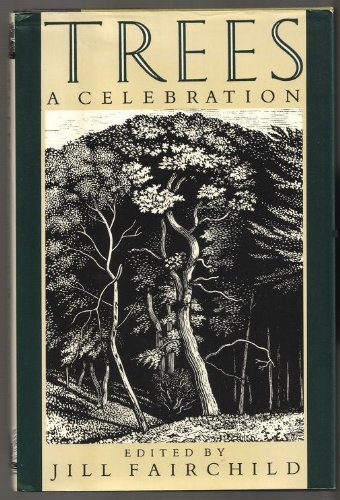
Jill Fairchild’s Trees: A Celebration is less a single narrative than a curated chorus of voices, images, and meditations that together compose an arboreal anthology. As its title suggests, the book is not meant merely to instruct or classify, but to honor. What distinguishes this work from more conventional botanical texts is the way it operates at the crossroads of literature, visual art, and natural history, appealing as much to aesthetic sensibility as to ecological conscience.
The volume gathers poems, prose excerpts, and visual representations that span cultures and centuries, highlighting the tree as both literal organism and enduring metaphor. In this sense, the book belongs to the tradition of symbolic natural histories—works that do not just describe the oak, the birch, or the baobab, but rather reveal how these trees have served as mirrors for human experience. Fairchild’s editorial choices remind us of the tree’s centrality to myth, religion, and philosophy: as axis mundi, as emblem of endurance, as witness to both personal and collective memory.
The arrangement of the anthology emphasizes contrast and resonance. A Romantic poet’s rhapsody on a grove may sit beside a contemporary photographer’s stark image of a lone trunk against an urban skyline. This juxtaposition underscores one of the book’s implicit theses: trees, while rooted in place, are universal in symbol. The multiplicity of perspectives resists reduction, allowing readers to experience trees as sacred, utilitarian, aesthetic, and ecological all at once.
Scholarly readers may note that Trees: A Celebration avoids overtly polemical environmentalism, though the book’s very existence as a “celebration” functions as quiet activism. By foregrounding the beauty and cultural centrality of trees, Fairchild indirectly compels reflection on their fragility in the face of deforestation and climate change. The absence of didactic tone makes the text accessible, yet its intertextual layering encourages critical engagement.
If the book has a limitation, it lies in its emphasis on Western literary traditions and glossy visual presentation. At times, the sleek design risks aestheticizing nature into coffee-table art, rather than grappling with the material urgencies of ecological crisis. Nonetheless, this is mitigated by the power of the assembled voices, which collectively remind us that trees are more than backdrop—they are co-inhabitants of human history.
Ultimately, Trees: A Celebration operates as a contemplative object as much as a book. It asks its reader not just to read but to pause, to look, and to remember. In doing so, it enacts its own thesis: that trees, like texts, invite sustained attention, and that through their rootedness we may learn something of our own fleeting attempts at permanence.
Discover more from The New Renaissance Mindset
Subscribe to get the latest posts sent to your email.
 The New Renaissance Mindset