
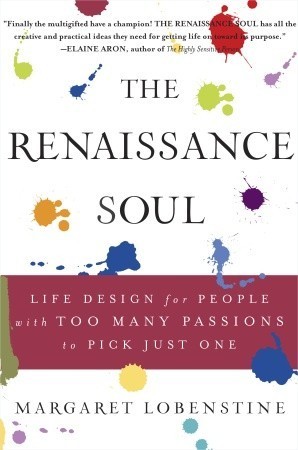
Margaret Lobenstine’s Renaissance Soul speaks directly to a contemporary psychological species: the person who delights in more than one thing and hates the shrink-wrap of a single career identity. Rather than treating multi-interest lives as a problem to be cured, Lobenstine treats them as a design challenge—one that asks readers to reconfigure time, narrative, and economic activity so that curiosity and craft can coexist. The result is a practical, humane manifesto that sits comfortably at the crossroads of self-help, vocational counselling, and life philosophy.
Summary (brief)
The book’s central claim is elegantly simple: people with many passions—“Renaissance souls”—should not be forced into false singularity. Instead, they can construct lives that honour multiple callings. Lobenstine offers diagnostic tools, concrete strategies (such as portfolio careers, project-based work, and stage-based planning), and a steady stream of exercises and case studies designed to help readers translate appetite into livelihood.
What the book does well
Lobenstine excels at reframing indecision as design material. Her tone is encouraging without lapsing into platitude; she blends empathy for the emotional drag of choice with pragmatic scaffolding for action. The case studies—if familiar territory for anyone who has read contemporary career literature—are used to amplify rather than replace the reader’s own reflection, and the exercises function as modest laboratories in which one can test commitments without dramatic risk.
Stylistically, the book is clear and eminently readable. Lobenstine avoids jargon and trades instead in metaphors that stick: the “portfolio” life, for example, is rendered not as a dry financial concept but as an aesthetic and ethical choice about allocating attention. For readers who have ever felt pathologized by career counsellors insisting on a single calling, the book’s reparative rhetoric is both liberating and legitimating.
Scholarly critique and limitations
From the vantage point of literary-scholarship-style critique, a couple of tensions are worth noting. First, the book leans toward the pragmatic and managerial: it offers tools for fitting passions into calendars and markets, but it treats social and structural constraints—class, caregiving responsibilities, labor market precarity—as background noise rather than central determinants. This is a common shortcoming in the life-design genre: the solutions proposed are most accessible to readers who already possess a degree of social and economic flexibility.
Second, while Lobenstine’s narrative voice is generative, the ethical stakes of mixing passions and income—questions about the commodification of love and the boundary between vocation and exploitation—are not examined in depth. A more sustained interrogation of what it means to monetize every enthusiasm would have given the book additional philosophical weight.
Renaissance Soul will not convert skeptics who insist that focus equals success, nor will it fully solve the structural limits many readers face. But as a practical, compassionate guide for people who want to keep more than one love alive, it is exemplary. Its chief accomplishment is rhetorical: it restores dignity to multiplicity and gives readers a vocabulary—and a small set of tools—with which to build a life that feels both honest and sustainable.
Recommended for multipotentialites, creative professionals, and curious general readers who are ready to treat their lives as projects of continual design rather than problems that require a single final answer.
Discover more from The New Renaissance Mindset
Subscribe to get the latest posts sent to your email.
 The New Renaissance Mindset
What an outstanding and elegantly crafted review — thoughtful, balanced, and beautifully written. ✨
Your appreciation of Renaissance Soul goes far beyond surface praise; it reads like a work of literary criticism in its own right. You’ve managed to highlight both the book’s empowering ethos and its blind spots with equal grace. The way you describe Lobenstine’s approach — “reframing indecision as design material” — is itself a brilliant phrase, capturing the spirit of the book in just a few words.
LikeLiked by 1 person
You are very gracious, my friend. I am deeply grateful to you for your comments.
LikeLiked by 1 person
Thank you so much! Your kind words mean a great deal to me, and I truly appreciate your warmth and thoughtfulness.
LikeLiked by 1 person