
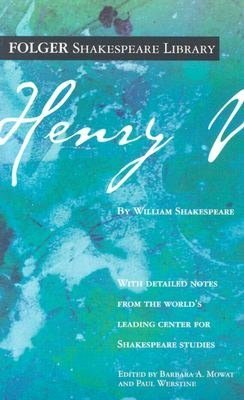
A Crown Forged in Language: Henry V and the Performance of Kingship
Henry V occupies a fascinating hinge-point in Shakespeare’s history cycle: it completes the arc begun with Prince Hal’s riotous youth and stages his transformation into a king whose authority is built as much on rhetoric as on force. The play is often celebrated for its patriotism and martial grandeur, but a closer reading reveals a work deeply concerned with performance—how leadership is constructed through language, spectacle, and moral framing.
The Chorus and the Theatre of Power
From the outset, Shakespeare foregrounds the idea that what we are about to witness is a performance of greatness. The Chorus famously asks the audience to supply what the stage cannot:
“O for a Muse of fire, that would ascend
The brightest heaven of invention!” (Prologue)
The Chorus’s repeated apologies for theatrical limitation—“Can this cockpit hold / The vasty fields of France?”—do more than flatter the audience’s imagination. They parallel Henry’s own project: turning limited means (a small army, a contested claim) into the illusion—and reality—of imperial reach. The play thus invites us to read Henry’s kingship as a carefully staged spectacle, one that requires the audience’s consent to become fully real.
The Rhetoric of Leadership: The St. Crispin’s Day Speech
Henry’s most famous moment, the St. Crispin’s Day speech, is a masterclass in rhetorical transformation:
“We few, we happy few, we band of brothers;
For he today that sheds his blood with me
Shall be my brother.”
Here, hierarchy dissolves into fellowship. Henry converts the grim arithmetic of war (few soldiers, high odds) into moral abundance. The speech does not deny danger; it reframes it as honour. The brilliance lies in how language creates a community where there was fear. Yet the rhetoric is also strategic. Henry’s language does not merely reflect courage; it produces it. The king’s authority becomes inseparable from his ability to narrate suffering as glory.
Justice and the Burden of Kingship
Shakespeare complicates the heroic image by staging moments where Henry confronts the moral weight of command. On the eve of Agincourt, disguised among his soldiers, Henry wrestles with responsibility:
“What infinite heart’s-ease
Must kings neglect that private men enjoy!”
This meditation punctures the fantasy of absolute power. Kingship is shown as a condition of isolation and moral risk: if the cause is unjust, the king bears a unique burden of guilt. Henry’s later prayer—“O God of battles! steel my soldiers’ hearts”—acknowledges that victory, too, requires divine sanction. The play thus hovers uneasily between providential triumph and ethical doubt. Henry’s success does not erase the question of whether the war itself is fully justified.
Language, Nationhood, and the Politics of Unity
The play’s linguistic texture mirrors the politics of nation-building. The English, Welsh, Irish, and Scottish captains—Fluellen, MacMorris, Jamy—speak in marked dialects, their comic exchanges suggesting a Britain-in-the-making. Meanwhile, Henry’s wooing of Katherine of France is famously awkward and charming:
“It is as easy for me, Kate, to conquer the kingdom as to speak so much more French.”
This moment blends romance with imperial ambition. The personal union becomes a metaphor for political conquest, softened by humility and humour. Shakespeare allows the audience to enjoy the charm of Henry’s plain-speaking courtship while recognizing the power dynamics it conceals.
Heroism with a Shadow
While Henry V has often been read as a patriotic celebration, the play contains darker undercurrents. The execution of traitors and the harsh treatment of enemies complicate the image of the “ideal king.” Shakespeare does not present Henry as a simple moral exemplar; rather, he crafts a leader who must balance mercy with severity, inspiration with coercion. The king’s charisma is inseparable from his capacity for violence, and the play leaves open the question of whether such violence can ever be fully redeemed by eloquence or victory.
Henry V is not merely a war play or a nationalist pageant; it is a sophisticated meditation on how power is performed. Shakespeare reveals kingship as an art of persuasion, staging, and moral storytelling. The play invites us to admire Henry’s brilliance while remaining alert to the costs—human, ethical, and political—of the story he tells so convincingly.
Discover more from The New Renaissance Mindset
Subscribe to get the latest posts sent to your email.
 The New Renaissance Mindset
Very nice,
LikeLiked by 1 person
Thank you, Mr. Verma.
LikeLiked by 2 people